
Mild soreness can occur after spinal manipulation, but feeling worse is not evidence that chiropractic care is working or that improvement will follow. New, severe or worsening symptoms need assessment rather than reassurance that you must push through them. This 2026 guide explains what to report, when to seek medical help and what to discuss before another adjustment.
- Is it normal to feel worse before feeling better? Chiropractic soreness can occur, but worsening symptoms need assessment.
- MyChiro provides chiropractic care in Bondi Junction; this guide does not establish whether another adjustment suits you.
- Report changes before further adjustments; soreness does not establish benefit or predict recovery.
- Call 000 for possible stroke symptoms, including sudden facial drooping, arm weakness or speech difficulty.
Is it normal to feel worse before feeling better?
Feeling worse after an adjustment is not a required stage of getting better. Temporary soreness is a recognised possible side effect of spinal manipulation, but that does not explain every new symptom. The nature of the change matters more than the label attached to it.
The guide to soreness after an adjustment covers a related question. Here, the distinction is between a possible temporary reaction and a change that needs reassessment.
| What you notice | What to do | What not to assume |
|---|---|---|
| Mild local soreness without new symptoms | Report it to the practitioner and ask for individual advice | That soreness proves the adjustment helped |
| Pain that is increasing or affecting usual activities more | Seek timely advice from a qualified health professional before further adjustments | That another adjustment is automatically appropriate |
| New numbness, weakness or difficulty walking | Seek prompt medical assessment | That this is ordinary post-adjustment soreness |
| Sudden facial drooping, arm weakness or speech difficulty | Call 000 immediately | That waiting for the chiropractic clinic is appropriate |
This table supports decisions about seeking help; it cannot diagnose the cause of your symptoms. Do not use it to rule out a problem because your experience does not fit a row exactly.
Why this matters
The phrase worse before better turns an uncertain symptom into a reassuring explanation. That is the problem. It can make you discount a change that deserves attention or continue with care you would otherwise question.
Two things can be true: temporary soreness is reported after spinal manipulation, and worsening symptoms still deserve consideration. Neither soreness nor its absence establishes whether a procedure has helped you.
You do not need to decide for yourself whether the adjustment caused the change. Describe what happened and seek appropriate advice. Establishing timing is useful; establishing causation requires clinical assessment.
What public health sources say
For this 2026 overview, the relevant distinction comes from public patient information, not testimonials or promises about recovery:
- NHS, “Chiropractic”: describes possible side effects after chiropractic care, including aches, stiffness and tiredness, and acknowledges the risk of more serious complications.
- US National Center for Complementary and Integrative Health, “Spinal Manipulation: What You Need To Know”: discusses temporary adverse effects and serious adverse events associated with spinal manipulation.
- Healthdirect Australia, information on stroke and back pain: explains symptoms that require urgent medical attention, including stroke warning signs and certain neurological changes accompanying back pain.
These sources concern general patient information. They do not establish why a particular person feels worse or support a promise that further adjustments will lead to improvement.
A recognised side effect is not a reason to dismiss your individual symptoms. Frequency, severity and cause are separate questions. A clinician needs your history and, where appropriate, an examination to advise on the next step.
What should you do if you feel worse after an adjustment?
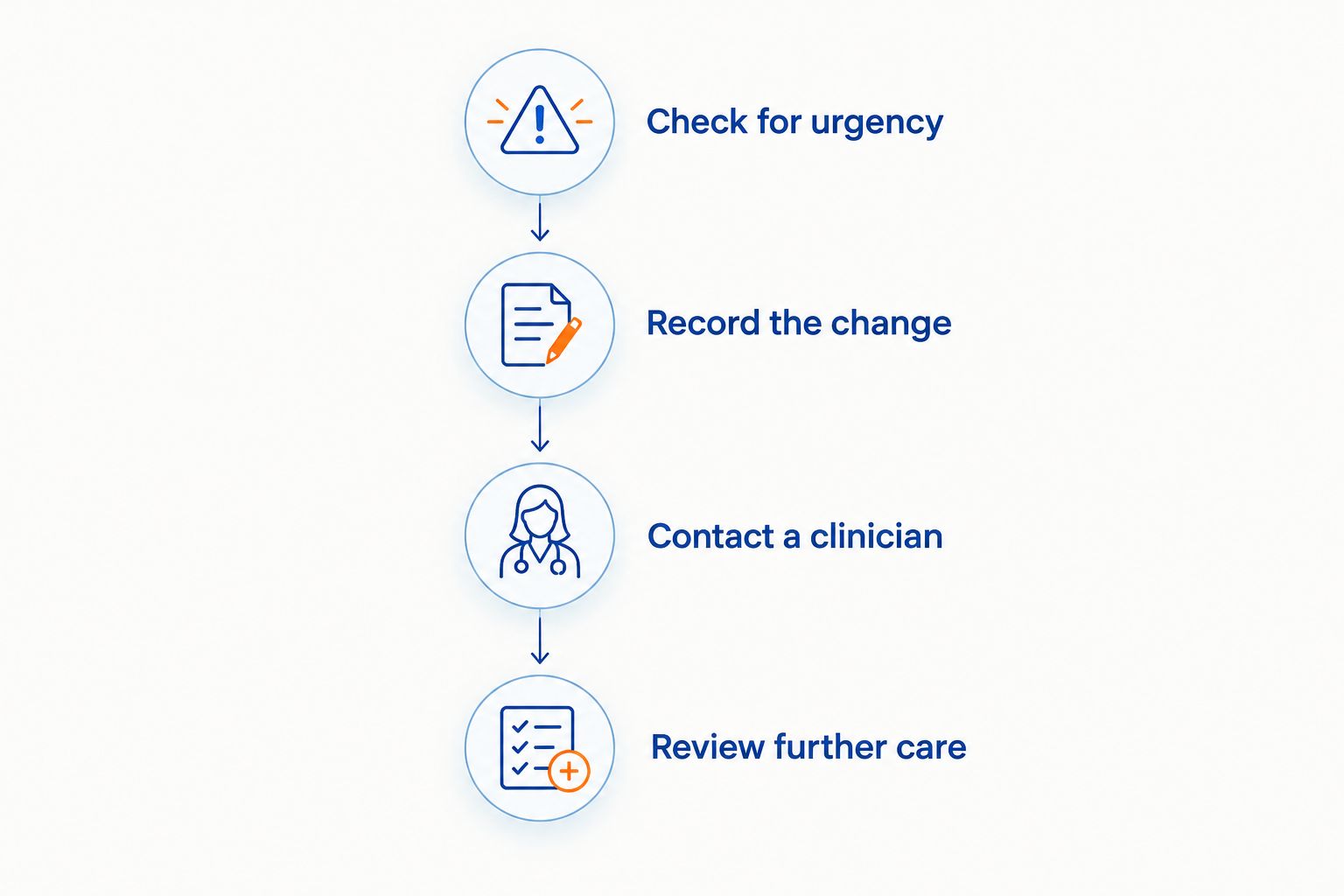
Use the following sequence to organise your response. If emergency symptoms are present, skip symptom recording and seek emergency help.
Check for urgency
Call 000 for possible stroke symptoms, such as sudden facial drooping, arm weakness or speech difficulty. Sudden severe headache, new visual disturbance or sudden difficulty with balance also warrants urgent medical attention, particularly following neck manipulation.
Seek urgent medical assessment for new bladder or bowel control changes, numbness around the groin or saddle area, or substantial new limb weakness. Do not wait for a routine chiropractic appointment to discuss these symptoms.
These warnings are not a diagnosis. Their purpose is to direct you towards medical assessment rather than another adjustment or an online explanation.
Record the change
If there are no emergency symptoms, write down what changed. Use ordinary descriptions: aching, sharp, burning, tingling, or difficulty doing a familiar task. You do not need a medical label.
Include when the symptoms started relative to the appointment and whether they are increasing, easing or staying similar. Note whether the discomfort is in the original area or somewhere new.
Record function as well as discomfort. For example, tell the clinician if turning your head, walking, dressing or sleeping has become harder. Describe the change without repeatedly testing a movement that aggravates it.
Contact a clinician
Tell the practitioner who performed the adjustment about the change, including any new symptoms. Ask whether you need medical assessment and whether the proposed care should be paused or changed.
A GP can assess symptoms and consider other explanations, investigations or referrals where appropriate. You can seek another opinion; you do not have to continue with the same practitioner to have your concerns assessed.
Review further care
Do not treat the next adjustment as the automatic answer to feeling worse. Ask for reassessment before proceeding, particularly when symptoms are new, increasing or affecting your usual activities.
Discuss the proposed procedure, its purpose, material risks, alternatives and the option of not proceeding. Consent is an ongoing conversation. You can decline a procedure or withdraw consent even if you previously agreed to a care plan.
What does mild local soreness mean?
Mild local soreness is a possible reaction after spinal manipulation, as described in NHS and NCCIH patient information. It does not, by itself, tell you whether the procedure was appropriate or beneficial.
Ask the practitioner how to respond in your circumstances and what changes should prompt medical advice. An explanation should address your symptoms, not simply repeat that soreness happens.
Avoid using someone else's recovery story as a timetable. A friend feeling better after soreness does not establish what will happen to you. Likewise, an absence of soreness does not establish that an adjustment failed.
What if your original pain is worse?
An increase in your original pain deserves a review of the situation. Tell the clinician how the symptoms compare with those before the appointment and whether daily activities have become more difficult.
Do not assume that more pain means more benefit later. Ask what the worsening changes about the assessment and whether continuing, modifying or stopping the proposed intervention is appropriate.
If symptoms are severe, escalating or accompanied by new neurological changes, seek medical assessment rather than waiting for a routine review. The decision should reflect the symptoms you have now, not the appointment schedule already in place.
What if you develop a new symptom?
A new symptom should be described as new, even if it occurs near the area that was adjusted. Do not fold numbness, weakness, dizziness or a different headache into the general description of being sore.
Some new symptoms require urgent medical assessment, as outlined above. Others still need individual advice before further manipulation. An article cannot distinguish all of these situations remotely.
When you contact a clinician, start with the new symptom rather than your original reason for attending. That helps make the change clear: what you had before, what happened during the appointment and what you noticed afterwards.
Why experiences after an adjustment differ
There is no single explanation for everyone who feels worse. A clinical review needs to consider several details rather than assign a standard recovery story:
- Baseline symptoms: what you were experiencing before the appointment and whether symptoms were already changing.
- Procedure details: which area was assessed, what procedure was performed and what you noticed during it.
- Timing: whether the change began during the procedure, soon afterwards or later.
- Symptom pattern: whether the discomfort remains local or includes new symptoms elsewhere.
- Health context: relevant medical conditions, medicines, recent illness or injury, and other care you are receiving.
These are assessment details, not proof of a cause. Provide them accurately and let the clinician decide what examination or referral is appropriate.
What should you ask before another adjustment?
For a 2026 care discussion, focus on decisions rather than predictions. You need an explanation of the proposed next step, not a guarantee about when you will feel better.
Useful questions include:
- What is your assessment of the symptoms that changed?
- Do I need assessment by a GP or another health professional?
- Why are you proposing another adjustment now?
- What are the material risks and alternatives in my circumstances?
- What would lead you to stop or change the proposed care?
- How will we review whether continuing is appropriate?
Ask for clarification if the explanation relies on an unfamiliar phrase. Describing symptoms as a healing reaction does not establish their cause or remove the need to assess them.
You can pause a proposed procedure while you seek advice. An existing appointment or prepaid schedule does not replace informed consent at the next visit.
Does feeling worse mean chiropractic care is working?
No. Feeling worse does not establish that chiropractic care is working, and it does not predict later improvement. Evaluate a change through assessment rather than interpreting discomfort as a positive sign.
The reverse assumption is also unhelpful: timing alone does not establish that an adjustment caused every symptom afterwards. Report the sequence accurately without deciding the explanation in advance.
Should you keep your next appointment if you feel worse?
Contact the clinic before the appointment and explain the change. A discussion or reassessment is different from agreeing to another adjustment.
For emergency symptoms, seek emergency care instead. For other concerns, ask whether a GP review or a change to the appointment is appropriate before attending for further manipulation.
Discussing symptoms with MyChiro
MyChiro is a chiropractic clinic and wellness centre in Bondi Junction, Sydney, offering chiropractic care and spinal adjustments. That service description does not establish whether further chiropractic care is appropriate for your changed symptoms.
If your appointment was at MyChiro, explain what changed and ask about reassessment before another procedure. For urgent symptoms, use medical or emergency services rather than waiting for the clinic to respond.
FAQ
Is it normal to feel worse before feeling better after chiropractic care?
Temporary soreness can occur after spinal manipulation, but feeling worse is not a required stage of improvement. New, severe or worsening symptoms need assessment rather than an assumption that care is working.
How long should I wait if I feel worse after an adjustment?
Do not use a fixed waiting period to decide whether symptoms need attention. Seek emergency help for emergency warning signs and contact a qualified health professional about new or worsening symptoms.
Does soreness mean an adjustment worked?
Soreness does not establish that an adjustment worked. It is a possible side effect, not evidence of benefit or a prediction of later improvement.
Should I get another adjustment if the first one made me feel worse?
Another adjustment is not automatically appropriate when you feel worse. Report the change and discuss reassessment, alternatives and whether medical assessment is needed before proceeding.
What symptoms after neck manipulation need urgent help?
Sudden facial drooping, arm weakness or speech difficulty require an immediate call to 000. Sudden severe headache, new visual disturbance or sudden balance difficulty also warrants urgent medical attention.
Can I say no to another chiropractic adjustment?
You can decline another adjustment or withdraw consent. Ask about the proposed procedure, material risks, alternatives and the option of not proceeding.
What should I tell MyChiro if I feel worse?
Tell MyChiro what changed, when it started and whether you have any new symptoms or difficulty with usual activities. Seek medical or emergency assessment rather than waiting for a clinic response when urgent warning signs are present.
Does this 2026 guide replace a medical assessment?
This 2026 guide does not replace an individual medical assessment. It provides general information about reporting changed symptoms and recognising situations that require medical help.
One last thing
For your next care discussion in 2026, bring a description of what you can and cannot do—not just a pain label. Saying that you now struggle to walk across the room or turn your head gives the clinician something specific to assess.
The useful question is not whether discomfort is part of a recovery story. It is whether your current symptoms change what care is appropriate now.
Related guides
- What to expect from spinal manipulation
- How often should you see a chiropractor?
- When back pain needs a chiropractor or a doctor