

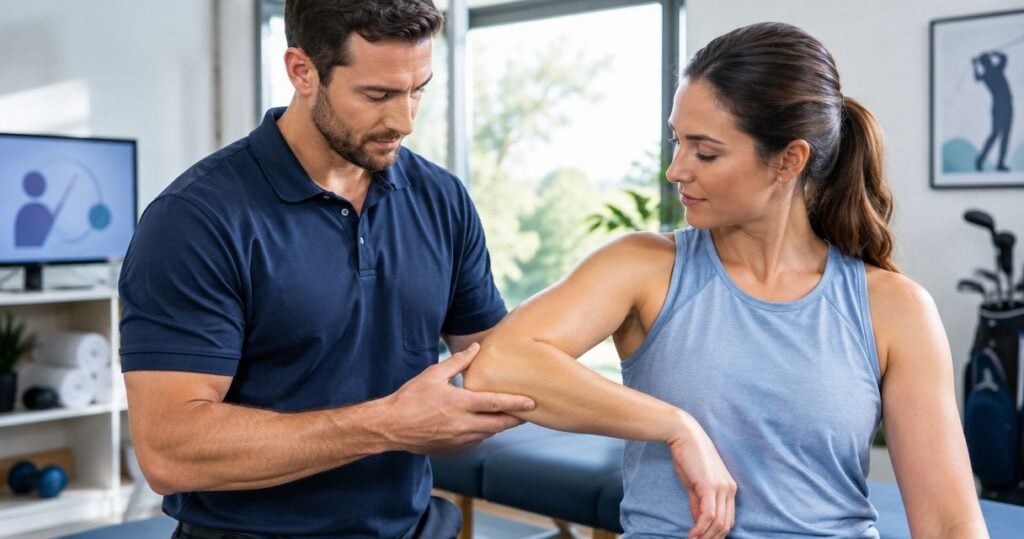
Golfer's elbow chiropractic care for golfers is an assessment-led approach to reducing forearm and elbow strain caused by repetitive swing loading, with the aim of supporting a steadier return to the course. Golfers face a narrower, more repetitive stress pattern than most desk-bound patients, so any plan needs to account for grip pressure, swing plane and practice volume, not just the sore spot on the inside of the elbow.
- A chiropractor for golfers elbow assesses grip, swing load and joint restriction before suggesting an exercise plan, not just rest.
- MyChiro in Bondi Junction offers assessment-led chiropractic care for golfer’s elbow alongside referral when red flags appear.
- Golfer’s elbow (medial epicondylalgia) usually needs load management and forearm strengthening, not rest alone.
- Persistent numbness, weakness or night pain after 2026-dated symptom onset warrants a GP review rather than continued self-management.
Why chiropractic care matters for golfers with golfer's elbow
Golfer's elbow, medically known as medial epicondylalgia, sits on the inside of the elbow where the forearm flexor tendons attach. Golfers load this tendon repeatedly through wrist flexion and forearm pronation at impact, and the lead arm usually takes the brunt of it. Unlike a one-off strain, the pain tends to build over weeks of normal play rather than from a single bad shot.
The constraint most golfers face is different from a typical desk worker's: stopping golf entirely for six weeks is rarely realistic or even necessary. The more useful question is which specific part of the swing or practice routine keeps re-loading the tendon before it settles. Golfers managing back strain from the same rotational swing often deal with more than one overlapping issue — the guide on golfers with lower back pain covers the lower-body side of that same movement pattern.
A chiropractor can assess joint restriction through the wrist, elbow and shoulder, and combine that with soft tissue work and a graded exercise plan following an individual assessment. This doesn't replace grip and equipment changes — it works alongside them.
Identify what's loading the tendon
Before changing anything, work out which part of your game is driving the strain. Golfer's elbow rarely comes from one bad round; it usually comes from a pattern repeated hundreds of times.
- Grip pressure that's tighter than needed through the swing
- An early wrist release or "casting" motion at the top of the downswing
- A steep angle of attack that increases impact shock through the lead arm
- A sudden jump in practice volume, especially hitting off mats
- A grip size or club length that doesn't suit your hand
Reduce load without stopping golf completely
Cutting all practice cold turkey isn't usually necessary, and it can make it harder to stay consistent with rehab. The goal is lowering total tendon load while keeping some movement going.
- Shorten practice sessions and split them across the week rather than one long block
- Alternate ball-striking drills with putting and chipping sessions
- Use lower-compression or foam practice balls to reduce impact shock during drills
- Apply ice after sessions if the area feels irritated, not before
- Avoid hitting exclusively off mats, which transmit more shock than turf
Get an assessment before guessing at a fix
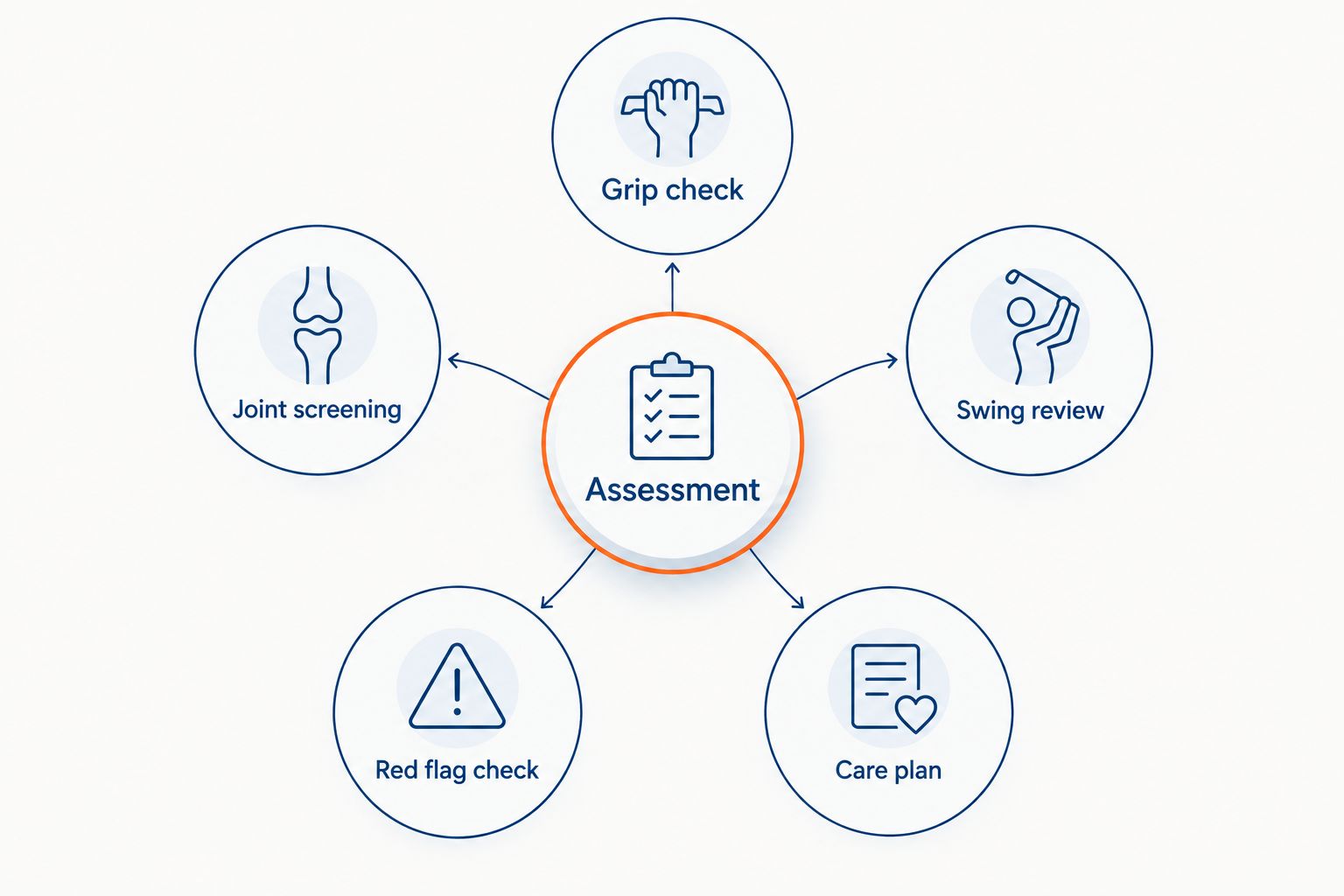
Self-diagnosing golfer's elbow from a search result only goes so far, particularly when pain has been present for more than a couple of weeks. An assessment at a clinic such as MyChiro can map out which structures are involved and whether chiropractic care may be appropriate alongside your existing routine.
- A grip strength and range-of-motion check across the wrist and elbow
- Screening of the tendon and surrounding joints for restriction or tenderness
- A review of your swing on video, if you have footage from a lesson or app
- A discussion of red flags that would warrant a GP or imaging referral
- A care plan built around your golf calendar rather than a generic timeline
Rebuild forearm strength and control
Rest alone rarely resolves golfer's elbow because the tendon needs a controlled reload, not just time off. This is the stage most golfers skip because it's slower than they'd like.
- Eccentric wrist flexor curls, starting with light resistance
- Forearm pronation and supination drills with a resistance band
- Grip strengthening using putty or a grip trainer, done in short sets
- Isometric holds at the wrist, progressing to isotonic movement once tolerated
- Gradual reintroduction of impact drills only once daily activities feel comfortable
Review grip, equipment and swing mechanics
Even with strength work, the tendon keeps getting re-loaded if the mechanical cause hasn't changed. This step usually needs a coach or pro shop fitting, not just a chiropractic consult.
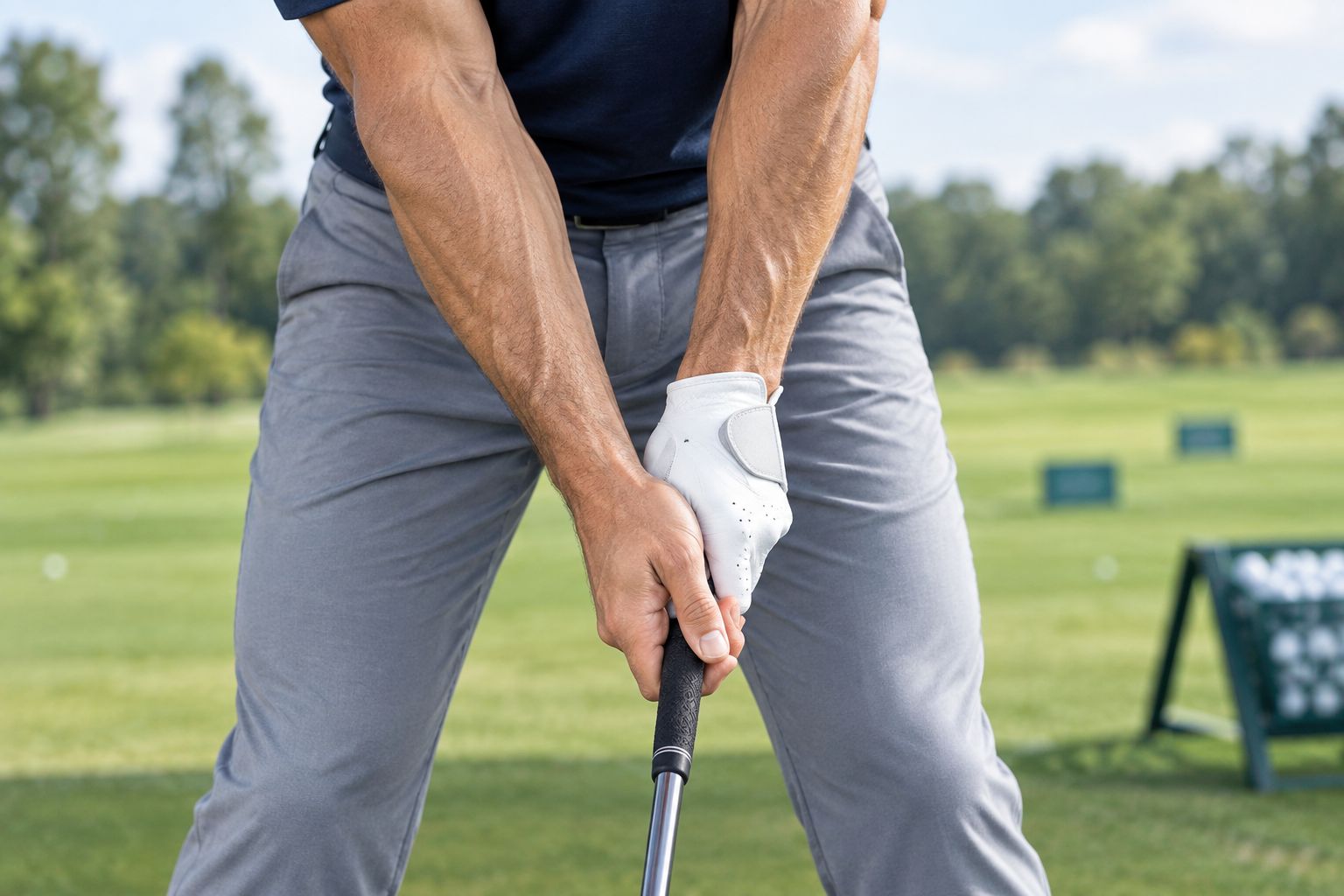
- Grip size — too thin a grip increases hand tension through the swing
- Shaft flex that doesn't match swing speed, adding extra wrist load at impact
- Glove fit and wear pattern, which can hint at grip pressure issues
- Early extension or steep swing plane picked up on video review
- Wrist angle at impact, particularly on the lead arm
Plan your return-to-play load
Going straight back to full rounds after symptoms ease is one of the most common ways golfer's elbow returns within a few weeks.
- Stage your return over several weeks rather than jumping straight to 18 holes
- Track pain 24 hours after a session, not just during it — delayed soreness is the real signal
- Keep a simple log of balls hit or holes played each week
- Back off load again if pain reappears at rest or overnight
- Check in with your health professional if progress stalls for more than a couple of weeks
Comparing your options for golfer's elbow
| Option | Best for | Key limitation | Verdict |
|---|---|---|---|
| Rest and self-managed load changes | Mild, early-stage symptoms | Doesn't address grip or swing mechanics causing the strain | Try first |
| Physiotherapy | Structured, supervised strength rehab | Appointment availability can add lead time | Consider |
| Chiropractic assessment and care (e.g. MyChiro) | Golfers wanting a joint and soft tissue assessment alongside an exercise plan | Not appropriate for suspected tendon tears or fractures without imaging | Discuss with a professional |
| Counterforce brace or strap | Reducing tendon load during a return-to-play period | Manages symptoms without addressing the underlying cause | Supportive, not standalone |
| GP review with imaging or injection | Pain persisting beyond 6 weeks or suspected structural damage | Requires referral and doesn't replace strength rehab | Escalate if needed |
| Surgery | Rare cases unresponsive to months of conservative care | Longer recovery, only after conservative options are exhausted | Last resort |
Common mistakes golfers make with golfer's elbow
- Playing through pain and only stretching before rounds — stretching cold tissue right before impact does little without ongoing strength work between rounds
- Blaming the club when grip pressure or an early wrist release is the actual driver — a new grip won't fix a swing habit
- Icing without ever loading the tendon through rehab exercises — the tendon needs controlled reload, not just rest
- Ramping practice volume back up the moment pain eases — strength and tendon capacity lag behind pain reduction
- Ignoring shoulder and thoracic spine mobility — restriction higher up the chain often forces extra strain through the elbow on the downswing
Book an assessment for elbow pain
Get a joint and soft tissue check before deciding on a plan.
FAQ
What is golfer’s elbow and how is it different from tennis elbow?
Golfer’s elbow (medial epicondylalgia) affects the tendons on the inside of the elbow, while tennis elbow affects the outside. Golfers load the inside tendon through repeated wrist flexion and forearm pronation at impact.
Can a chiropractor for golfers elbow help?
A chiropractor can assess joint restriction and tendon load and, following assessment, discuss soft tissue work and an exercise plan that may be appropriate for your situation. It works alongside, not instead of, grip and swing changes.
How long does golfer’s elbow usually take to settle?
Recovery timelines vary by individual and how early load changes start. Mild cases often ease within a few weeks of adjusted practice volume and forearm strength work, while longer-standing cases can take longer and may need a GP review.
Should I stop playing golf completely if I have golfer’s elbow?
Full stoppage isn’t always necessary. Reducing practice volume, swapping high-impact drills for putting and chipping, and addressing grip mechanics is often more useful than stopping entirely.
What exercises help golfer’s elbow?
Eccentric wrist flexor curls, forearm pronation and supination with a light resistance band, and gradual grip strengthening are commonly used once acute irritation has settled. Start light and progress slowly.
When should I see a doctor instead of a chiropractor for elbow pain?
See a GP if you notice numbness, weakness, night pain that doesn’t ease, or symptoms lasting beyond six weeks despite load changes. These can indicate something beyond a straightforward tendon strain.
Does grip size make a difference for golfer’s elbow?
Yes — a grip that’s too thin can increase hand and forearm tension through the swing. A pro shop fitting alongside your rehab plan is worth checking.
Is golfer’s elbow the same as a torn tendon?
No. Golfer’s elbow typically refers to tendon irritation from repetitive load, while a tear is a more serious structural injury usually confirmed on imaging. A GP or imaging referral is the way to rule that out.
One last thing
Golfer's elbow gets its name from the sport, but plenty of golfers who develop it never change a single thing about their swing before symptoms start — the trigger is often just a jump in practice volume in the lead-up to a competition round. Tracking pain 24 hours after a session, rather than during it, catches overload before it becomes a six-week problem in 2026 or any other year.
Related guides
- Chiropractic care for tennis elbow and repetitive strain
- How to improve flexibility for golf performance
- How to choose the right chiropractor for your condition


