

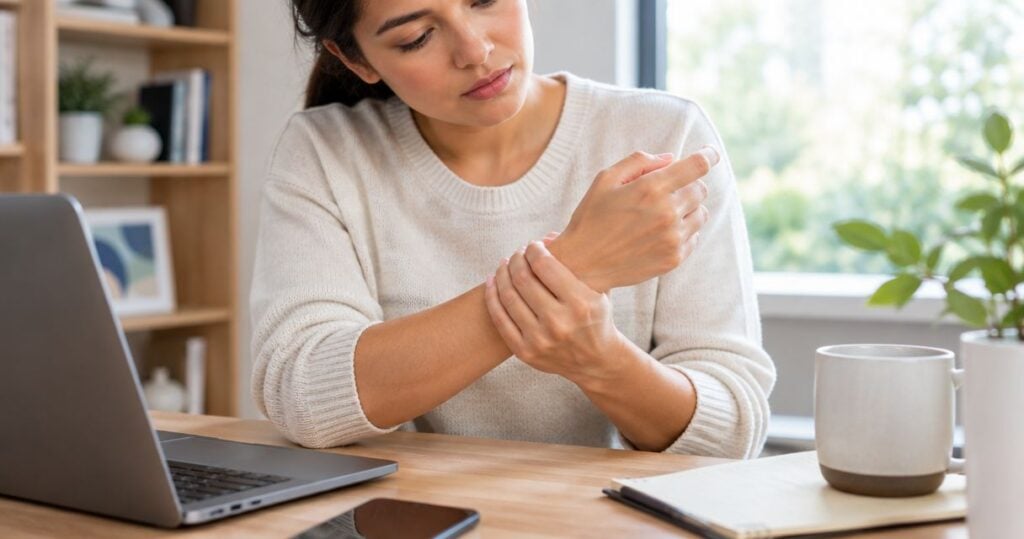
De Quervain's tenosynovitis causes sharp pain along the thumb side of the wrist, and for most people it never needs a scalpel. This guide covers the non-surgical management options generally discussed for de quervain's tenosynovitis treatment in 2026, what triggers flare-ups, and where a chiropractor fits into the picture.
- De quervain’s tenosynovitis treatment in 2026 generally starts with a thumb splint, rest from the aggravating movement and ice, not surgery.
- Corticosteroid injection is a step a GP may discuss if splinting and activity changes haven’t settled symptoms within six to eight weeks.
- Repetitive thumb movement from phones, keyboards and lifting a baby is the trigger seen most often in wrist and hand strain cases.
- Manual therapy and ergonomic advice from a chiropractor may support recovery following assessment, alongside medical review, not instead of it.
Why this matters
De Quervain's tenosynovitis involves irritation of two tendons that run along the thumb side of the wrist, the abductor pollicis longus and extensor pollicis brevis. It sits alongside trigger finger as one of the more common repetitive strain conditions affecting the hand and wrist in 2026, and both are usually picked up before any discussion of surgery is warranted.
The condition is sometimes nicknamed "mummy thumb" or "gamer's thumb" because repetitive lifting, scrolling or gripping motions are the usual trigger. Left unaddressed, the pain can spread from the base of the thumb into the forearm, which is why the underlying movement pattern matters as much as the tendon itself.
How do you treat de quervain's tenosynovitis without surgery?
Conservative management is built around reducing load on the irritated tendons while they settle, then rebuilding strength and range once the sharp pain has eased. A GP, hand therapist or chiropractor can confirm the diagnosis and outline which of the following steps may be appropriate for your case following assessment.
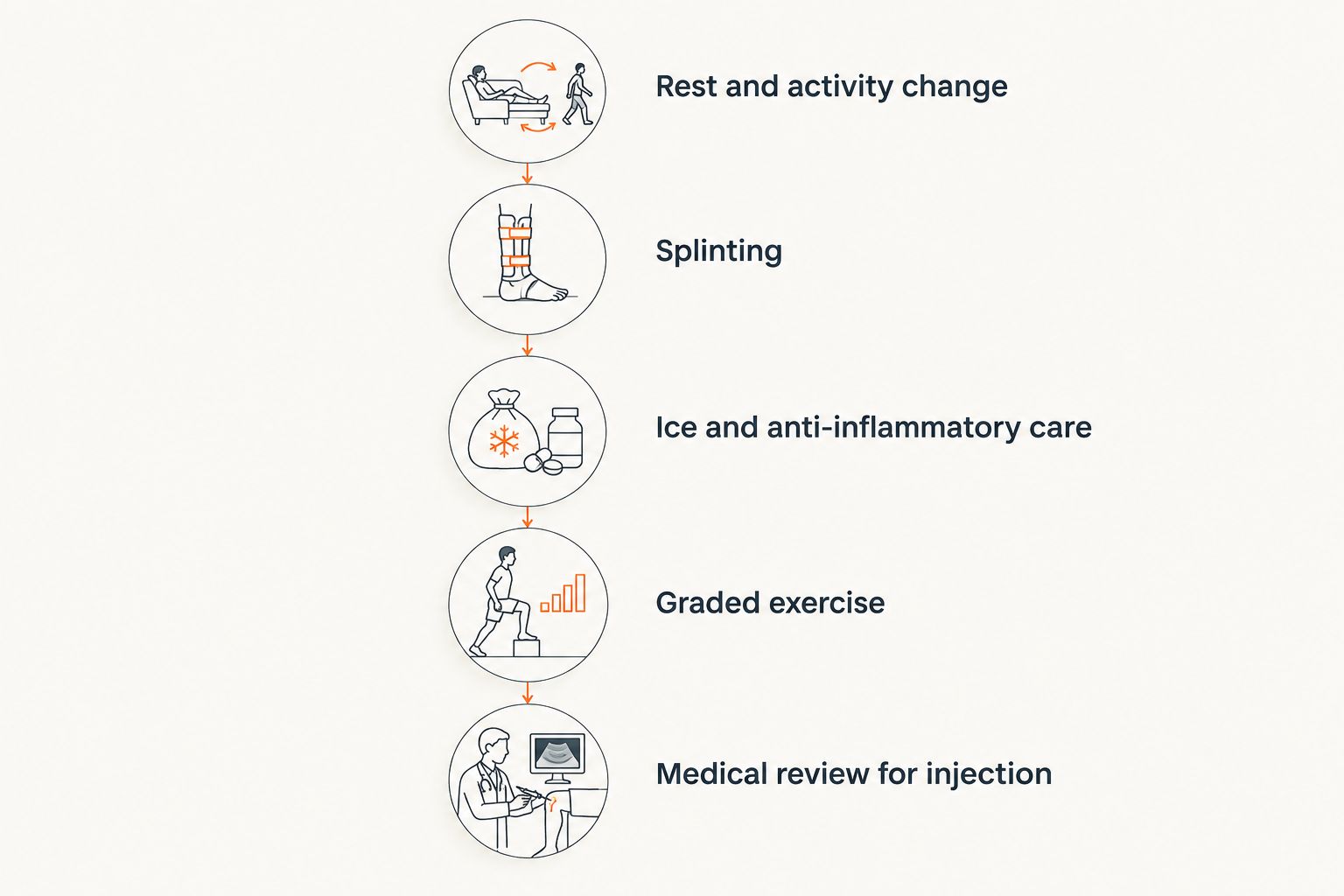
- Rest and activity modification — reducing the specific gripping, texting or lifting motion that provokes pain, rather than avoiding all hand use.
- Thumb spica splinting — a splint that immobilises the thumb and wrist is commonly worn for four to six weeks to let the tendon sheath calm down.
- Ice and anti-inflammatory measures — ice applied for 15 to 20 minutes at a time is a standard first-line measure discussed with a health professional.
- Graded stretching and strengthening — introduced once acute pain settles, usually guided by a hand therapist or chiropractor.
- Ergonomic and manual therapy support — adjustments to how a keyboard, phone or baby carrier is used, alongside manual therapy to the wrist and forearm where appropriate.
- Medical review for injection — a corticosteroid injection is something a GP may discuss if splinting and rest haven't reduced symptoms within six to eight weeks.
| Approach | What it involves | May suit | Considerations |
|---|---|---|---|
| Thumb spica splint | Immobilises thumb and wrist | Early-stage pain, flare-ups | Worn for weeks, not a standalone fix |
| Activity modification | Reduces the repetitive trigger movement | Desk workers, new parents | Requires identifying the actual trigger |
| Ice and NSAIDs | Reduces local inflammation | Acute flare-ups | Discuss NSAID use with a pharmacist or GP |
| Manual therapy / chiropractic support | Soft tissue work, ergonomic advice | Ongoing stiffness alongside medical care | Complements, doesn't replace, medical review |
| Corticosteroid injection | Reduces tendon sheath inflammation | Symptoms unresolved after 6-8 weeks | Discussed and administered by a GP |
For most people, de quervain's tenosynovitis treatment starts with a thumb splint and activity changes, not surgery.
“For most people, de quervain’s tenosynovitis treatment starts with a thumb splint and activity changes, not surgery.”
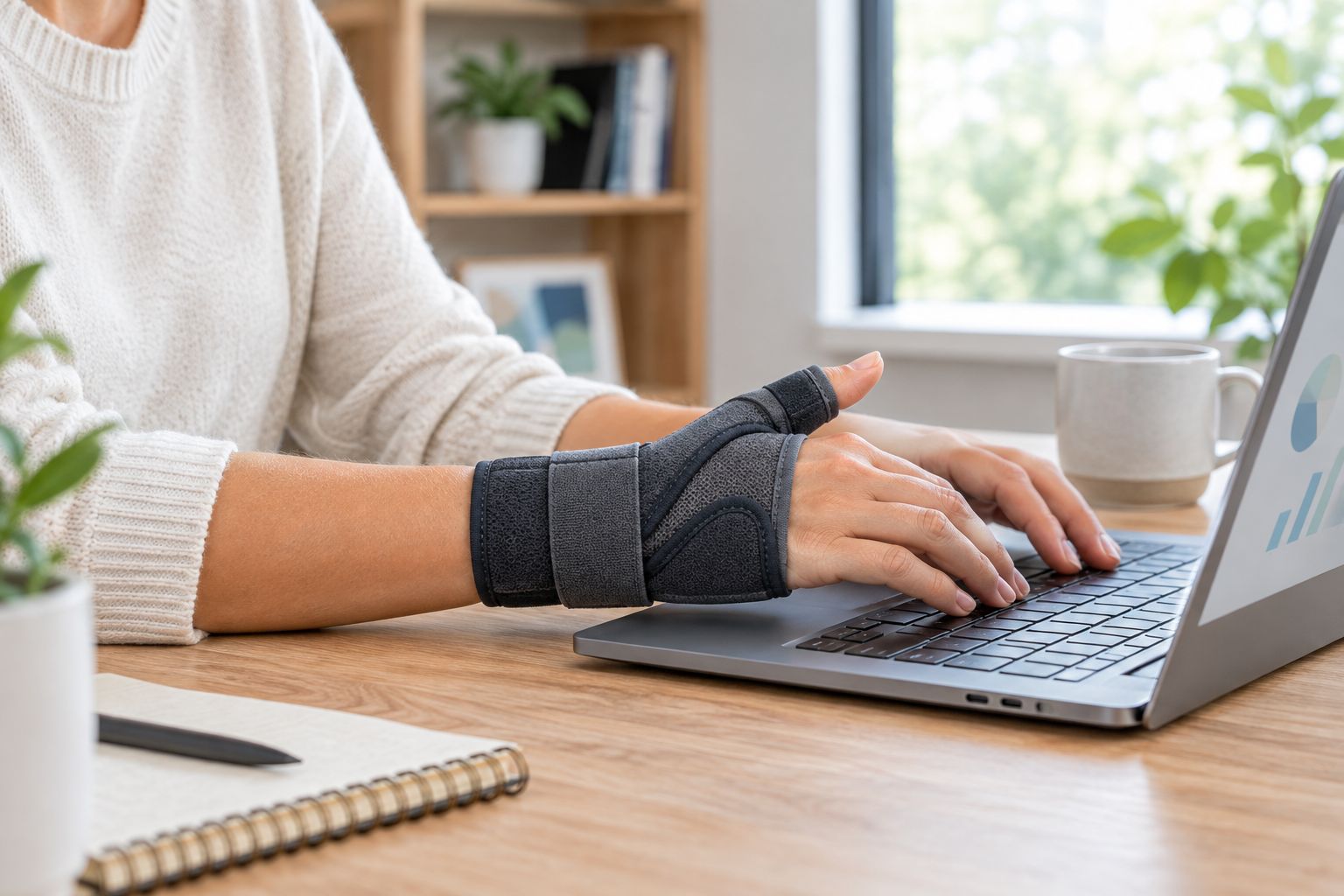
Why de quervain's tenosynovitis symptoms vary
Not everyone's flare-up responds the same way, and the trigger behind the pain shapes how long recovery tends to take.
- Repetitive thumb movements — texting, gaming, scrolling or repeated gripping motions at work.
- New parenting — lifting an infant with the thumbs extended is one of the most common triggers seen in postpartum patients.
- Hormonal changes — pregnancy, postpartum recovery and perimenopause are all associated with higher rates of tendon irritation.
- Occupational strain — hairdressers, checkout staff, tradies and anyone doing repeated pinching or gripping tasks.
- Prior wrist injury or arthritis — existing joint changes can make the tendon sheath more sensitive to load.
- Inadequate ergonomic setup — a keyboard, mouse or phone grip that keeps the thumb in an awkward position all day.
Is de quervain's tenosynovitis the same as carpal tunnel syndrome?
No, de quervain's tenosynovitis is not the same as carpal tunnel syndrome, even though both cause wrist pain and both are commonly managed without surgery. De Quervain's affects the tendons at the base of the thumb, while carpal tunnel syndrome involves compression of the median nerve through the carpal tunnel, and the two need different assessment approaches.
Can chiropractic care help de quervain's tenosynovitis?
Manual therapy and ergonomic guidance from a chiropractor may support recovery from de quervain's tenosynovitis when combined with the standard conservative measures, following an individual assessment. At MyChiro in Bondi Junction, a chiropractor can discuss whether manual therapy around the wrist and forearm, along with posture and workstation advice, is appropriate alongside any medical care already in place — this isn't a substitute for a GP review if symptoms persist.
How long does non-surgical recovery from de quervain's tenosynovitis take?
Symptoms often start to ease within six to eight weeks of consistent splinting and activity changes, though full recovery timelines vary from person to person. Recurrence is common if the repetitive movement that caused the strain in the first place isn't identified and changed, which is why ergonomic review matters as much as the splint itself.
Discuss your wrist pain with MyChiro
An assessment can clarify whether manual therapy fits alongside your GP’s plan.
FAQ
What is de quervain’s tenosynovitis?
De Quervain’s tenosynovitis is irritation of the tendons running along the thumb side of the wrist, causing pain with thumb and wrist movement. It’s commonly linked to repetitive gripping, texting or lifting motions.
What does de quervain’s tenosynovitis pain feel like?
It typically feels like a sharp or aching pain at the base of the thumb that worsens when gripping, twisting a jar lid or lifting with the thumb extended. Swelling along the tendon can also be present.
Can de quervain’s tenosynovitis go away on its own?
Mild cases can settle with rest and reduced repetitive strain, but ongoing symptoms are usually assessed by a GP, hand therapist or chiropractor rather than left untreated. Early assessment helps rule out other wrist conditions.
Is de quervain’s tenosynovitis common after pregnancy?
Yes, it’s frequently reported in new parents due to hormonal changes and the repetitive thumb-extended grip used when lifting an infant. This is sometimes referred to informally as mummy thumb.
What exercises help with de quervain’s tenosynovitis?
Gentle thumb and wrist stretches, introduced once acute pain has settled, are typically guided by a hand therapist or chiropractor. Exercises started too early or without guidance can aggravate the tendon sheath.
When is surgery considered for de quervain’s tenosynovitis?
Surgery is generally only discussed if splinting, activity changes and corticosteroid injection haven’t resolved symptoms after an extended period. A GP or hand surgeon makes that assessment, not a splint or exercise program alone.
Can a chiropractor help with de quervain’s tenosynovitis?
A chiropractor may support recovery through manual therapy and ergonomic advice following an assessment, used alongside standard medical management. It isn’t a replacement for GP review if symptoms don’t improve.
How is de quervain’s tenosynovitis diagnosed?
Diagnosis is usually clinical, based on symptom pattern and a test called the Finkelstein test, where tucking the thumb into a fist and bending the wrist toward the little finger reproduces the pain. A health professional confirms the diagnosis before any treatment plan starts.
One last thing
A quick way to guess whether wrist pain fits de quervain's tenosynovitis rather than another repetitive strain condition is the Finkelstein test: tuck the thumb into a closed fist, then bend the wrist toward the little finger. Sharp pain along the thumb side suggests the tendons are involved, though a chiropractor or GP still needs to confirm the diagnosis before any treatment plan is discussed for 2026. Waiting out a flare-up rarely works if the repetitive movement behind it hasn't changed.
Related guides
- Best ergonomic keyboards and mice for wrist and shoulder pain
- Chiropractic care for tennis elbow and repetitive strain
- How to choose the right chiropractor for your condition


