Hip labral tear chiropractic care is supportive musculoskeletal care considered after appropriate assessment, with the aim of reviewing surrounding spinal and pelvic mechanics rather than repairing torn cartilage. In 2026, people with suspected or confirmed tears need a diagnosis-led plan because groin pain, clicking and restricted movement can have several causes.
- For chiropractic care hip labral tear questions, diagnosis and medical triage come before hands-on care.
- Chiropractic care does not repair a torn hip labrum; it may address surrounding musculoskeletal factors after assessment.
- MyChiro chiropractic care should complement, not replace, care from your GP, physiotherapist or orthopaedic specialist.
- Sudden severe pain, inability to bear weight or symptoms after trauma require prompt medical assessment.
- A 2026 care plan needs measurable goals, defined clinician roles and scheduled reviews.
Why chiropractic care matters for hip labral tear patients
The hip labrum is a ring of fibrocartilage around the socket of the hip joint. A tear can be associated with groin pain, stiffness, clicking or catching, but those features are not specific enough to confirm the condition. A qualified medical practitioner needs to consider other possible causes and decide whether imaging or specialist referral is appropriate.
This makes hip labral tear care different from a general flexibility or posture program. The structural diagnosis, symptom behaviour and effect on daily function must guide decisions about exercise, manual care and activity modification. Anyone comparing providers should also understand how to choose the right chiropractor for a condition before consenting to care.
A chiropractor cannot confirm a labral tear from posture, leg length or palpation alone. MyChiro is an option for Bondi Junction adults who want to discuss whether a chiropractic assessment fits an existing, clinician-directed musculoskeletal care plan. That assessment should not delay medical review, imaging or orthopaedic advice when any of those steps are indicated.
Follow this hip labral tear care sequence
The sequence matters more than the number of practitioners involved. Start with medical triage, document what the hip does, then decide which disciplines have a defined role in your 2026 plan.
Rule out urgent problems and confirm the diagnosis
Start with a GP, sports physician or another qualified medical practitioner. Describe where the pain occurs, what started it and whether the hip locks, catches or gives way. Your practitioner can examine the hip, consider other diagnoses and decide whether an X-ray, MRI, MRA or specialist opinion is warranted.
Do not book routine hands-on care first if the pain began after a fall, collision or other trauma. Sudden severe pain, inability to bear weight, visible deformity, fever with a hot or swollen joint, or new neurological symptoms need prompt medical assessment. Call Triple Zero on 000 for an emergency.
- State whether symptoms began suddenly or gradually
- Identify any fall, collision or rapid change in training load
- Report locking, giving way and loss of weight-bearing ability
- Ask what diagnosis is being considered and what evidence supports it
- Request copies of reports for every practitioner involved
Map your symptoms before changing several things
A short diary gives your care team a consistent account instead of relying on memory. Keep the activity predictable and stop any self-test that increases pain, catching or instability. This record does not diagnose a tear, but it can show which activities need modification and whether the overall pattern is changing.
Use a 0–10 symptom scale without treating the number as a diagnosis. Record the location as groin, outer hip, buttock or elsewhere. If your clinician agrees that walking is appropriate, use the same comfortable 10-minute route rather than testing the hip with progressively longer distances.
- Keep the diary for 7 days before your next review
- Record symptoms on waking and after usual daily activity
- Check the response to sitting at 30 minutes and 60 minutes
- Note clicking, catching, locking or giving way separately
- List medicines, exercises and care already being used
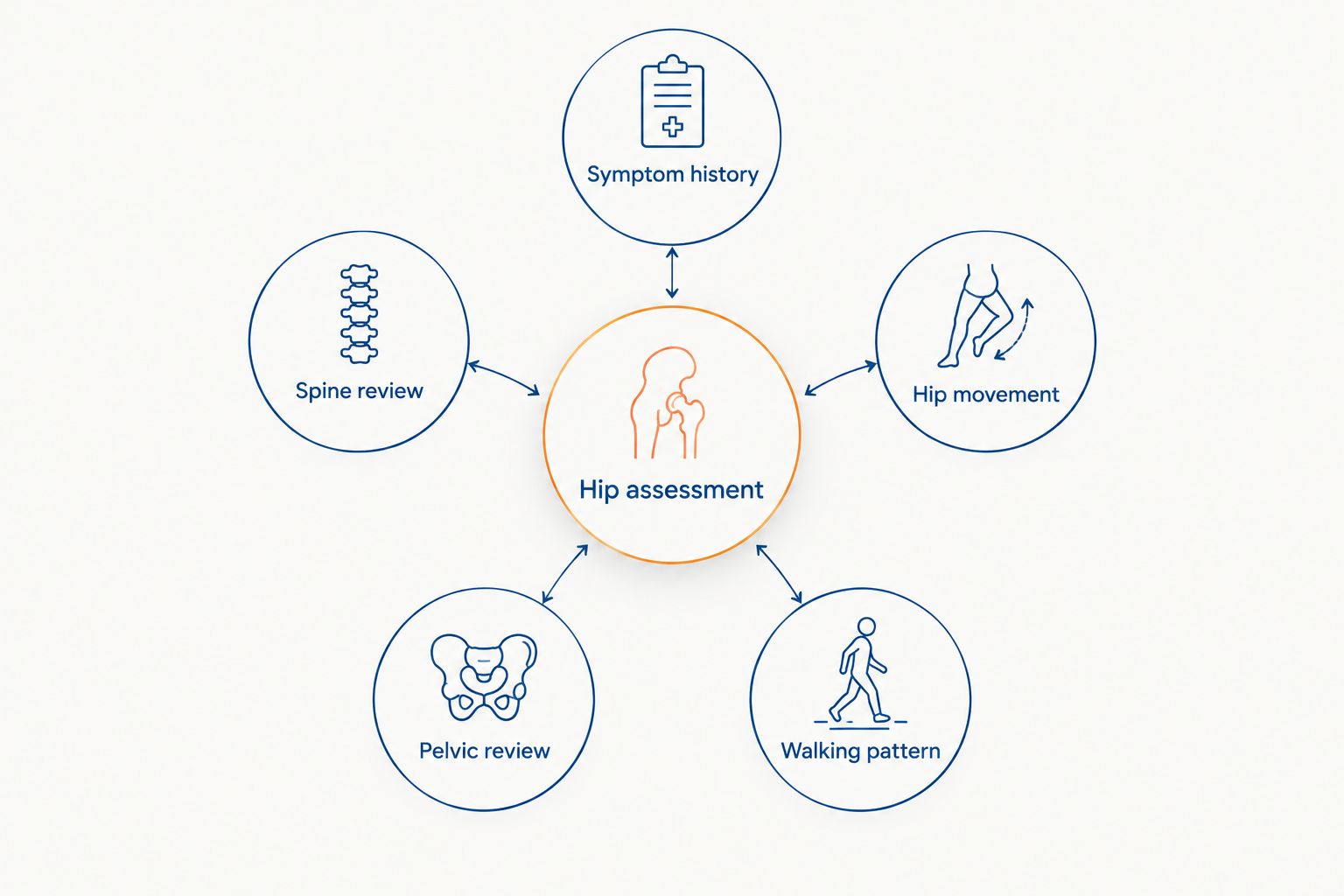
Assess the hip, spine and pelvis together
Once urgent concerns and diagnostic questions have been addressed, a broader musculoskeletal assessment may be appropriate. Reduced tolerance for hip movement can change how you sit, walk, climb stairs or load the opposite leg. An assessment can document these patterns without claiming that posture caused the tear.
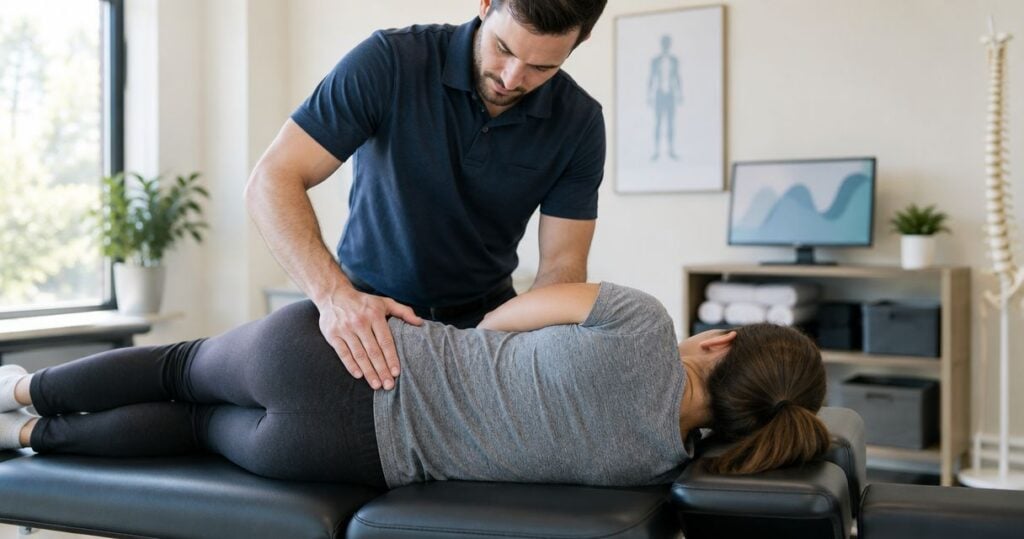
A MyChiro chiropractic assessment can include discussion of symptoms and examination of relevant musculoskeletal areas. Whether chiropractic adjustments, mobilisation or exercise advice are appropriate depends on the individual assessment, diagnosis and other care already underway. Consent should cover the proposed approach, alternatives, expected review point and material risks.
- Bring imaging reports and current clinical advice
- Explain which movements have already been restricted
- Ask what each examination finding means for the plan
- Confirm that the assessment will not replace medical diagnosis
- Decline any technique you do not understand or consent to
Define each clinician's role
Care becomes confusing when several practitioners use different explanations or duplicate the same work. Write down who is responsible for diagnosis, exercise progression, medication advice, hands-on care and decisions about specialist referral. In 2026, every part of the plan should have a purpose that can be explained in plain language.
MyChiro chiropractic care should sit within those defined boundaries. A chiropractor can communicate relevant musculoskeletal findings to another practitioner with your consent, while medication, imaging and surgery questions stay with appropriately qualified medical professionals. No provider should promise a particular result or imply that one technique repairs the labrum.
- Nominate one practitioner to coordinate the overall plan
- Share reports rather than repeating the full work-up
- Ask who will progress or reduce your exercise load
- Confirm who should be contacted if symptoms worsen
- Set a date for the team to review the plan
Use graded activity instead of aggressive stretching
Exercise selection needs to reflect the diagnosis, current irritability and advice from the practitioner managing rehabilitation. A generic hip routine can miss important differences between a confirmed labral tear, tendinopathy, osteoarthritis and pain referred from the spine. Deep flexion, forceful rotation or loaded stretching should not be added simply because the hip feels tight.
Start with daily activities that remain tolerable and use your diary to record the response. A physiotherapist or other qualified exercise professional can prescribe and progress exercises after assessment. The aim is a controlled program with clear stop rules, not repeated testing of the most painful movement.
- Follow the exercise dosage supplied by your treating practitioner
- Keep movements within the agreed range
- Stop and report locking, giving way or a marked symptom increase
- Avoid adding internet exercises without checking compatibility
- Review sitting, walking and training loads together
- Change one variable at a time so the response remains clear
Review progress and escalate when required
A care plan without a review date can continue despite no meaningful change. Agree in advance which measures matter: walking tolerance, sitting tolerance, sleep disruption, ability to work or return to a chosen activity. Use the same measures at each 2026 review so the comparison is useful.
Persistent or worsening symptoms need reconsideration of the diagnosis and plan. New locking, loss of weight-bearing ability or symptoms after another injury should be reported promptly. A GP or orthopaedic specialist decides whether further imaging, an injection discussion or surgical consultation belongs in the next stage.
- Compare the same functional measures at every review
- Record adverse responses after appointments or exercises
- Ask whether the working diagnosis still fits the presentation
- Stop care that lacks a defined purpose or review point
- Return to a medical practitioner when symptoms change materially
Compare care options for a hip labral tear
No single option covers diagnosis, rehabilitation and every possible escalation. The suitable combination depends on the confirmed diagnosis, red flags, daily demands and response to the existing plan.
| Option | Suitable for | What it contributes | Key limitation |
|---|---|---|---|
| GP or sports physician | Initial assessment and care coordination | Differential diagnosis, imaging decisions and referrals | Does not provide the full rehabilitation program in every setting |
| Physiotherapy | Individual exercise and activity progression | Movement assessment, graded loading and functional review | Exercises need regular completion and adjustment |
| MyChiro chiropractic care | Discussing surrounding spinal and pelvic mechanics after medical triage | Musculoskeletal assessment and care when clinically appropriate | Does not repair the labrum or replace medical diagnosis |
| Orthopaedic consultation | Persistent symptoms or structural questions requiring specialist review | Surgical opinion and discussion of relevant alternatives | Consultation does not mean surgery is automatically required |
| Self-management | Recording symptoms and following an approved plan between reviews | Supports consistent activity modification and monitoring | Self-management cannot confirm the diagnosis |
The practical verdict for 2026 is simple: medical assessment establishes the diagnosis, rehabilitation manages activity and function, and chiropractic care has a limited supportive role when the individual assessment indicates it may be appropriate.
Common mistakes people make with hip labral tears
Assuming every hip click means torn cartilage
A click alone does not establish a labral tear. Report the sound, its location and any associated pain or locking, then let a qualified practitioner assess the complete pattern.
Treating imaging as the whole clinical picture
A scan result needs to be interpreted alongside symptoms, examination findings and function. Do not assume every finding on a report explains every symptom or requires the same intervention.
Stretching harder when the joint feels blocked
Forceful stretching is not a diagnostic test. If deep flexion or rotation produces sharp pain, catching or instability, stop and discuss it with the practitioner directing rehabilitation.
Letting several providers run separate plans
Conflicting restrictions and duplicated exercises make progress difficult to evaluate. Use one written plan, define each clinician's role and share relevant reports with consent.
Continuing without measurable review criteria
Attendance is not a functional outcome. Track activities that matter to you and reconsider the approach when the agreed measures are unchanged or worsening.
Discuss a chiropractic assessment
Ask whether a musculoskeletal assessment may fit your existing care plan.
FAQ
Can chiropractic care repair a hip labral tear?
No, chiropractic care does not repair torn hip cartilage. After medical assessment, a chiropractor may discuss surrounding musculoskeletal factors and whether supportive care is appropriate within the broader plan.
Should I see a doctor before a chiropractor for suspected hip labral damage?
Yes, start with prompt medical assessment when a labral tear is suspected, particularly after trauma or when the hip locks, gives way or cannot bear weight. A doctor can consider other causes and decide whether imaging or specialist referral is appropriate.
What can a chiropractor assess when I have a confirmed labral tear?
A chiropractor can assess relevant musculoskeletal movement in the hip, pelvis and spine after reviewing the diagnosis and current advice. Any proposed care needs informed consent, a defined purpose and a review point.
Is clicking in the hip always a labral tear?
No, clicking does not confirm a hip labral tear. Pain, locking, injury history, examination findings and medical imaging decisions all contribute to the diagnostic process.
Can I exercise with a hip labral tear?
Exercise may form part of an individual plan, but selection and progression depend on assessment, symptoms and medical advice. Stop and seek review if exercise causes locking, giving way or a marked deterioration.
When does hip pain need urgent medical assessment?
Seek prompt medical assessment for sudden severe pain, inability to bear weight, visible deformity, a hot swollen joint with fever, new neurological symptoms or pain after significant trauma. Call Triple Zero on 000 for an emergency.
How do I compare physiotherapy and chiropractic care for a labral tear?
Physiotherapy commonly centres on individual exercise and activity progression, while chiropractic care may assess surrounding spinal and pelvic mechanics. Neither should replace medical diagnosis, and neither practitioner should claim to repair the labrum through manual care.
What should I bring to a chiropractic appointment in 2026?
Bring imaging reports, referral letters, your medication list and a short symptom diary. Also explain current restrictions, other practitioners involved and the activities you want the plan to address.
One last thing
A hip sound and a hip diagnosis are not the same thing. Clicking can occur for different reasons, while an imaging finding may not explain the full symptom pattern. The useful question in 2026 is not whether the hip makes noise; it is whether pain, locking, instability or reduced function has been properly assessed and matched to a coordinated plan.
Related guides
- Chiropractic care for dancers with hip and back strain
- Chiropractic care for sacroiliac joint pain
- Stretches for tight hip flexors