
Menopausal joint pain shows up as new stiffness, aching or swelling in the hands, knees, hips or shoulders as oestrogen levels shift, and finding a chiropractor for menopause joint pain means finding a practitioner who assesses movement and alignment as one part of a broader plan, not a stand-alone answer.
- A chiropractor for menopause joint pain in 2026 assesses posture, alignment and movement before any care plan is discussed.
- Joint aching during perimenopause and menopause is commonly reported and often improves with a combined approach.
- MyChiro’s Bondi Junction clinic reviews joint symptoms alongside your GP care rather than replacing it.
- Swelling, redness or symmetrical joint pain needs medical review first, not chiropractic care.
- Strength training, anti-inflammatory nutrition and sleep all play a role alongside professional assessment.
Why this matters
Joint symptoms during perimenopause and menopause are common enough that most women typing "chiropractor for menopause joint pain" into Google in 2026 are looking for a starting point, not a single fix. Hormonal shifts change how connective tissue, cartilage and the muscles supporting your joints respond to daily load, which is part of why stiffness that never showed up before can appear through your 40s and 50s.
None of this means every new ache is menopause-related. Joint pain that's symmetrical, comes with swelling or warmth, or sits alongside fatigue and low-grade fever needs a GP review before anything else, since inflammatory arthritis and other conditions can present with overlapping symptoms around the same age. MyChiro works from that starting point: assessment first, plan second.
Why chiropractic assessment fits into a menopause joint pain plan
Women managing menopause-related joint pain are usually juggling work, sleep disruption and other perimenopause symptoms at the same time, so the approach needs to fit around a life that's already stretched thin. That's different from managing a single acute injury, where the goal is narrower.
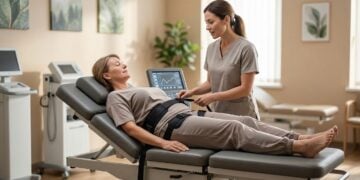
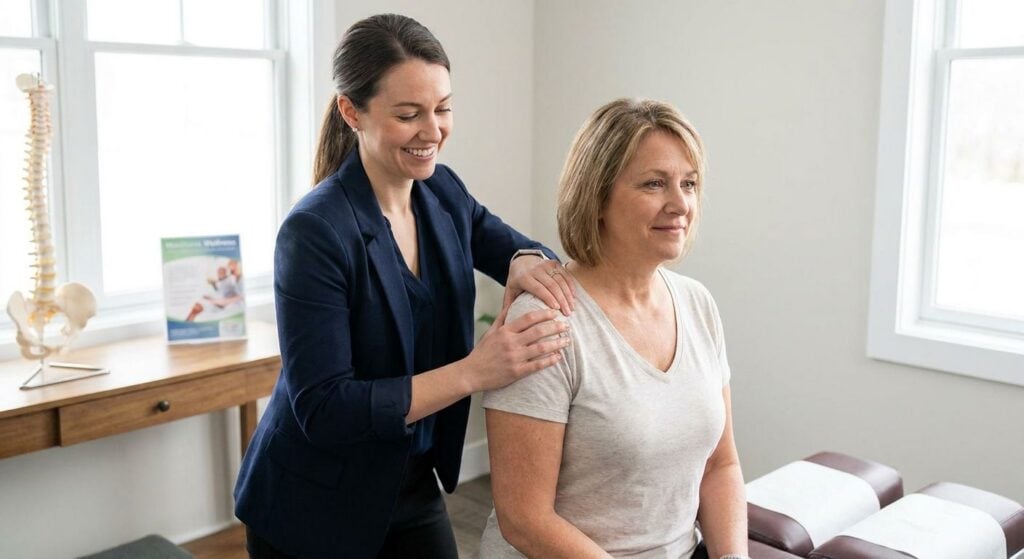
A chiropractor for menopause joint pain typically looks at spinal and joint alignment, posture and movement patterns rather than hormone levels themselves, and can discuss whether manual therapy or a mobility programme may be appropriate following assessment. Where joint symptoms overlap with degenerative changes, chiropractic care for arthritis in the spine and joints covers how that overlap is usually assessed. Chiropractic care sits alongside your GP and any hormone therapy discussion, not instead of it.
Get a proper assessment before you start anything
Before changing your routine or trying a new therapy, get a clear picture of what you're actually dealing with.
- Book a GP review if joint pain is new, worsening or symmetrical
- Ask your GP whether blood tests to rule out inflammatory arthritis are worthwhile
- Note your menopause stage (perimenopause, menopause, post-menopause) as context
- Mention any current medications, since some affect joint and muscle comfort
- Ask whether hormone therapy is worth discussing given your symptoms
Track your joint pain patterns for two to three weeks
A simple log makes the next conversation with a health professional far more useful than trying to describe symptoms from memory.
- Note which joints are affected and whether it changes day to day
- Record time of day symptoms are worst
- Log any correlation with sleep, stress or activity levels
- Rate stiffness on waking versus stiffness later in the day
- Bring the log to any GP or chiropractic assessment
Adjust your daily movement routine
Movement is usually one of the more accessible levers for joint comfort, and it costs nothing to start.
- Walk most days, even in short 10 to 15 minute blocks
- Add gentle mobility drills for hips, knees and hands each morning
- Swap high-impact cardio for low-impact options like swimming or cycling during flares
- Stretch major muscle groups after activity, not before
- Avoid staying in one position for long stretches at a desk or in the car
Review your nutrition for joint support
What you eat won't reverse hormonal change, but it can support the tissue around your joints.
- Include omega-3 sources such as oily fish two to three times a week
- Prioritise calcium and vitamin D for bone and joint tissue
- Limit highly processed and high-sugar foods where possible
- Keep protein intake consistent across meals to support muscle around joints
- Stay hydrated, since joint tissue relies on adequate fluid intake
Discuss chiropractic care as one part of your plan
Once you've got an assessment and a movement baseline in place, a chiropractor for menopause joint pain can be one option worth discussing, particularly if posture or spinal alignment seem to be part of the picture.
- Ask what a chiropractic assessment at MyChiro actually involves before booking
- Discuss whether adjustments or mobility work may be appropriate for your specific joints
- Ask how chiropractic care would fit alongside your GP's involvement
- Request a plan that's reviewed and adjusted over multiple visits, not a single session
- Confirm any red-flag symptoms are ruled out with your GP first
Discuss your joint symptoms with MyChiro
Book an assessment to review posture, alignment and movement patterns.
Manage sleep and stress load
Disrupted sleep is common during menopause and tends to make joint discomfort feel more pronounced the next day.
- Keep a consistent sleep and wake time where possible
- Reduce caffeine intake in the second half of the day
- Build a short wind-down routine before bed
- Address hot flushes or night sweats with your GP if they're breaking sleep
- Use stress-reduction habits like breathing exercises or short walks
Build strength through resistance training
Muscle and bone tissue respond to load, and strength work is one of the more evidence-supported daily habits during menopause.
- Aim for two to three resistance sessions a week
- Focus on major muscle groups: legs, back, shoulders, core
- Start with bodyweight or light resistance if you're new to training
- Progress gradually rather than jumping straight into heavy loads
- Work with a physiotherapist or trainer if you're unsure where to start
Know when to escalate to your GP
Some symptoms need medical review rather than a self-managed approach, regardless of how much sense a menopause explanation makes.
- Sudden swelling, redness or warmth around a joint
- Fever alongside joint pain
- Symmetrical pain affecting both sides of the body
- Joint pain that worsens despite consistent movement and nutrition changes
- New numbness, tingling or weakness in a limb
Options for managing menopause-related joint pain
| Option | Best for | Key limitation |
|---|---|---|
| Chiropractic assessment and care | Women wanting a joint and posture-focused approach alongside movement guidance | Doesn't address hormonal drivers directly |
| GP review and hormone therapy discussion | Women wanting to address hormonal change directly | Requires ongoing medical monitoring |
| Physiotherapy | Women needing structured rehab for one specific joint | Access and wait times vary by location |
| Nutrition and exercise self-management | Women wanting a daily, self-directed approach | Slower to show change and needs consistency |
Common mistakes with menopause-related joint pain
- Assuming every new ache is menopause and skipping a GP review — this can delay diagnosis of inflammatory arthritis or another condition with overlapping symptoms.
- Stopping exercise entirely during a flare — reduced movement often increases stiffness rather than resolving it.
- Ignoring sleep and stress as pain amplifiers — both commonly make joint discomfort feel more intense the next day.
- Trying multiple new therapies at once — this makes it hard to know what's actually helping.
- Waiting months before getting an assessment — an earlier baseline makes tracking change over 2026 far easier.
“Joint pain that’s symmetrical or comes with swelling needs a GP review before it needs a chiropractor.”
FAQ
Is joint pain a normal part of menopause?
Joint aching and stiffness are commonly reported by women during perimenopause and menopause as oestrogen levels decline, though the same symptoms can come from other conditions too. A GP or chiropractor can help work out what’s contributing to your specific symptoms following an assessment.
Can a chiropractor help with menopause joint pain?
A chiropractor can assess joint and spinal alignment, movement patterns and posture, and discuss whether care such as adjustments or mobility work may be appropriate following assessment. Chiropractic care sits alongside, not instead of, medical management of menopause.
How is menopause joint pain different from arthritis?
Menopause-related joint aching tends to move between joints and fluctuate with hormonal changes, while inflammatory arthritis often causes persistent swelling, redness or symmetrical joint involvement. Any new swelling or symmetrical pain should be reviewed by a GP.
Does exercise make menopause joint pain worse?
Appropriate movement generally supports joint comfort rather than worsening it, though high-impact activity during a flare can increase discomfort for some women. Low-impact options like walking, swimming or resistance training two to three times a week are commonly recommended.
How long does menopause-related joint pain last?
Duration varies between individuals since it’s tied to hormonal fluctuation across the perimenopause transition rather than a single event. Ongoing symptoms are worth discussing with a GP to review options, including whether hormone therapy is appropriate.
Does hormone therapy help with joint pain during menopause?
Hormone therapy is a medical decision that can be discussed with your GP, who can weigh it against your health history and current symptoms. It sits outside the scope of chiropractic care, which focuses on joint and spinal movement rather than hormonal management.
When should menopause joint pain be checked by a GP?
New swelling, redness, warmth around a joint, fever, or pain that’s symmetrical across both sides of the body warrants a GP review rather than self-management. These patterns can indicate inflammatory arthritis or another condition needing separate assessment.
What happens during a chiropractic assessment for menopause joint pain in 2026?
A chiropractic assessment in 2026 typically covers your health history, current joint symptoms, posture and movement, before any care plan is discussed. It’s a starting point for understanding what’s contributing to your joint pain, not a diagnosis of menopause itself.
One last thing
If you only make one change this month, add two short resistance sessions a week. Muscle and joint tissue respond to consistent load, and through the colder months of 2026 that habit tends to matter more for joint comfort than any single therapy on its own. Bring your symptom log to whoever you see first, whether that's your GP or a chiropractor, so the assessment starts from real data instead of guesswork.
Related guides
- Chiropractic care for seniors with joint stiffness
- How to manage joint stiffness as you age
- Chiropractic care for osteoporosis patients