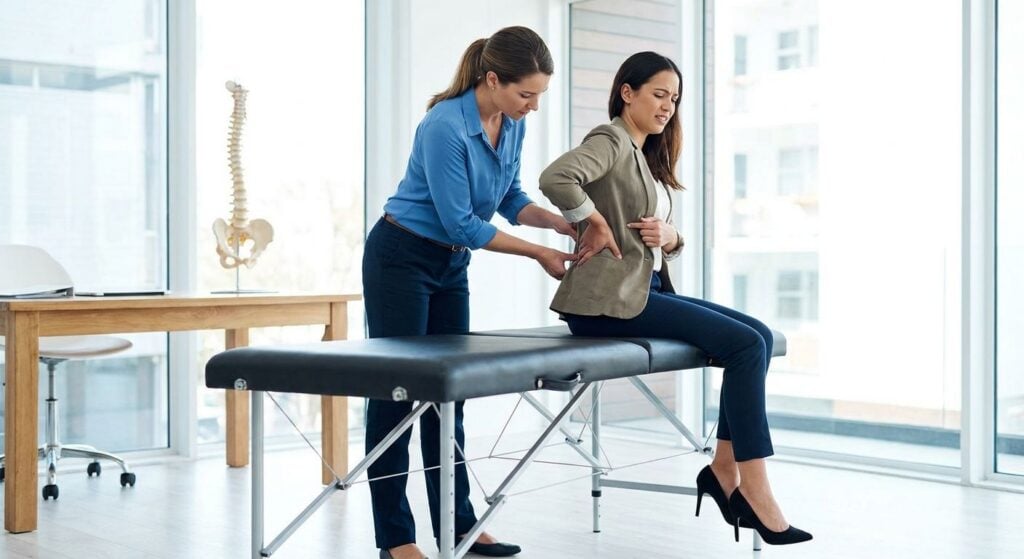
High heel wearers with back pain deal with a footwear-driven postural pattern, not just a vague ache. Heel height changes how load travels through the ankles, hips and lower back, and a chiropractic assessment is one way to review what may be contributing to ongoing symptoms.
- Heels above roughly 5cm shift your centre of gravity forward and increase lumbar curve, a pattern a chiropractor for high heels back pain will check during assessment.
- Rotating footwear and stretching calf and hip flexor muscles are practical first steps before considering ongoing chiropractic care.
- A chiropractic assessment at MyChiro in Bondi Junction reviews pelvic tilt, spinal alignment and muscle tension linked to prolonged heel wear.
- Core and glute strengthening supports the lower back in 2026 regardless of what shoes sit in your closet.
Why this matters
Heel height above about 5cm changes the angle of the ankle and shifts more weight onto the ball of the foot. That shift pulls the pelvis forward, which can increase the curve in the lower back and shorten the calf muscles over time.
For someone wearing heels five days a week in an office, retail or hospitality role, this is not a one-off strain. It is a repeated pattern that builds through 2026 the same way it did in prior years. High heel wearers with back pain tend to report stiffness at the end of the day rather than a single injury moment, which is why a generic checklist often falls short without a look at pelvic position and muscle balance.
MyChiro sees this pattern regularly in patients working in Bondi Junction and the wider Sydney area, where retail, hospitality and office roles still commonly involve heeled footwear for full shifts.
Why chiropractic care matters for this group specifically
The mechanics differ from a desk worker's back pain or a tradie's lifting strain. Heel wearers deal with a forward-shifted centre of gravity, tighter calves and hip flexors, and often a compensatory arch in the lower back that builds gradually rather than appearing after one bad day. An assessment that looks at pelvic tilt and lumbar curve specifically, rather than treating the pain as generic lower back strain, can be a useful starting point for understanding what is driving symptoms.
Steps to manage back pain linked to high heel wear
Reduce heel height gradually, not all at once
Dropping from a 9cm heel to flats overnight can strain the Achilles tendon and calf muscles that have adapted to the higher position over months or years.
- Step down in 1-2cm increments over several weeks
- Alternate heel heights across the week instead of wearing the same pair daily
- Keep a lower pair on hand for commuting, switching at the desk
- Track which heel height correlates with worse end-of-day stiffness
Stretch calf muscles and hip flexors daily
Shortened calves and tight hip flexors are two of the most consistent findings in people who wear heels regularly.
- Wall calf stretches held for 30 seconds per side, twice daily
- Kneeling hip flexor stretches after long shifts
- Foam rolling the calves and outer hips before bed
- Ankle circles and dorsiflexion work to restore range of motion
Review your standing and walking patterns at work
How you stand for eight hours matters as much as the shoes themselves.
- Shift weight between both feet rather than locking one hip
- Use anti-fatigue matting if you are on your feet at a register or counter
- Take short seated breaks every 60-90 minutes where the role allows
- Check whether uneven flooring or a sloped counter is making one side work harder
The pattern overlaps with what shows up in chiropractic care for hairdressers and beauty therapists, another group combining long standing hours with repetitive postural strain.
Strengthen your core and glutes
A stronger core and glute group can help support the pelvis against the forward tilt that heels encourage.
- Glute bridges, 3 sets of 10-12
- Dead bug exercises for deep core control
- Side plank holds, building from 15 seconds
- Bird dogs for spinal stability
Have your posture and spine reviewed by a chiropractor
Once footwear rotation, stretching and standing habits are in place and symptoms persist, a chiropractic assessment can look at pelvic tilt, spinal alignment and muscle tension in more detail. At MyChiro in Bondi Junction, this involves a review of posture, movement and areas of restriction before discussing options that may be appropriate following assessment.
This is a step to add to the habits above, not a replacement for them. Footwear choices and daily movement still do most of the work between visits.
Rotate footwear across the week
Wearing the same heel height every day means the same muscles and joints absorb the same load repeatedly.
- Alternate between heels, flats and supportive trainers across a working week
- Choose a lower, wider heel for days with more walking
- Check that shoes have cushioning at the ball of the foot
- Replace worn-out soles that have lost shock absorption
For people managing foot-level symptoms alongside back pain, best shoes for plantar fasciitis relief covers footwear features worth checking regardless of heel preference.
Track flare-ups and known triggers
A simple log of which days, shoes and activities correlate with worse symptoms makes patterns easier to spot.
- Note heel height, hours worn and end-of-day pain level
- Record whether stretching or breaks were skipped
- Flag numbness, tingling or pain radiating down a leg for review by a qualified health professional
- Bring this log to any assessment for context
Comparison of options for high heel wearers with back pain
| Option | Best for | Key limitation |
|---|---|---|
| Footwear rotation | Mild, occasional stiffness | Does not address existing muscle tightness alone |
| Daily stretching routine | Building long-term flexibility | Requires consistency over weeks to notice change |
| Ergonomic changes at work | Standing or retail roles | Limited by workplace flooring and layout |
| Chiropractic assessment | Ongoing symptoms after the basics are in place | Requires an in-person review to identify contributing factors |
| Core and glute strengthening | Long-term pelvic support | Slower to show change than passive approaches |
Common mistakes high heel wearers make
- Switching to flats abruptly after years in heels, which can strain the Achilles tendon rather than settle back pain
- Skipping calf and hip flexor stretches on the assumption that the problem sits only in the lower back, not the legs
- Ignoring one-sided habits such as carrying a heavy bag on one shoulder while also wearing heels, doubling the load on one side
- Ignoring the pattern outside work hours, then wondering why weekend rest does not settle weekday stiffness
- Treating red-flag symptoms as normal, such as numbness or tingling down a leg, instead of raising them with a qualified health professional
Prepare for a posture assessment
What a first chiropractic appointment involves, step by step.
FAQ
Can high heels cause lower back pain?
Heel height above roughly 5cm shifts your centre of gravity forward and can increase the curve in your lower back, a commonly reported contributor to end-of-day stiffness in regular heel wearers. Whether it is the main driver of your specific pain is something a health professional can help assess.
How high do heels need to be to affect your back?
Heels above about 5cm are generally considered high enough to change gait and pelvic position. Lower heels and wedges still shift weight forward, just to a lesser degree.
Is a chiropractor for high heels back pain a good option?
A chiropractic assessment can review pelvic tilt, spinal alignment and muscle tension that heel wear may contribute to, with next steps depending on individual findings. It sits alongside footwear changes, stretching and strengthening rather than replacing them.
What stretches help with heel-related back pain?
Calf stretches, hip flexor stretches and ankle mobility work are the most commonly recommended for people transitioning between heel heights. Daily consistency matters more than stretch duration.
How long does it take to notice change from footwear adjustments?
Muscle length and habitual posture typically take several weeks of consistent change to shift noticeably. Tracking flare-ups against footwear choices over 2-4 weeks usually reveals a pattern.
Should I stop wearing heels completely?
That is a personal decision rather than a clinical requirement, and rotating heel heights is more realistic for most people than eliminating heels entirely. A qualified health professional can help weigh this against your specific symptoms.
Can chiropractic care help with posture from heels?
An assessment can identify posture-related patterns linked to heel wear, such as anterior pelvic tilt, and discuss options that may be appropriate following that review. Individual responses vary and outcomes are not guaranteed.
What is the difference between physiotherapy and chiropractic care here?
Both professions assess posture and movement patterns, with differences in typical technique emphasis and appointment structure. The choice often comes down to personal preference and what a qualified health professional recommends for your situation.
One last thing
The detail most heel wearers miss is that the load is not created by the heel itself. It is created by wearing the same heel height, on the same surface, for the same number of hours, day after day through 2026 without variation. Rotating between two or three heel heights across a working week does more for muscle balance than any single stretch routine, because it changes which muscles shorten and lengthen on any given day.
Related guides
- How to know when back pain needs a chiropractor vs a doctor
- Chiropractic care for retail workers on their feet all day
- Best stretches for tight hip flexors