


A chiropractic adjustment has no single standard duration; confirm the time allocated to your particular appointment with the clinic. The adjustment itself is only part of the visit, which also needs room for assessment, discussion and consent. For a booking in 2026, ask for the full appointment length rather than relying on an estimate for the hands-on procedure alone.
- How long does a chiropractic adjustment take? Confirm the full appointment length, not just the hands-on time.
- MyChiro is a chiropractic clinic in Bondi Junction, Sydney; ask directly about appointment timing.
- A first appointment and a follow-up have different purposes; confirm which appointment type you need.
- An appointment does not commit you to an adjustment; assessment and informed consent come first.
Why this matters
Book around the whole appointment, not just the adjustment. If you are fitting a visit between work, travel or caring responsibilities, the relevant information is when you need to arrive and when the appointment is expected to finish.
MyChiro provides chiropractic care in Bondi Junction, Sydney. For local appointment enquiries, use MyChiro to find the clinic’s published information, then confirm the appointment type and allocated time directly.
An estimate is useful for organising your day. It is not a promise that every discussion, examination or decision will fit an identical schedule, and it does not indicate whether an adjustment is appropriate for you.
How long does a chiropractic adjustment take?
There is no universal appointment length that answers this question for every patient and clinic. Separate the time spent on an adjustment from the time reserved for the consultation as a whole.
Use these steps to get a useful answer before booking:
- Name the appointment type. Explain whether you are a new patient, returning for a planned review or asking about a new concern.
- Ask for the full slot. Confirm whether the quoted duration includes assessment, discussion, any proposed procedure and questions.
- Check arrival requirements. Ask whether paperwork needs to be completed beforehand or at the clinic.
- Explain your deadline. If you must leave at a particular time, say so before choosing the appointment.
A clear booking question is: Does the allocated time cover the whole consultation, and is there anything I need to complete before arriving? This is more useful than asking how quickly an adjustment can be performed.
Appointment types at a glance
The table below compares the purpose of different visits, not their clinical suitability. The clinic should confirm which booking category applies to your circumstances.
| Visit type | Main purpose | Scheduling advantage | Limitation to clarify |
|---|---|---|---|
| First appointment | Discuss your history, assess your concern and consider options | Creates space to explain a new concern | An adjustment is not assured or required |
| Planned follow-up | Review changes and discuss the agreed next step | The practitioner already has an existing history to review | New information can change the appointment’s scope |
| Reassessment or new concern | Reconsider the situation when circumstances have changed | Allows the booking to reflect the current concern | A routine follow-up slot might not match what is needed |
Appointment duration is a scheduling detail, not evidence of clinical quality or a particular outcome. Neither a shorter nor a longer booking establishes what care you need.
First appointment: confirm the assessment time
For a first chiropractic appointment in 2026, ask how the clinic separates assessment from any proposed procedure. Do not assume that booking an appointment means an adjustment will happen during that visit.
Prepare a clear account of your reason for attending. Include when the concern began, what you have noticed, relevant previous care and the questions you want answered. Share your medication list and relevant health information rather than deciding yourself which details matter.
Ask whether existing reports or correspondence would be useful to bring. There is no need to arrange new tests simply to make the appointment feel complete; decisions about investigations belong in a discussion with an appropriately qualified health professional.
The practical benefit of preparing is that your information is ready to discuss. The limitation is equally important: preparation cannot replace assessment or establish whether an adjustment may be appropriate.
Before leaving, check that you understand what was discussed and whether any next step has actually been agreed. You can ask for clarification without committing to a procedure or further appointments.
Follow-up appointment: confirm what the booking covers
A follow-up has a different starting point from a first visit because there is an existing history to review. That does not establish a fixed duration or remove the need to discuss changes and consent.
When arranging a follow-up in 2026, explain whether you are returning about the same concern. Tell the clinic if your circumstances have changed rather than assuming the existing booking description still fits.
Questions worth asking include:
- Is this appointment intended as a review, a discussion of options or a proposed procedure?
- Does the allocated time include questions about the previous appointment?
- Should I tell the clinic about a new concern before arriving?
- What happens if assessment suggests a different next step?
A follow-up booking is not an automatic requirement for another adjustment. Any proposed procedure should be discussed in the context of your current circumstances, with an opportunity to ask questions and decide whether to proceed.
If you want background on the terminology before that conversation, read what to expect from spinal manipulation. General reading is preparation for a discussion, not a personal recommendation.
Reassessment: explain what has changed
If you are returning after a gap or bringing a different concern, describe that when you contact the clinic. Ask whether you need a reassessment rather than selecting a familiar appointment category without checking.
Useful information includes changes in your health, medication, previous care or reason for attending. You do not need to identify the cause yourself. Your task is to communicate what is different so the clinic can advise on the booking and any appropriate next step.
A reassessment provides an opportunity to reconsider the situation. Its limitation is that an appointment cannot promise a particular procedure, diagnosis or outcome before the relevant information has been considered.
If you are unsure whether a chiropractic appointment is the right starting point, discuss that uncertainty with your GP or another qualified health professional. Do not use the availability or length of a booking as the deciding factor.
Why chiropractic appointment length varies
The useful question is what the appointment needs to cover, not how many minutes every patient should receive. These are matters to clarify with the clinic rather than assumptions about a particular practitioner’s schedule:
- Appointment purpose: A first consultation, planned review and reassessment involve different conversations.
- Health history: Relevant information needs to be shared and considered before decisions are made.
- Changes since booking: A new concern or changed circumstances can alter what needs discussion.
- Consent questions: You need an opportunity to understand a proposed procedure, its risks and alternatives, and the option not to proceed.
- Agreed next steps: An appointment can involve discussion or referral rather than an adjustment.
- Administrative requirements: Forms and check-in arrangements affect how you plan your arrival, even when they sit outside the consultation.
None of these factors provides a reliable minute estimate on its own. Ask how they apply to your booking instead of adding together assumed durations from different websites.
How can I plan an appointment around work?
For a 2026 booking, establish your arrival requirements and expected finish time before arranging the rest of your day. Keep travel, parking and other personal arrangements separate from the consultation duration quoted by the clinic.
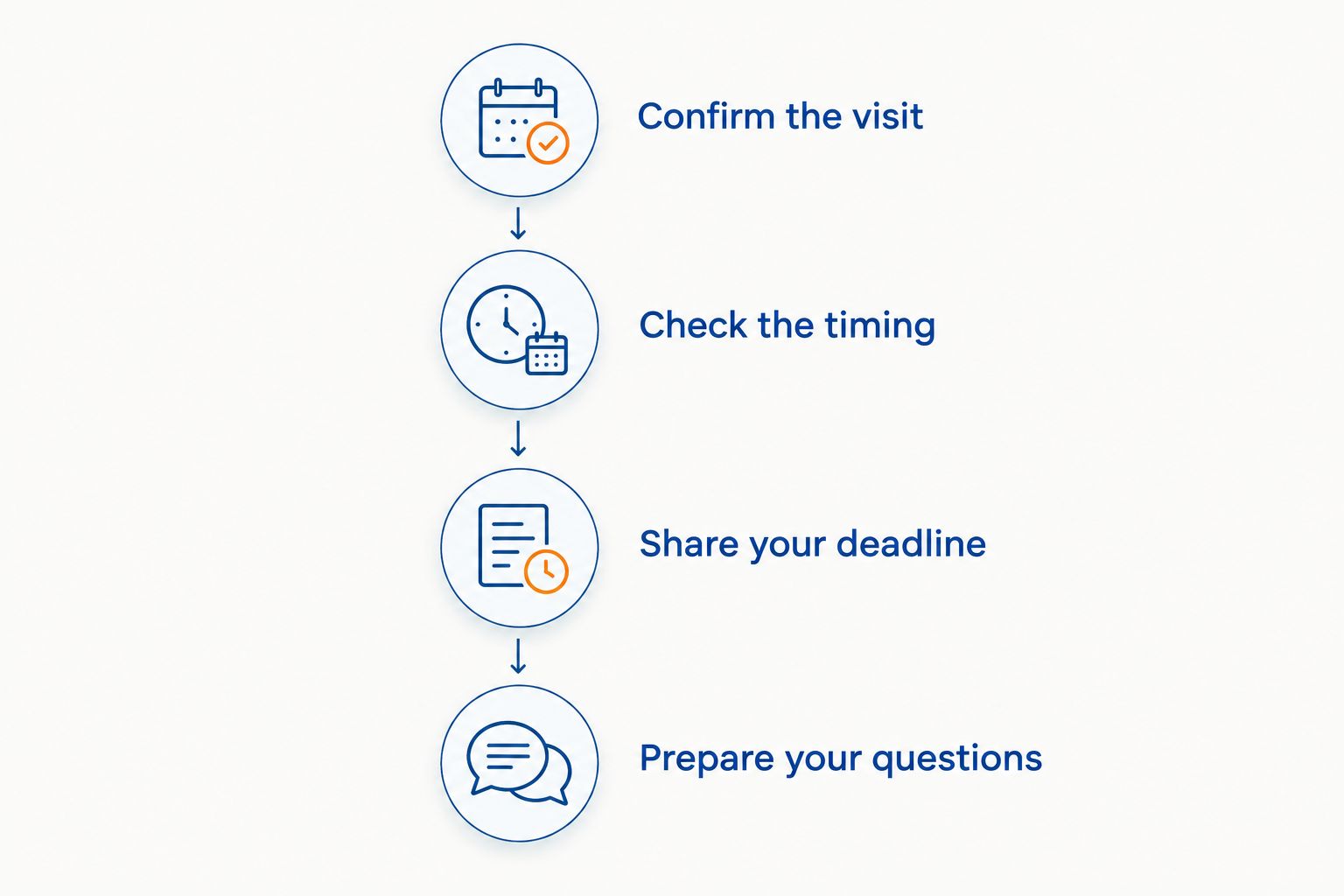
Use this sequence when contacting reception:
- Confirm the visit: Explain whether you are new, returning or discussing a changed concern.
- Check the timing: Ask for the allocated consultation length and whether early arrival is requested.
- Share your deadline: State any firm departure time before accepting the booking.
- Prepare your questions: Write down what you need to understand so it is ready to discuss.
If your schedule leaves no room for uncertainty, ask whether another appointment time would be more practical. A tight diary should not pressure you into skipping questions or agreeing to something you do not understand.
For MyChiro appointment enquiries, describe both your reason for attending and your scheduling constraints. This keeps the conversation focused on the booking you need without assuming a particular duration or procedure.
Does a longer chiropractic appointment mean more benefit?
A longer appointment does not establish greater benefit, and a shorter appointment does not establish poorer care. Time alone cannot tell you whether a procedure is appropriate or whether an agreed plan should continue.
Instead, consider whether you understand the assessment, the proposed options, the relevant risks and the reason for any suggested next step. Ask how decisions will be reviewed rather than judging the appointment by its length.
The same distinction applies when comparing clinics in 2026. Published appointment times are useful for scheduling, but they are not a substitute for checking practitioner registration, asking questions and making an informed choice.
Will I have an adjustment at my first appointment?
An adjustment is not assured at a first appointment. It may be appropriate following assessment, but the visit can also involve discussion, a decision not to proceed or advice to seek another form of assessment.
You can ask what a proposed adjustment involves before deciding. Ask about material risks, alternatives and what happens if you choose not to have it. You can decline or withdraw consent.
Do not interpret an appointment without an adjustment as an incomplete visit. The decision about whether to proceed matters more than filling a booking with a procedure.
What should I ask before agreeing to further appointments?
Ask why further appointments are being proposed, what each is intended to cover and how the plan will be reconsidered. The length of an individual appointment does not answer how many appointments, if any, are appropriate.
Keep the discussion specific to your circumstances. You should understand the proposed approach and have room to consider alternatives, including not proceeding.
A useful closing question is: What information would change the next step? This invites an explanation of the decision rather than an automatic commitment to a schedule.
FAQ
How long does a chiropractic adjustment take compared with the whole appointment?
The adjustment is only part of the appointment; confirm the full allocated consultation time with the clinic. Assessment, discussion, consent and questions need to be considered separately from hands-on time.
How long should I allow for my first chiropractic appointment?
Allow the time confirmed by the clinic for a first appointment, including any requested early arrival. Ask whether forms should be completed beforehand and whether the quoted duration covers the whole consultation.
Are follow-up chiropractic appointments always shorter?
Do not assume a follow-up appointment is shorter; confirm the allocated time when booking. Tell the clinic about any new concern or changed circumstances before arriving.
Can I have an assessment without agreeing to an adjustment?
You can discuss assessment and options without agreeing to an adjustment. Ask what the appointment covers, and remember that you can decline a proposed procedure or withdraw consent.
Does a quick adjustment mean I need more appointments?
The duration of an adjustment does not establish a need for further appointments. Ask for the reasoning behind any proposed follow-up and how that decision will be reviewed.
Can I fit a chiropractic appointment into my lunch break?
Confirm the full appointment time and arrival requirements before deciding whether a lunch break is sufficient. Tell the clinic about your departure deadline and account separately for travel.
How do I confirm appointment timing at MyChiro?
Ask MyChiro which appointment type applies and how much time is allocated to the full consultation. Explain whether you are a new patient, returning about an existing concern or asking about something different.
One last thing
The most useful timing question is not how quickly an adjustment happens, but what your booked appointment includes. Write that question beside your calendar entry for 2026, along with your arrival instructions and anything the clinic asks you to bring.
You can organise your day without deciding in advance that you need an adjustment. Keep the scheduling decision separate from the clinical decision.
Related guides
- How to prepare for your first chiropractor appointment
- What qualifications should a Sydney chiropractor have?
- How chiropractors coordinate with GPs on imaging referrals