


There is no fixed number of chiropractic sessions you need for back pain; an individual recommendation requires assessment, and chiropractic care is not appropriate for every presentation. Any proposed schedule should explain its purpose, when progress will be reviewed, and what would prompt a change or referral—not promise recovery after a set number of visits.
- How many chiropractic sessions for back pain depends on assessment, agreed goals and review—not a universal appointment schedule.
- Mychiro is a chiropractic clinic in Bondi Junction; its location does not establish whether chiropractic care suits your symptoms.
- Ask why each follow-up is proposed and what would prompt stopping, changing care or seeking another assessment.
- New bladder or bowel changes, saddle numbness or significant leg weakness require urgent medical assessment.
How many chiropractic sessions do you need for back pain?
A session count is a proposed plan, not a prediction of recovery. Before agreeing to appointments, ask the chiropractor to explain the assessment findings, available choices and reason for the proposed frequency. The recommendation should also acknowledge uncertainty.
For your first discussion in 2026, bring a symptom history, details of previous care and questions about your daily activities. This guide to preparing for your first chiropractor appointment provides a starting point for organising that conversation.
Use these steps to assess a proposed schedule:
- Clarify the assessment. Ask what the clinician thinks is contributing to your symptoms and what remains uncertain.
- Discuss the choices. Ask whether chiropractic care may be appropriate following assessment and what alternatives warrant consideration.
- Set a goal. Identify a daily activity you want to discuss, rather than agreeing only to an appointment count.
- Agree on review. Establish when the recommendation will be reconsidered and which observations will inform that decision.
- Define the next decision. Ask what would justify continuing, reducing, stopping or changing the plan.
These are discussion steps, not a prescribed course of care. An assessment does not oblige you to accept an adjustment or commit to follow-up appointments.
Why this matters
A fixed schedule can sound reassuring because it gives you a clear endpoint. But a booking calendar does not establish what is causing back pain, whether a particular intervention is appropriate, or how you will respond.
Separate those questions before committing. A useful explanation makes clear what is known, what is uncertain and which decisions depend on reassessment.
For a 2026 care discussion, ask for a plain-language explanation you can refer to later. You should be able to describe the purpose of the proposed appointments without relying on promises about alignment, prevention or future results.
What should happen before a session schedule is proposed?
Start with your history and an assessment relevant to your symptoms. Tell the clinician when the problem began, where you notice it, what has changed and which activities are difficult. Include relevant medical conditions, medicines and previous investigations.
Your questions matter too. Explain whether you are seeking information, an assessment, a second opinion or a discussion about a particular procedure; these are not interchangeable requests.
Before consenting to a procedure, ask about its proposed purpose, material risks, alternatives and the option not to proceed. Ask whether any findings warrant assessment by your GP or another health professional before a chiropractic procedure is considered.
The Australian Commission on Safety and Quality in Health Care’s Low Back Pain Clinical Care Standard is a national reference for discussions about assessment and care planning. It is not a personalised chiropractic appointment schedule.
An initial assessment should inform the next decision; it should not be presented as an automatic commitment to ongoing care.
Why a proposed session count varies
These factors belong in the conversation about a proposed schedule. None provides a reliable session total on its own.
- Assessment findings: Ask how the findings support the proposed approach and whether anything requires further medical assessment.
- Symptom history: Explain when symptoms began, previous episodes and any recent changes. Do not assume a longer history automatically requires more appointments.
- Daily activity goals: Identify the activities you want to discuss, such as dressing, working or walking. Ask how these goals will be reviewed.
- Relevant health circumstances: Share medical conditions, medicines, previous procedures and advice from other clinicians so the recommendation considers that information.
- Response and preferences: Report changes, unwanted effects and concerns. Your willingness to continue is part of the decision, not a detail to address after bookings are made.
Work patterns and caring responsibilities also affect what you can realistically attend. Discuss those constraints openly, but keep convenience separate from the clinical reason for recommending an appointment.
How should different appointment decisions be explained?
The following table compares decisions you might discuss—not competing promises about outcomes. It does not recommend an option for a particular diagnosis.
| Decision | Purpose to clarify | Practical advantage | Limitation to discuss |
|---|---|---|---|
| Initial assessment | Understand the presentation and discuss appropriate next steps | Gives you an opportunity to ask questions before deciding | Does not establish a guaranteed recovery timeline |
| Proposed follow-up | Address a stated purpose within an agreed plan | Creates a defined opportunity to reassess | Attendance alone does not demonstrate benefit |
| Reducing or stopping visits | Reconsider whether further appointments are warranted | Avoids treating the original schedule as permanent | Needs a clear discussion of what to do if circumstances change |
| Seeking another assessment | Clarify uncertainty or consider other care | Brings another clinical perspective to the decision | Requires sharing relevant history to avoid fragmented advice |
Ask which decision is being proposed and why. If the explanation is simply that everyone follows the same schedule, request the reasoning specific to your assessment.
What should you agree to measure at review?
Choose observations that relate to your own daily life. You might discuss whether getting dressed is less difficult, whether you are managing a work task differently, or whether sleep disruption has changed; these are examples of review topics, not promised outcomes.
A useful review separates what happened during an appointment from what happened afterwards. Describe both, including any unwanted effects, rather than reporting only your immediate impression.
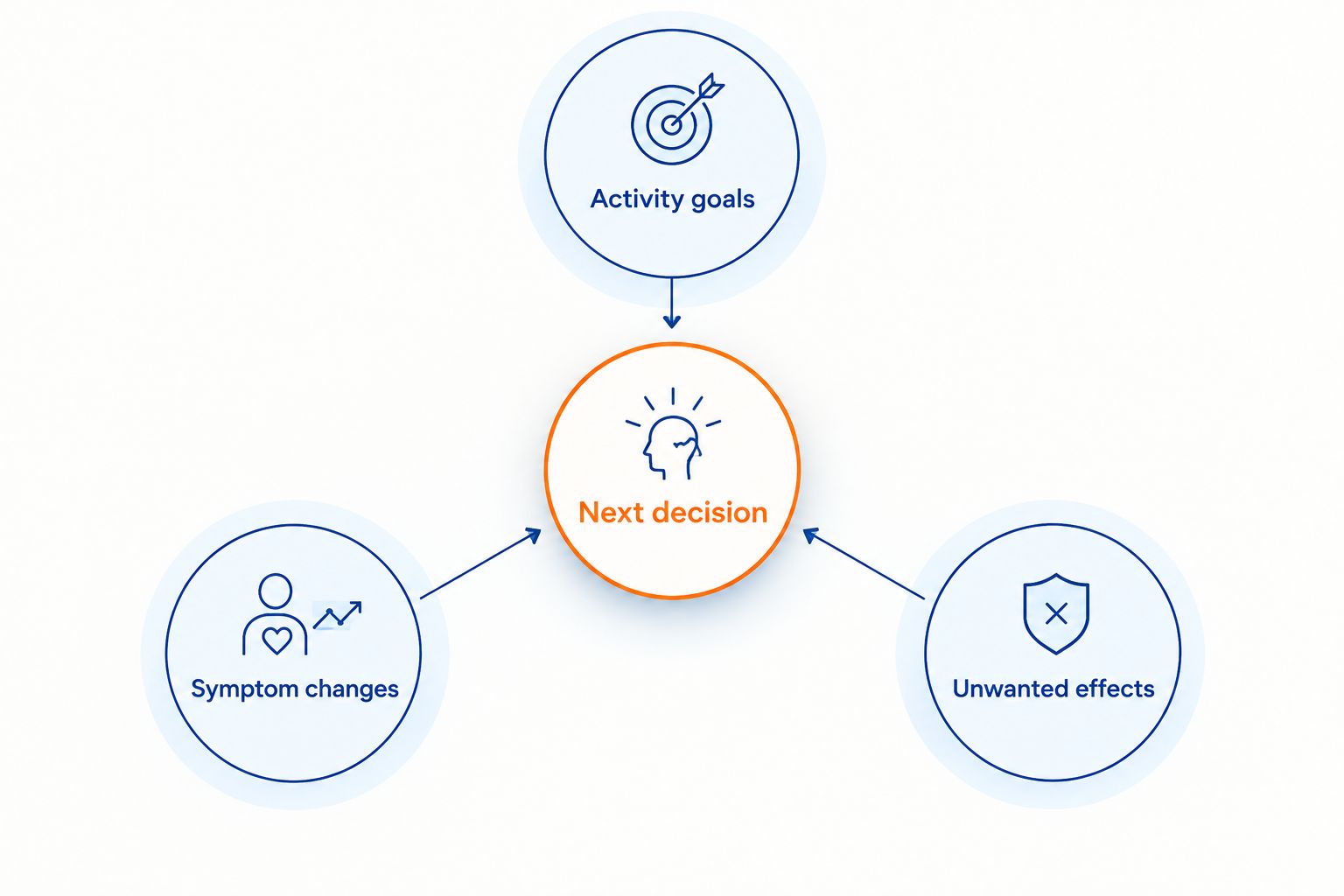
For your 2026 review conversation, organise your notes under these headings:
- Activity goals: Which everyday activities did you agree to discuss?
- Symptom changes: What changed, stayed the same or became more troublesome?
- Unwanted effects: What concerns arose during or after care?
- Next decision: What does the information mean for continuing, changing or stopping?
You do not need a complicated tracking system. A short note in your own words can keep the discussion focused, particularly when several clinicians are involved.
Do you need to keep attending if you feel better?
Feeling better is a reason to review the plan, not an automatic reason to keep attending. Discuss what has changed, whether the original goals remain relevant and whether another appointment has a clear purpose.
Ask the clinician to distinguish a recommendation based on your current assessment from an optional appointment you are considering for another reason. Neither a previous booking nor an unused appointment allocation establishes a clinical need.
Avoid treating ongoing attendance as proof that you are looking after your back. The relevant question is whether the proposed care is appropriate for your circumstances and informed preferences.
What if nothing changes after chiropractic appointments?
Unchanged symptoms warrant a review of the reasoning, not an automatic extension of the schedule. Describe what has happened and ask whether the original assessment, proposed approach or need for another clinical opinion should be reconsidered.
Ask these questions directly:
- What findings support continuing the current approach?
- What information would lead you to change the recommendation?
- Should I discuss this with my GP or another health professional?
- Is there a reason not to pause while I consider the options?
You can decline further procedures or seek another opinion. If symptoms worsen or new symptoms appear, seek clinical advice rather than waiting solely for the next routine appointment.
Does a long history of back pain mean more sessions?
A long history of back pain does not establish a chiropractic session count. It provides context for assessment, but it does not justify an indefinite schedule by itself.
Describe previous care, what you found acceptable, what concerned you and which activities remain difficult. If you have received different explanations from different clinicians, bring those explanations to the discussion rather than trying to resolve the disagreement yourself.
Ask how the proposed plan accounts for that history. Request a clear distinction between an assessment finding, a possible explanation and a prediction about future outcomes.
When should you seek medical assessment instead?
Some symptoms require medical assessment rather than a routine discussion about chiropractic frequency. Healthdirect Australia’s back-pain guidance identifies warning symptoms that warrant urgent attention.
Seek urgent medical assessment for new bladder or bowel control changes, numbness around the genitals or buttocks, or significant new leg weakness. Contact emergency services if you need emergency assistance.
Back pain following a significant injury, or accompanied by fever or feeling very unwell, also warrants prompt medical assessment. Tell a medical practitioner about unexplained weight loss, a cancer history or other concerning changes.
This is not an exhaustive checklist. Do not use the absence of these examples to diagnose yourself or assume that a chiropractic procedure is appropriate.
Discussing chiropractic care in Bondi Junction
Mychiro is a chiropractic clinic and wellness centre in Bondi Junction, Sydney, offering chiropractic care and spinal adjustments. That factual description does not establish whether an adjustment is appropriate for an individual presentation.
If you are considering Mychiro chiropractic care, use the same questions you would ask any provider: what is the proposed purpose, what are the risks and alternatives, and when will the recommendation be reviewed? Discuss suitability following assessment rather than selecting a session package from a general article.
A local clinic’s convenience can help with practical planning. Keep that consideration separate from the clinical decision about whether to proceed.
FAQ
How many chiropractic sessions for back pain should I book initially?
There is no fixed initial session count for back pain. Discuss assessment first, then ask for the reasoning, review point and alternatives before agreeing to follow-up appointments.
Can a chiropractor tell me exactly how many visits I will need?
A proposed visit count is not a guarantee of how your symptoms will change. Ask which findings support the estimate and what would lead the clinician to revise it.
Do I have to accept an adjustment at my first appointment?
You can decline a proposed adjustment. Ask about its purpose, material risks, alternatives and the option not to proceed before giving consent.
Should I keep going if my back pain has not changed?
Unchanged back pain calls for a review rather than an automatic extension of appointments. Discuss whether the assessment or approach needs reconsideration and whether another clinical opinion is appropriate.
Do I need regular adjustments after my back feels better?
Feeling better does not establish a need for ongoing adjustments. Review whether further appointments have a clear purpose in your current circumstances.
Does private health cover decide how many visits I need?
Private health cover does not establish clinical need. Check your policy separately and ask the clinician to explain any recommendation on assessment grounds, not unused benefits.
Can Mychiro tell me my session count before an assessment?
A personalised chiropractic session recommendation requires assessment; a general article cannot establish it. Discuss your history, goals and questions with Mychiro before deciding whether to proceed.
When should back pain be assessed urgently?
New bladder or bowel control changes, saddle-area numbness or significant new leg weakness require urgent medical assessment. Back pain after significant injury or with fever or feeling very unwell also warrants prompt medical attention.
One last thing
Before accepting a proposed schedule in 2026, ask: What would make you recommend fewer appointments—or no further appointments? The answer helps you understand whether the plan includes a genuine decision point rather than simply more bookings.
Write down the explanation in your own words. A clear plan includes a reason to reconsider it.
Related guides
- What to expect from spinal manipulation
- What qualifications should a Sydney chiropractor have?
- How chiropractors coordinate with GPs on imaging referrals