

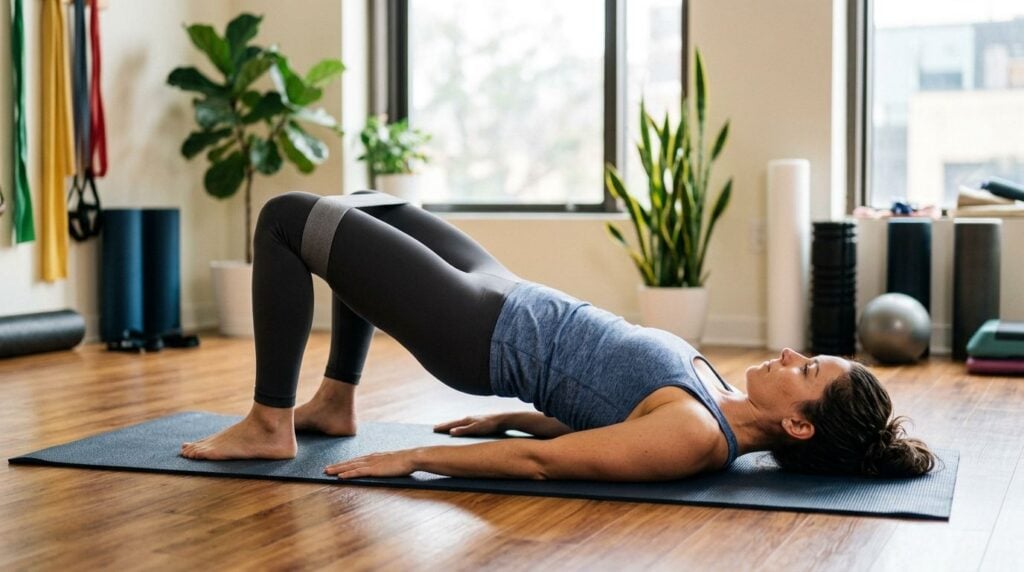
Lower crossed syndrome exercises target two muscle groups at once: stretching the tight hip flexors and lower back extensors, while strengthening the weak abdominal and glute muscles that let the pelvis tip forward. A routine built around hip flexor stretches, glute bridges, dead bugs and glute activation drills, done 3-4 times a week, is the exercise approach most commonly recommended for this pattern. The catch is that stretching alone rarely helps if the glutes and deep core stay weak — the imbalance just reasserts itself once you stand up and go back to sitting for eight hours.
- Lower crossed syndrome exercises combine hip flexor and lower back stretches with glute and core strengthening, not stretching alone.
- The pattern is driven by an anterior pelvic tilt: tight hip flexors and erector spinae paired with weak glutes and abdominals.
- Consistency over weeks matters more than intensity — most people need 6-12 weeks of regular practice before posture changes are noticeable.
- Exercises can be a self-managed starting point, but a chiropractic assessment can identify whether pelvic tilt, disc load or another factor is driving your specific symptoms.
Why this matters
Lower crossed syndrome is one of the most common postural patterns seen in people who sit for long stretches — desk workers, drivers, and anyone spending most of the day in a chair. It doesn't cause pain on its own for everyone, but the anterior pelvic tilt it produces can increase load through the lower back and contribute to stiffness, tightness or discomfort over time. Addressing it usually comes down to a structured exercise routine rather than a single stretch or one appointment.
MyChiro, a chiropractic clinic in Bondi Junction, Sydney, sees this pattern regularly in patients reporting lower back tightness after long periods of sitting. A chiropractic assessment can help confirm whether pelvic tilt and muscle imbalance are contributing to your symptoms before you commit to a home exercise program.
How to fix lower crossed syndrome with exercises
The exercise approach follows a simple structure: lengthen what's tight, strengthen what's weak. Four muscle groups are usually involved — two need stretching, two need strengthening, and core strengthening exercises that avoid straining the lower back are a useful starting point if you're not sure where your own core strength sits.
| Muscle group | Problem | Exercise type | Example |
|---|---|---|---|
| Hip flexors | Tight, shortened | Stretch | Kneeling hip flexor stretch, 30-60 seconds per side |
| Lower back erector spinae | Tight, overactive | Stretch | Cat-cow, child's pose |
| Abdominals (especially deep core) | Weak, underactive | Strengthen | Dead bug, plank hold |
| Glutes | Weak, underactive | Strengthen | Glute bridge, clamshell, bird dog |
A practical weekly structure looks like this:
- Warm up with 5 minutes of walking or marching in place.
- Stretch hip flexors and lower back for 2-3 sets of 30-60 seconds each side, 4-5 days a week.
- Strengthen glutes and deep core with 2-3 sets of 10-15 reps, 3-4 days a week.
- Reassess posture every 2-3 weeks — standing pelvic tilt in a mirror is a simple way to track change.
- Add load gradually once bodyweight versions feel easy, using resistance bands for glute work.
If hip flexor tightness is the dominant issue for you, stretches specifically for tight hip flexors go into more detail on hold times and progressions than the summary above.
The exercises that matter most are the strengthening ones, not the stretches — most people already stretch enough informally through daily movement, but almost nobody does dedicated glute and deep core work without a structured plan.
Why lower crossed syndrome develops
A handful of factors show up repeatedly in people with this pattern:
- Prolonged sitting — hip flexors shorten when they stay in a flexed position for hours at a time, a pattern common through 2026 given how much desk-based and screen-based work has increased.
- Weak glute activation — sitting reduces glute recruitment, so the muscles gradually underperform even during standing and walking.
- Poor standing posture habits — locking the knees and letting the pelvis tip forward becomes a default resting position.
- Limited hip extension mobility — tight hip flexors restrict how far the hip can extend, which changes gait and standing alignment.
- Inconsistent or absent core training — without regular deep core work, the abdominals don't provide enough counter-tension to the lower back extensors.
- Carrying habits and repetitive load — occupations or routines involving a lot of forward-leaning or lifting can reinforce the same tilt pattern.
None of these factors act alone. Most people with lower crossed syndrome have some combination of tight hip flexors, weak glutes and a sitting-heavy routine, which is why the exercise approach addresses both ends of the pattern rather than just one muscle group.
When exercises alone aren't enough
A home exercise routine is a reasonable starting point for mild postural tightness, but persistent lower back discomfort, radiating leg symptoms, or pain that doesn't ease with a few weeks of consistent stretching and strengthening warrants a professional assessment rather than more stretching. Guidance on when back pain needs a chiropractor versus a doctor covers the red flags worth checking before you continue self-managing at home.
A chiropractic assessment can identify whether pelvic tilt, joint restriction or muscle imbalance is the main contributor to your symptoms, and a chiropractor can discuss whether adjustments, soft tissue work or a tailored exercise plan may be appropriate for your specific presentation following that assessment.
How long does it take to correct lower crossed syndrome?
Most people notice postural change after 6-12 weeks of consistent exercise, done 3-4 times a week, though the exact timeline depends on how long the pattern has been present and how consistently the routine is followed. Sporadic or occasional stretching over the same period tends to produce far slower or no visible change.
Can lower crossed syndrome come back after it improves?
Yes, lower crossed syndrome can return if the sitting habits and inactive periods that contributed to it in the first place resume without any ongoing strengthening work. Maintaining glute and core strength, even at a reduced frequency, is generally what keeps the pattern from re-establishing itself.
Do stretches alone fix lower crossed syndrome?
Stretching alone rarely resolves the pattern because it only addresses the tight side of the imbalance and leaves the weak glutes and core unaddressed. A combined stretch-and-strengthen routine is the approach most consistently recommended over stretching in isolation.
Get a postural assessment
Discuss pelvic tilt and muscle imbalance with a chiropractor before starting a home routine.
FAQ
What are the best lower crossed syndrome exercises to start with?
A starting routine usually combines hip flexor stretches, lower back stretches like cat-cow, and strengthening moves such as glute bridges and dead bugs. Consistency across all four movements matters more than picking a single ‘best’ exercise.
How do I know if I have lower crossed syndrome?
Common signs include an exaggerated lower back curve, a forward-tilted pelvis, tight hip flexors and weak-feeling glutes when standing for long periods. A chiropractic assessment can confirm the pattern and rule out other contributing factors.
Is lower crossed syndrome the same as anterior pelvic tilt?
Anterior pelvic tilt is the visible postural result of lower crossed syndrome, not a separate condition. The muscle imbalance between tight hip flexors/lower back and weak glutes/core produces the forward pelvic tilt.
How often should I do lower crossed syndrome exercises?
Stretching 4-5 days a week and strengthening 3-4 days a week is a common structure, with most people needing 6-12 weeks of consistent practice before noticing postural change. Sessions of 15-20 minutes are usually enough.
Can sitting all day cause lower crossed syndrome?
Prolonged sitting is one of the most common contributing factors because it shortens the hip flexors and reduces glute activation over time. Standing breaks and regular movement throughout the day can help reduce this contribution.
Does lower crossed syndrome cause lower back pain?
It can contribute to lower back discomfort in some people by increasing load on the lumbar spine, though not everyone with the pattern experiences pain. Persistent or worsening pain should be assessed by a health professional rather than managed with exercise alone.
Can a chiropractor help with lower crossed syndrome?
A chiropractor can assess pelvic alignment and muscle imbalance and discuss whether adjustments, soft tissue techniques or a tailored exercise program may be appropriate for your presentation. This is decided following an individual assessment rather than a standard protocol for everyone.
One last thing
The detail most people miss is that glute strength, not hip flexor flexibility, is usually the slower variable to change. Hip flexors loosen within a few weeks of consistent stretching, but underactive glutes often take the full 6-12 week window to reliably fire during standing and walking — which is why postural improvement tends to show up later than flexibility improvement, and why stopping the strengthening work early is the most common reason the pattern returns.
Related guides
- How to fix winged shoulder blades naturally
- Chiropractic care for leg length discrepancy and posture imbalance


