

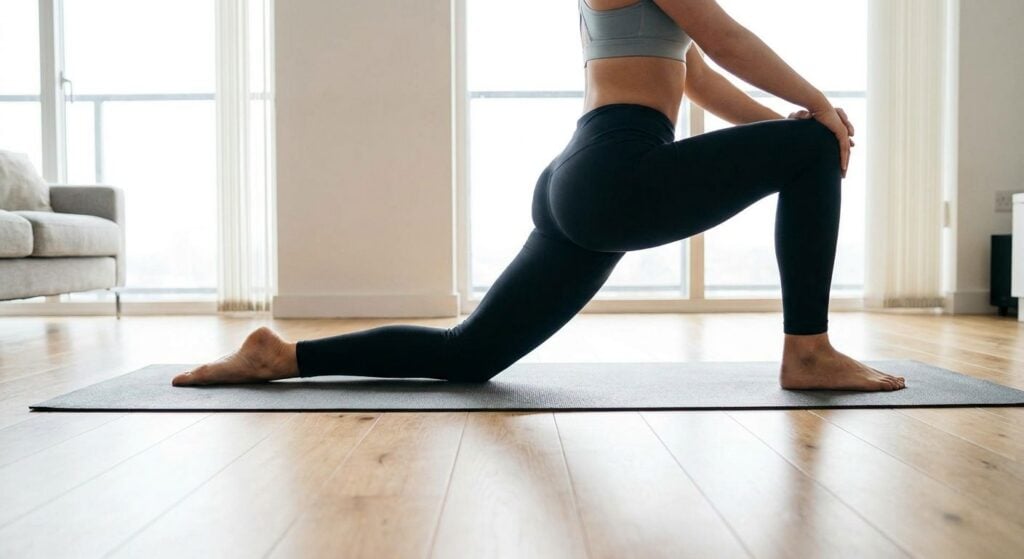
Uneven hips – one hip sitting visibly higher, or trousers hanging longer on one leg – almost always come down to muscle imbalance around the pelvis, one-sided movement habits, or a mild leg length difference, and stretching plus strength work can often help address the pattern once a qualified health professional has ruled out other causes. Sacroiliac joint restriction, scoliosis and a genuine structural leg length discrepancy each need a different approach, so guessing at home rarely tells you what's actually happening in the pelvis. In 2026, this is one of the more common posture questions raised at Bondi Junction chiropractic clinics, usually first noticed in a mirror, a photo, or a hemline that never sits straight.
- Muscle imbalance and one-sided habits cause most cases of uneven hips – structural leg length differences are less common.
- Learning how to fix uneven hips naturally starts with an assessment, not a stretching routine picked off the internet.
- Hip flexor and glute medius work, done consistently through 2026, may help address the pattern over weeks, not days.
- A chiropractor at MyChiro can assess whether the asymmetry is muscular, postural, or worth referring on.
Why this matters
A hip that sits higher on one side changes how load travels through your lower back, knees and even ankles every time you walk. Left unaddressed, the compensations can show up as one-sided lower back tightness or a knee that niggles on longer walks.
Most people can book a chiropractic assessment before starting a home stretching plan, because a five-minute check can tell you whether the imbalance is muscular, postural, or something that needs imaging first. That distinction changes everything about what you do next.
How to fix uneven hips naturally: a step-by-step approach
The sequence below reflects the general order a chiropractor or physiotherapist would typically work through once other causes have been ruled out. It is general education, not a substitute for an individual assessment.
- Get assessed first. A chiropractor or GP can check for sacroiliac joint restriction, scoliosis, or a true leg length discrepancy before you assume it's just tight muscles.
- Loosen the tight side. A shortened hip flexor on one side is one of the most common drivers of a pelvic tilt – gentle daily stretching may help release this over several weeks.
- Strengthen the weak side. Glute medius weakness on one side lets the pelvis drop when you stand on that leg – targeted strength work can help build the stability that holds the pelvis level.
- Change the habit that's feeding it. Carrying a bag on one shoulder, standing with weight on one leg, or crossing the same leg every time you sit all reinforce the imbalance day after day.
- Reassess. A follow-up check with a health professional after four to six weeks shows whether the approach is working or whether something else needs investigating.
Common causes compared
| Possible cause | What it usually looks like | Who to see first |
|---|---|---|
| Muscle imbalance (tight hip flexor, weak glute medius) | Hip appears higher on the tight side, worse after long sitting | Chiropractor or physiotherapist |
| One-sided habits (bag carrying, standing pattern) | Gradual asymmetry, no pain at rest | Chiropractor for a movement assessment |
| Functional leg length difference | Pelvis rotates rather than a true bone-length difference | Chiropractor or physiotherapist |
| Structural leg length discrepancy | Consistent measurable difference on imaging | GP referral for imaging, then chiropractor or physio |
| Sacroiliac joint restriction | One-sided ache low in the back or buttock | Chiropractor |
| Scoliosis | Curve visible on forward bend test, uneven shoulders too | GP or chiropractor for assessment and possible referral |
If you're dealing with a suspected leg length difference specifically, the piece on leg length discrepancy and posture imbalance goes into how that's typically assessed and managed alongside general postural work.
Why hips become uneven in the first place
A handful of patterns show up again and again in people asking how to fix uneven hips naturally:
- Tight hip flexors on one side from prolonged sitting, driving, or favouring one leg during exercise.
- Weak glute medius on the opposite side, which lets the pelvis drop with every step.
- Carrying habits – a bag, laptop case, or child consistently on the same side.
- Standing posture – weight shifted onto one leg while queueing, cooking, or working a counter job.
- Leg length difference, whether a minor anatomical variation or something more structural.
- Sacroiliac joint or lumbar spine restriction, which can rotate the pelvis without any obvious leg-length cause.
Mild leg length variation is more common than most people realise – differences of less than a centimetre are generally considered a normal anatomical variation rather than something that needs correcting on its own.
“A hip that looks higher in the mirror is usually a movement pattern first, and a structural issue second.”
Stretching and mobility work for the hip flexors specifically is covered in more depth in the guide to tight hip flexor stretches, which pairs well with the glute and core work above.
Get your hips assessed properly
A chiropractic assessment can help identify what’s driving hip asymmetry before you start a routine.
Can uneven hips cause back pain?
Uneven hips can be associated with one-sided lower back tightness, because a tilted pelvis changes how load distributes through the lumbar spine with every step. This doesn't mean every case of back pain is caused by hip asymmetry, but the two often show up together and a chiropractor can assess whether they're linked in your case. Persistent or worsening back pain alongside hip asymmetry is worth having assessed rather than stretched through.
Is it normal to have one hip higher than the other?
A slight difference in hip height is common and often falls within normal anatomical variation, particularly when it's mild and not accompanied by pain. It becomes worth assessing when the difference is noticeable in the mirror, is getting more pronounced over time, or comes with discomfort in the back, hip or knee. A quick check with a chiropractor or GP can clarify whether it needs any further action.
How long does it take to address uneven hips naturally?
There's no fixed timeline, but stretching and strengthening routines are generally given four to six weeks before reassessing progress, since muscle imbalance and movement habits take repetition to shift. Cases linked to a structural leg length discrepancy or an underlying joint restriction may need a different timeframe and a different plan entirely. Consistency with the exercises matters more than intensity in the early weeks.
FAQ
How do I know if my uneven hips need a professional assessment?
If the asymmetry is getting worse, comes with pain, or hasn’t changed after a few weeks of stretching, it’s worth having a chiropractor or GP assess it rather than continuing to guess at home.
Can stretching alone fix uneven hips?
Stretching can help with muscle-related tightness, but it won’t address a structural leg length discrepancy or a joint restriction, which is why an assessment usually comes first.
What exercises help with uneven hips?
Hip flexor stretches on the tight side and glute medius strengthening on the weaker side are the two most commonly recommended starting points, alongside correcting one-sided habits like bag carrying.
Are uneven hips the same as scoliosis?
Not necessarily. Uneven hips can occur with or without scoliosis, and a forward bend test alongside a professional assessment is the usual way to tell them apart.
Does sitting all day make uneven hips worse?
Prolonged sitting, especially with legs crossed the same way each time, can tighten one side of the hip flexors and contribute to the pattern over months.
Can a chiropractor help with uneven hips?
A chiropractor can assess the pelvis, spine and surrounding muscles to identify what’s likely contributing to the asymmetry and discuss an appropriate plan, which may include adjustments, exercise guidance, or referral if needed.
Is a leg length difference the same as uneven hips?
Not always – a true leg length difference is one possible cause of uneven hips, but muscle imbalance and postural habits are more common drivers of the same visual pattern.
One last thing
Most people asking how to fix uneven hips naturally are dealing with a movement pattern, not a permanent structural problem – but the only way to tell the difference is an assessment, not a mirror check. Skipping straight to a stretching routine can mean months of effort aimed at the wrong cause. If the asymmetry has been there for years without changing, that's actually a good sign it's stable rather than progressive, and worth mentioning at your next check-in either way.
Related guides