

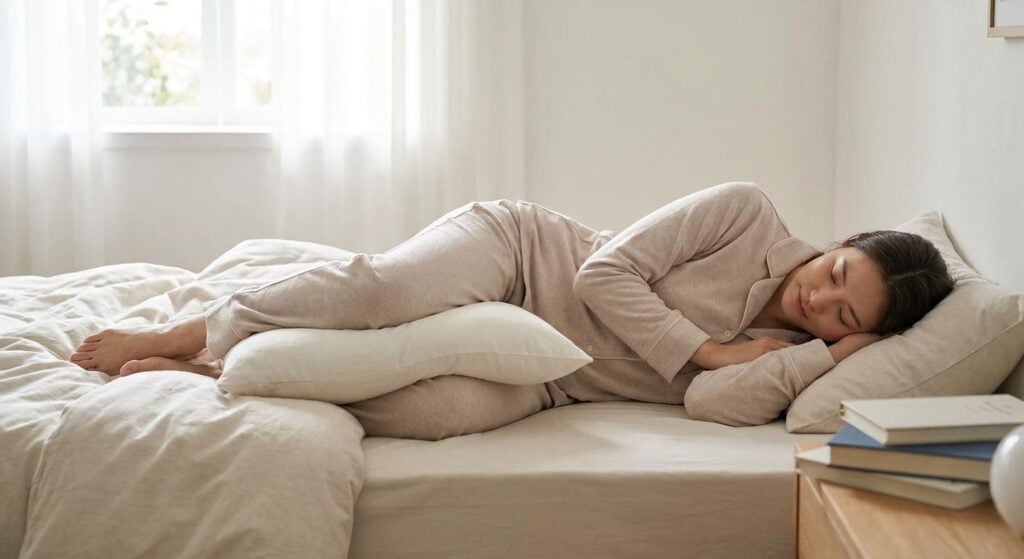
Sciatica pain has a cruel habit of flaring the second you lie down, turning bedtime into a nightly negotiation with your own nerve. This guide breaks down sleeping positions, bedroom setup and pre-bed habits that may make nights more manageable through 2026.
- Learning how to sleep with sciatica often starts with side-lying and a pillow between the knees to ease pressure on the nerve.
- A mattress on the firmer side of medium and a supportive pillow reduce spinal twisting overnight compared with soft, sagging surfaces.
- Gentle heat before bed can loosen tight muscles around the hip and lower back, easing the transition into a comfortable position.
- Numbness, weakness or bladder changes at night are a reason to seek same-day medical assessment, not a new pillow.
Why this matters
The sciatic nerve runs from the lower back, through the hip, and down each leg to the foot. When something in the lower spine irritates that nerve pathway, lying flat can compress it further, which is why sciatica often feels worse at night than during the day.
Poor sleep also lowers pain tolerance the next day, so the two problems feed each other. Getting the sleeping positions for sciatica pain right is one of the more practical steps you can take while a longer-term plan for the underlying cause is worked out with a health professional.
MyChiro sees this pattern often in patients across Bondi Junction who come in after weeks of broken sleep. Chiropractic care can be discussed as part of an assessment, but the sleep habits below are things you can test tonight.
What you'll need
- A firm-to-medium mattress, or a topper if yours has started to sag
- A supportive pillow for your head and neck
- One or two extra pillows for knee or leg support
- A heat pack or heating pad
- 10 to 15 minutes before bed for gentle stretching
- Patience — a new sleep position usually takes a few nights to feel natural
The steps
1. Test the side-lying position with a pillow between your knees
Lie on whichever side feels less irritated and place a firm pillow between your bent knees. This keeps your hips and lower back stacked instead of rotated, which can reduce pulling down the back of the leg.
Aim for a pillow thick enough that your top knee stays roughly level with your hip. Within the first few minutes of lying still, many people notice less pulling down the leg in this position. A common mistake is using a pillow that's too thin, letting the top leg roll forward and twist the lower back.
2. Adjust your pillow and neck alignment
A pillow for side sleepers with the right loft keeps your neck level with your spine rather than tilted up or down. Misalignment at the neck adds tension that can carry down through the back overnight.
The pillow should fill the gap between your ear and the mattress exactly, no more. Expect fewer wake-ups from shoulder and neck stiffness once this is dialled in. Reusing a flattened pillow that no longer supports the neck is the most common error here.
3. Try a semi-reclined position if lying flat feels worse
Some people find that lying completely flat aggravates sciatica, while a slight recline of 15 to 30 degrees eases it. Stack two or three firm pillows behind your back and head, or use an adjustable base if you have one.
This reduces the arch in your lower back that can narrow the space around an irritated nerve root. A few nights of testing this will tell you whether it's worth keeping as your default. Propping only the head instead of the whole upper back is the usual mistake — it bends the neck without helping the lower spine.
4. Place a pillow under your knees if you sleep on your back
Back sleepers can flatten the natural pelvic tilt by placing a pillow under both knees. This takes some of the pull off the lower back muscles overnight.
Use a pillow tall enough that your knees sit slightly bent, not locked straight. Morning stiffness tends to ease with this small change. Skipping support altogether and letting the lower back arch is the most frequent mistake in this position.
5. Apply heat 15 to 20 minutes before bed
Warmth increases local blood flow and can loosen the muscle guarding that builds up around an irritated nerve during the day. A heating pad on a low-to-medium setting for 15 to 20 minutes tends to be enough.
Never fall asleep on an active heat pack. Going straight from a day of sitting into bed without this step often means carrying the day's tension straight into the night.
6. Do two or three gentle stretches before lying down
A knee-to-chest stretch or a seated figure-four stretch, held for 20 to 30 seconds each, can reduce the stiffness that builds up through the day. Stop immediately if a stretch sharpens the pain down your leg rather than easing it.
The goal is looser muscles going into your chosen sleep position, not a deep stretch. Pushing through pain to "get a better stretch" is the mistake to avoid — sciatica responds better to gentle, repeated movement than force.
7. Get out of bed slowly in the morning
Roll onto your side first, then use your arms to push yourself up, rather than sitting straight up from lying flat. This reduces the sudden load on an irritated nerve first thing in the morning.
Most people notice less of a sharp pain spike in the first few steps once this becomes a habit. Swinging both legs out and sitting up in one motion is the common mistake this step fixes.
Get sciatica pain assessed properly
An assessment can help identify what’s contributing to your nerve pain.
Troubleshooting
Pain wakes you within an hour of falling asleep. Check whether you've rolled onto your back or let the top leg straighten out, then reset your pillow support before trying again.
Numbness or tingling down the leg overnight. If this persists beyond a few nights or doesn't ease with repositioning, it's worth raising with a qualified health professional at your next assessment.
Pain feels fine at bedtime but builds by 3am. This can point to a mattress that's sagging through the hip zone. A firmer surface or a topper is worth discussing with your GP or chiropractor.
Heat helps but pain returns as soon as you lie down. Try shifting the heat application to right before lying down rather than hours earlier in the evening.
You can only get comfortable sitting upright. This pattern is worth mentioning at your next assessment, since it may point to a different pain driver than typical positional sciatica.
Pain is on both sides, or comes with weakness or bladder and bowel changes. This combination needs same-day medical review rather than a change in sleep position.
Tools and resources
- A mattress topper if your current mattress has started to sag through the hips
- A supportive pillow rated for side sleeping
- A reusable heat pack for pre-bed use
- Gentle stretching routines aimed at the hips and lower back
- An assessment with a chiropractor if positional changes alone aren't shifting things after a couple of weeks
What to do next
Sleep position changes are a starting point, not the whole picture. If sciatica pain has been present for more than a few weeks, an assessment can help identify what's driving the nerve irritation and whether chiropractic care, exercise, or a referral is the more appropriate next step. MyChiro's Bondi Junction clinic works through this kind of assessment with patients dealing with ongoing back and leg pain.
FAQ
What’s the best sleeping position for sciatica pain?
Side-lying with a pillow between the knees is one of the more commonly reported comfortable positions for sciatica, since it keeps the hips and lower back aligned. Some people find a semi-reclined position works better, so it’s worth testing both over a few nights.
Is it better to sleep on your side or back with sciatica?
Neither position is universally better; it depends on which one keeps your spine in a neutral position for you. Side-lying with knee support and back-lying with a pillow under the knees are both worth testing.
How many pillows do you need to sleep with sciatica?
Most people need one supportive pillow for the head and neck plus one extra pillow for the knees or legs. Adding more than that can sometimes tilt the spine out of alignment rather than support it.
Does a firm mattress help sciatica pain?
A mattress on the firmer side of medium tends to reduce the sagging that can twist the spine overnight. An overly hard surface isn’t necessarily better either, so medium-firm is the usual starting point.
Should you use heat or ice for sciatica at night?
Heat applied 15 to 20 minutes before bed can loosen tight muscles around the lower back and hip. Ice tends to suit acute flare-ups earlier in the day rather than the pre-bed routine.
How long does sciatica pain last?
Duration varies significantly from person to person depending on the underlying cause. If pain persists beyond a few weeks or is getting worse rather than better, an assessment with a health professional is the appropriate next step.
When should you see a chiropractor for sciatica?
Consider booking an assessment if positional changes and basic self-care haven’t eased things after two to three weeks, or sooner if pain is worsening. A chiropractor can assess contributing factors and discuss appropriate next steps.
Can stretching before bed reduce sciatica discomfort?
Gentle stretches such as knee-to-chest or seated figure-four, held for 20 to 30 seconds, may reduce stiffness that builds up during the day. Stop any stretch that sharpens pain down the leg rather than easing it.
One last thing
The sciatic nerve is roughly the width of your thumb and the longest nerve in the human body, which is exactly why irritation at the lower back can show up as pain, tingling or numbness all the way down to the foot. Small changes at the point of irritation, like the position your hips sit in overnight, can have an outsized effect on how that pain travels.
Related guides