
Lower back pain doesn't need a gym membership to ease it, and the right yoga poses can loosen tight hips, mobilise stiff segments of the lumbar spine and take pressure off compressed nerves when the pain is nagging rather than severe. This guide ranks eight poses worth trying in 2026, flags which ones to modify or skip with disc-related pain, and tells you when a proper assessment matters more than another stretch.
- Cat-Cow and Child’s Pose top the list of best yoga poses for lower back pain in 2026 because both load the spine gently in flexion and extension.
- Supine Twist and Sphinx Pose suit desk-bound backs but need modifying if a disc issue has been diagnosed.
- Pigeon Pose eases hip tightness that refers pain into the lower back, though it should be entered slowly.
- Wheel Pose and deep backbends get a Skip verdict until a chiropractor or GP has assessed acute or radiating pain.
- Pairing yoga with a foam rolling routine and better desk posture supports progress between sessions.
Why this matters
Lower back pain is one of the most common reasons Australians see a health professional, and it rarely has a single cause — tight hip flexors, a stiff thoracic spine, weak glutes and long hours sitting all play a part. Yoga poses that combine gentle spinal movement with hip and hamstring mobility can support a broader recovery plan, but not every pose suits every back.
Some poses load the spine in flexion, some in extension, and some rotate it. Matching the pose to what your back tolerates today — not what looked good on Instagram in 2026 — is the difference between a pose that helps and one that flares things up. A foam rolling routine alongside these poses can loosen the same tissue from a different angle, which is worth building into the same week rather than choosing one or the other.
How this list is ranked
Each pose here is ranked on three things: how much load it puts through the lumbar spine, how forgiving it is for someone easing back into movement after a flare-up, and how practical it is to do at home without equipment. Poses that move the spine through a full range — like Cat-Cow — rank higher than static end-range holds, because gentle, repeated movement is generally better tolerated by an irritated back than a single deep stretch held for minutes.
Poses that load the spine into deep extension or require significant flexibility, like full Wheel Pose, rank lower here — not because they're inherently wrong for everyone, but because they carry more risk if attempted before a back has been assessed. None of this replaces individual advice; it's a starting point for choosing poses sensibly in 2026.
The ranked list
1. Cat-Cow (Marjaryasana-Bitilasana) — the safe starting point
On hands and knees, alternating between arching and rounding the spine moves every segment of the lumbar spine through flexion and extension in the same set. It's one of the few poses that works well on both a stiff morning back and a fatigued end-of-day back.
Aim for slow, controlled reps — 8 to 10 rounds, holding each end position for a breath. Verdict: Try.
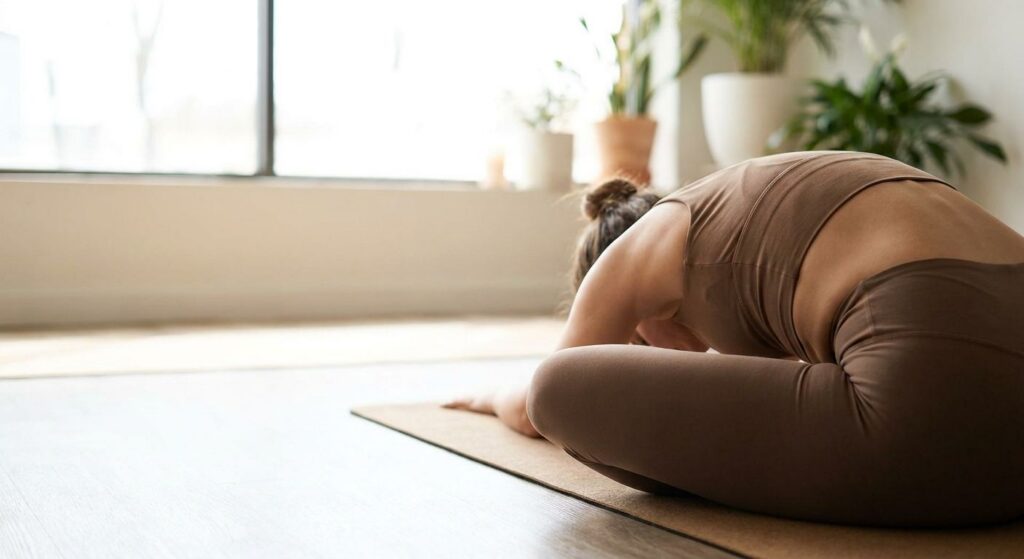
2. Child's Pose (Balasana) — the reset
Sitting back onto the heels with arms extended stretches the lumbar extensors and gives the whole back a passive release without any load-bearing. It's low-risk enough to use as a rest position between other poses.
Hold for 30 to 60 seconds, breathing into the lower back rather than forcing the stretch. Verdict: Try.
3. Supine Twist (Supta Matsyendrasana) — the desk-back release
Lying on your back and dropping bent knees to one side rotates the lumbar spine gently, which can ease the stiffness that builds up from hours in a chair. For anyone who's had a herniated disc diagnosed, this pose needs modifying — keep the twist shallow and stop short of any point that reproduces leg symptoms.
Hold each side for 20 to 30 seconds. If you're managing a diagnosed disc issue, this is a pose worth discussing with the team that reviewed your herniated disc pain before adding it to a routine. Verdict: Try, modified for disc issues.
4. Sphinx Pose — the gentle extension
Propping up onto the forearms while lying face-down extends the lumbar spine, which counters the flexed posture most people sit in all day at a desk. It's a smaller range of motion than a full backbend, which makes it a reasonable entry point into extension-based movement.
Hold for 30 seconds, keeping the lower back relaxed rather than pinched. Verdict: Try.
5. Pigeon Pose (Eka Pada Rajakapotasana) — the hip-tightness pose
Tight hips, particularly the piriformis and deep glutes, often refer tension into the lower back, and Pigeon Pose targets exactly that tissue. It's a deeper stretch than the others on this list, so it rewards a slow entry rather than dropping straight into the full position.
Ease in gradually over 30 to 45 seconds per side, and back off if it reproduces pain rather than a stretch sensation. Verdict: Try, but ease in.
6. Downward Dog — the full-body decompression
This pose elongates the spine and hamstrings simultaneously, which can take some of the pull off a tight lower back caused by short hamstrings. It also builds shoulder and core strength, which matters for how well the spine is supported day to day.
Hold for three to five breaths, bending the knees if the hamstrings are pulling the pelvis out of a neutral position. Verdict: Try.
7. Bridge Pose — the glute activator
Lying on your back and lifting the hips strengthens the glutes and hamstrings, which take load off the lumbar spine when they're doing their job properly. Weak glutes are a common contributor to lower back strain, particularly for people who sit for long stretches during shift work or desk jobs.
Hold for 20 to 30 seconds, squeezing the glutes rather than arching through the lower back to get height. Verdict: Try.
8. Wheel Pose / deep backbends — the one to hold off on
A full backbend puts significant compressive and extension load through the lumbar spine, which is a lot to ask of a back that's already irritated. This is a pose for later in a recovery timeline, not the first thing to try when pain is present.
If lower back pain includes leg symptoms, numbness or has followed an injury, this pose can wait until it's been assessed. Verdict: Skip until assessed.
“If a stretch reproduces leg pain below the knee, that’s the signal to stop and get it checked, not to push through.”
Comparison table
| Pose | Best for | Watch out for | Verdict |
|---|---|---|---|
| Cat-Cow | Daily mobility, stiff mornings | Rushing through reps | Try |
| Child's Pose | Passive relief, breathing reset | Forcing the range | Try |
| Supine Twist | Desk-related stiffness | Diagnosed disc issues | Try, modified |
| Sphinx Pose | Countering slumped posture | Pinching in the lower back | Try |
| Pigeon Pose | Tight hips referring pain | Dropping in too fast | Try, ease in |
| Downward Dog | Hamstring and spine length | Tight hamstrings pulling the pelvis | Try |
| Bridge Pose | Glute activation | Arching instead of squeezing | Try |
| Wheel Pose | Later-stage extension work | Acute or radiating pain | Skip until assessed |
A supportive setup during the day matters as much as the poses themselves. If hours in an office chair are part of the picture, a lumbar support cushion can reduce how much the lower back has to compensate before you even get to your mat.
Not sure which poses suit your back
An assessment can clarify what’s driving the pain before you build a routine around it.
When it's time to get it checked
- Pain that radiates below the knee, or numbness and tingling in the leg or foot — this pattern warrants assessment before adding load-bearing poses.
- Pain that hasn't eased after a week or two of gentle movement — persistent pain is worth discussing with a GP or chiropractor rather than pushing through with more stretching.
- Pain that followed a fall, collision or heavy lift — recent trauma is a reason to get checked before starting any new movement routine, yoga included.
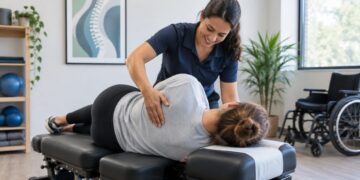
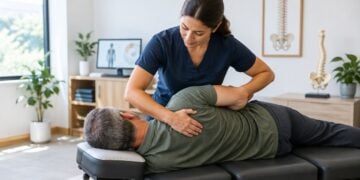
None of the poses above are a substitute for an assessment when any of these apply. A chiropractor can look at what's actually driving the pain and advise on which movements may be appropriate to add, and which to leave until later.
FAQ
What are the best yoga poses for lower back pain in 2026?
Cat-Cow, Child’s Pose, Sphinx Pose and Bridge Pose are generally the most forgiving starting points because they move the spine gently rather than holding it at a deep end range. Deeper poses like Wheel Pose are better left until pain has settled or been assessed.
Is yoga better than regular stretching for lower back pain?
Yoga and general stretching overlap heavily, and the main difference is that yoga sequences move through a broader range in a structured order. Which approach suits you can be discussed with a chiropractor or GP based on what’s driving your specific pain.
Can yoga poses help with a herniated disc?
Some gentle poses may be appropriate for a herniated disc following assessment, while deep flexion or extension poses often need to be avoided or modified. This is worth discussing with a qualified health professional who has reviewed your imaging or clinical history.
How often should I do yoga for lower back pain?
Short, gentle sessions most days tend to be better tolerated than long sessions a few times a week, particularly for Cat-Cow and Child’s Pose. Building consistency matters more than duration when a back is still irritable.
Are backbends bad for lower back pain?
Deep backbends like Wheel Pose put significant load through the lumbar spine and are generally better left until later in a recovery timeline. Gentler extension poses like Sphinx Pose are usually a more reasonable entry point.
Should I see a chiropractor before starting yoga for back pain?
If pain radiates into the leg, has lasted more than a week or two, or followed an injury, an assessment before starting a new routine is worth booking. For mild, non-radiating stiffness, gentle poses like Cat-Cow are a reasonable place to start while monitoring how the back responds.
Can yoga replace chiropractic care?
Yoga and chiropractic care serve different purposes and are often used alongside each other rather than as substitutes. A chiropractor can assess what’s contributing to the pain, which helps determine which poses are worth prioritising.
One last thing
The most overlooked pose on this list is Cat-Cow, mainly because it looks too simple to matter. It's the only pose here that moves the spine through both flexion and extension in the same set rather than holding one end-range position, which is closer to how the spine is designed to move throughout an ordinary day in 2026.
Related guides
- Chiropractic care for golfers with lower back pain
- Chiropractic care for shift workers with back pain