

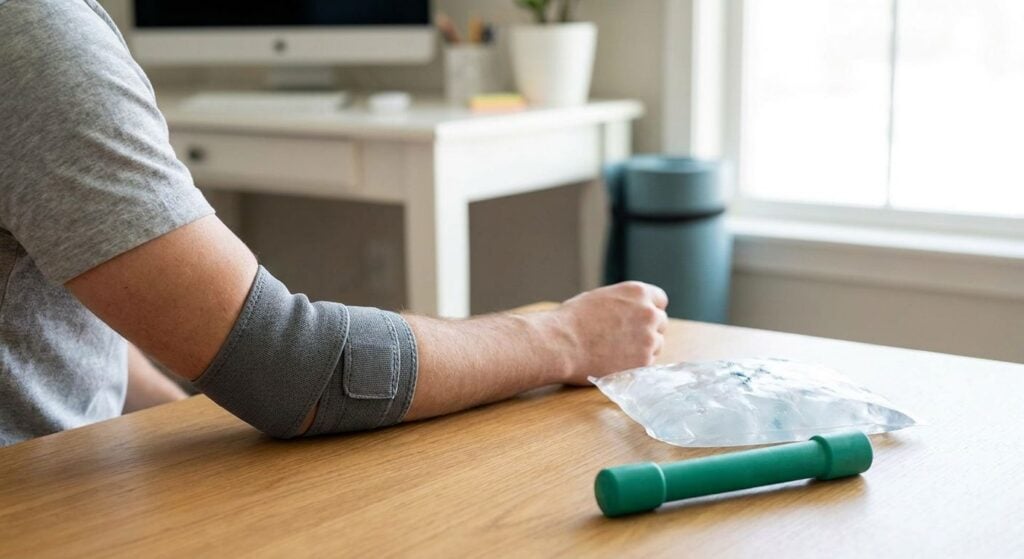
Tennis elbow (lateral epicondylalgia) is generally managed without surgery through activity modification, eccentric strengthening exercises, manual therapy and bracing, with a non-surgical trial of about 6 to 12 months standard in 2026 clinical practice before surgical options are even discussed. Most people notice a change within 6 to 8 weeks of starting a structured exercise program, though flare-ups are common if the aggravating movement pattern isn't corrected alongside treatment. Surgery is reserved for the small share of cases that don't respond to a full non-surgical program run under guidance from a health professional. The detail most guides skip: grip and forearm strength often lag behind pain improvement, so activity gets reintroduced gradually rather than all at once.
- Non-surgical tennis elbow management combines rest, eccentric exercises, manual therapy and bracing over 6-12 months.
- Surgery is typically only considered after a 6 to 12 month non-surgical trial has been tried and reviewed.
- Correcting grip, keyboard or racquet technique matters as much as any hands-on therapy for lasting change.
- Chiropractic care for tennis elbow may include joint mobilisation and soft tissue work following an assessment.
Why this matters
Most forearm pain diagnosed as tennis elbow settles with conservative care, not a scalpel. The mistake people make is treating it like a bruise that just needs time — repetitive gripping, typing or racquet loading keeps re-irritating the tendon, so time alone rarely closes the loop.
A structured plan — covered in more depth in chiropractic care for tennis elbow and repetitive strain — usually blends load management with graded exercise rather than rest alone. In 2026, that combination remains the standard first-line approach across physiotherapy and chiropractic guidance in Australia.
How is tennis elbow treated without surgery?
Non-surgical management typically follows this sequence, adjusted by a health professional based on assessment:
- Activity modification — reducing or pausing the specific grip, lift or swing pattern that aggravates the tendon.
- Ice and short-term pain relief — ice after aggravating activity; over-the-counter pain relief options can be discussed with a pharmacist or GP.
- Eccentric strengthening exercises — slow, controlled wrist extensor loading, usually introduced once acute irritation has settled.
- Manual therapy — joint mobilisation, soft tissue work or myofascial release, which a chiropractor or physiotherapist may include following assessment.
- Bracing or a counterforce strap — worn during aggravating tasks to offload tension at the tendon attachment.
- Escalation options — corticosteroid injection, shockwave therapy or platelet-rich plasma, which a GP or specialist may discuss if the above hasn't shifted symptoms within the expected timeframe.
Most plans combine three or four of these at once rather than working through them one by one.
Eccentric exercises: typically reviewed at 6-8 weeks
Slow-lowering wrist extensor exercises are the most studied non-surgical option as of 2026. Programs are usually reviewed at 6 to 8 weeks to check grip strength and pain on loading, with adjustments made from there. Verdict: worth starting early — delaying exercise while waiting for pain to fully settle often extends the timeline.
Manual therapy: usually reassessed after 4-6 sessions
Joint mobilisation and soft tissue techniques aimed at the elbow, wrist and sometimes the neck are commonly reassessed after 4 to 6 sessions. Chiropractic care for tennis elbow may include this kind of hands-on work alongside exercise prescription, following an individual assessment. Verdict: reasonable to combine with exercise, not a stand-alone fix.
Bracing: worn for 4-6 weeks during aggravating tasks
A counterforce strap or brace is usually worn for 4 to 6 weeks specifically during the activity that triggers symptoms — typing, lifting, racquet sport — rather than all day. Verdict: useful short-term support, but it doesn't replace strengthening.
Corticosteroid injection: effects usually reviewed at 6-12 weeks
A corticosteroid injection is a medical option some GPs or specialists discuss when symptoms haven't shifted with exercise and manual therapy alone. Effects are usually reviewed at the 6 to 12 week mark, and this decision sits with a GP or specialist, not a chiropractor. Verdict: a conversation for your GP, not a first-line step.
“If grip strength hasn’t started returning within six to eight weeks of starting eccentric exercises, that’s worth flagging to whoever built the program before adding more load.”
Why tennis elbow recovery timelines vary
No two cases follow the same clock. Factors that commonly affect how long non-surgical management takes:
- How long symptoms had been present before the first assessment
- Occupational or sporting demands — grip-heavy trades, racquet sports, repetitive lifting
- Baseline grip and forearm strength before symptoms started
- Consistency with the home exercise program between sessions
- Whether the aggravating movement pattern (grip technique, keyboard setup, racquet size) gets corrected alongside treatment
- Age and general tissue healing capacity
Repetitive strain from work is a common thread. Chiropractic care for gym goers and weightlifters covers a related pattern — grip and forearm overload from training volume rather than sport-specific technique.
Get your elbow pain assessed
A structured assessment can help identify what’s driving your symptoms.
Related questions about tennis elbow
Is tennis elbow the same as golfer's elbow?
No — tennis elbow affects the tendons on the outer elbow (lateral epicondyle), while golfer's elbow affects the tendons on the inner elbow (medial epicondyle). Both respond to a similar non-surgical approach: activity modification, graded exercise and manual therapy, adjusted for which side is involved.
Can tennis elbow come back after it settles?
Yes, tennis elbow can recur, particularly if the original aggravating movement pattern — grip technique, workstation setup, racquet size — was never corrected. Rebuilding tendon capacity with maintenance exercise after symptoms settle is commonly recommended to lower that risk.
Does tennis elbow show up on an X-ray?
Standard X-rays usually appear normal in tennis elbow, since the condition affects tendon tissue rather than bone. Ultrasound or MRI can show tendon changes in some cases, but imaging is generally reserved for cases that aren't responding as expected to conservative care.
FAQ
Can tennis elbow heal on its own without treatment?
Mild cases can settle with rest and activity modification alone, but ongoing gripping or repetitive loading commonly keeps symptoms going. A structured exercise program tends to produce more consistent progress than rest alone.
How long does tennis elbow take to heal without surgery?
Non-surgical management is typically trialled for 6 to 12 months, with many people noticing change within 6 to 8 weeks of starting a structured exercise program in 2026. Timelines vary based on how long symptoms were present and how consistently the program is followed.
What’s the fastest way to manage tennis elbow pain at home?
Reducing the specific aggravating activity, applying ice after use, and starting gentle wrist extensor exercises are the usual first steps. A health professional can tailor this further after an assessment.
Do braces help with tennis elbow?
A counterforce strap can reduce tension on the tendon during aggravating tasks and is commonly worn for 4 to 6 weeks. It’s generally used alongside exercise and activity changes, not as a stand-alone approach.
Can chiropractic care help with tennis elbow?
Chiropractic care for tennis elbow may include joint mobilisation, soft tissue work and exercise guidance following an individual assessment. Whether it’s appropriate depends on the specific presentation, which a chiropractor can discuss at assessment.
When is surgery needed for tennis elbow?
Surgery is generally only considered after a full non-surgical trial of around 6 to 12 months hasn’t produced the expected improvement. This decision is made with an orthopaedic specialist, not at the first-line stage.
What exercises help with tennis elbow recovery?
Eccentric wrist extensor exercises — slow, controlled lowering movements — are the most studied non-surgical exercise option. Programs are usually reviewed at 6 to 8 weeks to adjust load.
Can you keep exercising with tennis elbow?
Low-grip, low-load activity is often fine to continue, but grip-heavy training or racquet sport usually needs to be modified while symptoms settle. A health professional can help identify which specific movements to adjust.
One last thing
Forearm pain labelled tennis elbow sometimes has a neck or shoulder nerve contribution running alongside the tendon issue, which is why an assessment that looks past the elbow itself can change the plan. If a program has run for 8 to 12 weeks without the expected shift, that's the point to ask for a broader look rather than repeating the same exercises into 2026 unchanged. For anyone unsure which approach fits their situation, choosing the right chiropractor for your condition is a useful starting point before booking.
Related guides
- Chiropractic care for tradies and manual labourers
- Chiropractic care for dog walkers managing leash-pulling strain