
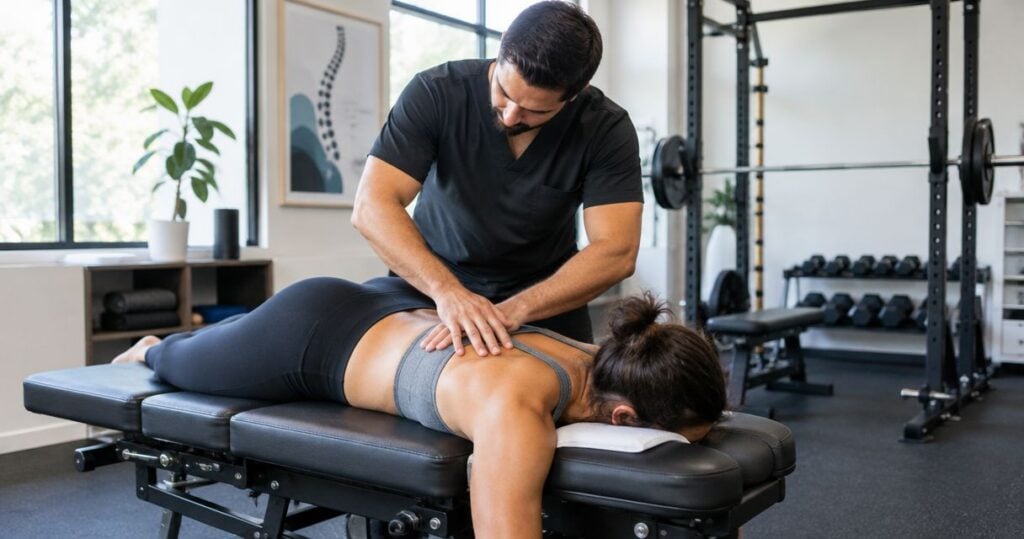
A chiropractic check-up is not a routine requirement before starting the gym. An assessment may be appropriate if you have an unresolved musculoskeletal concern, but the reason for attending should be a specific question—not an assumption that everyone needs an adjustment before exercise. If you have a medical condition, recent injury or concerning symptoms, discuss exercise readiness with an appropriate health professional rather than relying on a chiropractic appointment as general medical clearance.
- Is a chiropractic check up worth it before starting the gym? Not as a routine requirement for every beginner.
- Mychiro is a chiropractic clinic in Bondi Junction; an appointment is not a substitute for general medical clearance.
- Use pre-exercise screening to identify questions about your health history, symptoms and planned gym training.
- An assessment does not automatically mean you need an adjustment, imaging or ongoing appointments.
Why this matters
Starting the gym involves several different questions: whether you need medical advice, how to use equipment and whether a particular symptom needs assessment. A chiropractic appointment does not answer all of them. Choose the professional according to the question you need answered.
This 2026 guide separates exercise screening from chiropractic care without assuming that either an appointment or an adjustment is necessary. If you already have a reason to attend, the guide to preparing for your first chiropractor appointment offers further appointment-planning context.
Is a chiropractic check-up worth it before starting the gym?
A chiropractic check-up may be appropriate following assessment of an individual concern, but joining a gym alone is not a reason to recommend chiropractic care. Start by identifying what you want to know. Equipment instruction, exercise programming, medical clearance and assessment of persistent discomfort are different services.
The Australian Adult Pre-Exercise Screening System, developed through Australian exercise and sports medicine organisations, provides a structured approach to identifying health questions before exercise. It is a screening framework—not a diagnosis and not an instruction for every beginner to book a chiropractic appointment.
| Starting point | Relevant next step | What it addresses | Important limitation |
|---|---|---|---|
| You want to learn gym equipment | Gym induction with a suitably qualified trainer | Equipment use and the planned session | It is not a clinical assessment |
| You have a question about a medical condition or medication | Discussion with your GP or relevant medical professional | Medical considerations around exercise | It does not replace exercise coaching |
| You have persistent back or neck discomfort | Assessment by an appropriate registered health professional | The concern and whether further assessment is needed | No particular intervention is automatically required |
| You need exercise planning around a health condition | Discussion with an accredited exercise physiologist or another appropriate clinician | Individual exercise planning within professional scope | The appropriate pathway depends on your circumstances |
The useful distinction is between having a reason for assessment and being told that assessment is a universal prerequisite. Neither a gym membership nor a sedentary job establishes a need for spinal adjustments.
If you feel well and want to learn the equipment
If you have no current concerns, do not assume you need a chiropractic check-up simply because strength training is unfamiliar. Complete the gym's screening process honestly and raise any unanswered health questions with an appropriate professional. Ask the trainer to explain equipment settings and the intended starting programme.
Keep the gym induction focused on practical learning. You can ask how to adjust the seat, position the equipment and choose an introductory task without turning normal beginner uncertainty into a diagnosis.
For a gym start in 2026, a useful question is: What information am I missing? If the answer is equipment instruction, ask for equipment instruction. Do not substitute a clinical appointment for the service you actually need.
If you have persistent back or neck discomfort
Persistent discomfort gives you a specific issue to discuss with a qualified health professional. Describe when it occurs, which activities bring it on and whether it affects everyday tasks. Ask whether assessment is appropriate before beginning the exercise you have planned.
Do not arrive with a predetermined explanation such as a misalignment, trapped nerve or weak core. Those labels should not be inferred from a social-media post, a posture photograph or discomfort during an unfamiliar movement.
If chiropractic care is discussed, ask what the assessment is intended to clarify and what alternatives exist. Agreeing to an assessment does not commit you to an adjustment or a course of appointments.
A clinician should also explain when the concern falls outside their scope or warrants another professional's input. The appointment should address your question, not simply produce a generic recommendation to return regularly.
If you have a medical condition or recent injury
A chiropractic check-up should not stand in for medical advice about a diagnosed condition, medication, recent operation or injury. Discuss those circumstances with your GP or the clinician already involved in your care. Bring any existing exercise restrictions or discharge instructions into that conversation.
For post-injury exercise, ask who is responsible for advising on your return and whether your gym programme needs coordination with them. A trainer should not have to guess what an old report means or whether previous restrictions still apply.
This section is not a return-to-exercise protocol. Individual medical advice takes priority over a general gym-starting article, including this 2026 guide.
Why the value of a pre-gym assessment varies
The value of an appointment depends on whether it answers a relevant question. Consider these factors before deciding:
- Your current concern: Identify the symptom, limitation or uncertainty you want assessed rather than requesting a general spinal check without a purpose.
- Your health history: Tell the professional about relevant diagnoses, operations, injuries and medicines; do not expect a movement check to reveal your full medical history.
- Your planned activity: Explain whether you intend to attend an introductory class, use resistance machines or return to demanding lifting.
- Advice you already have: Bring existing recommendations so the discussion does not duplicate or contradict another clinician's plan without explanation.
- The professional's scope: Ask whether your question belongs with a trainer, chiropractor, physiotherapist, exercise physiologist or medical practitioner.
- The proposed next step: An assessment has a clearer purpose when you understand what decision it will inform and whether further appointments are necessary.
A vague promise to optimise your body before training does not explain why an appointment is indicated. Ask for a plain-language reason connected to your circumstances.
How do I decide what to do before my first gym session?
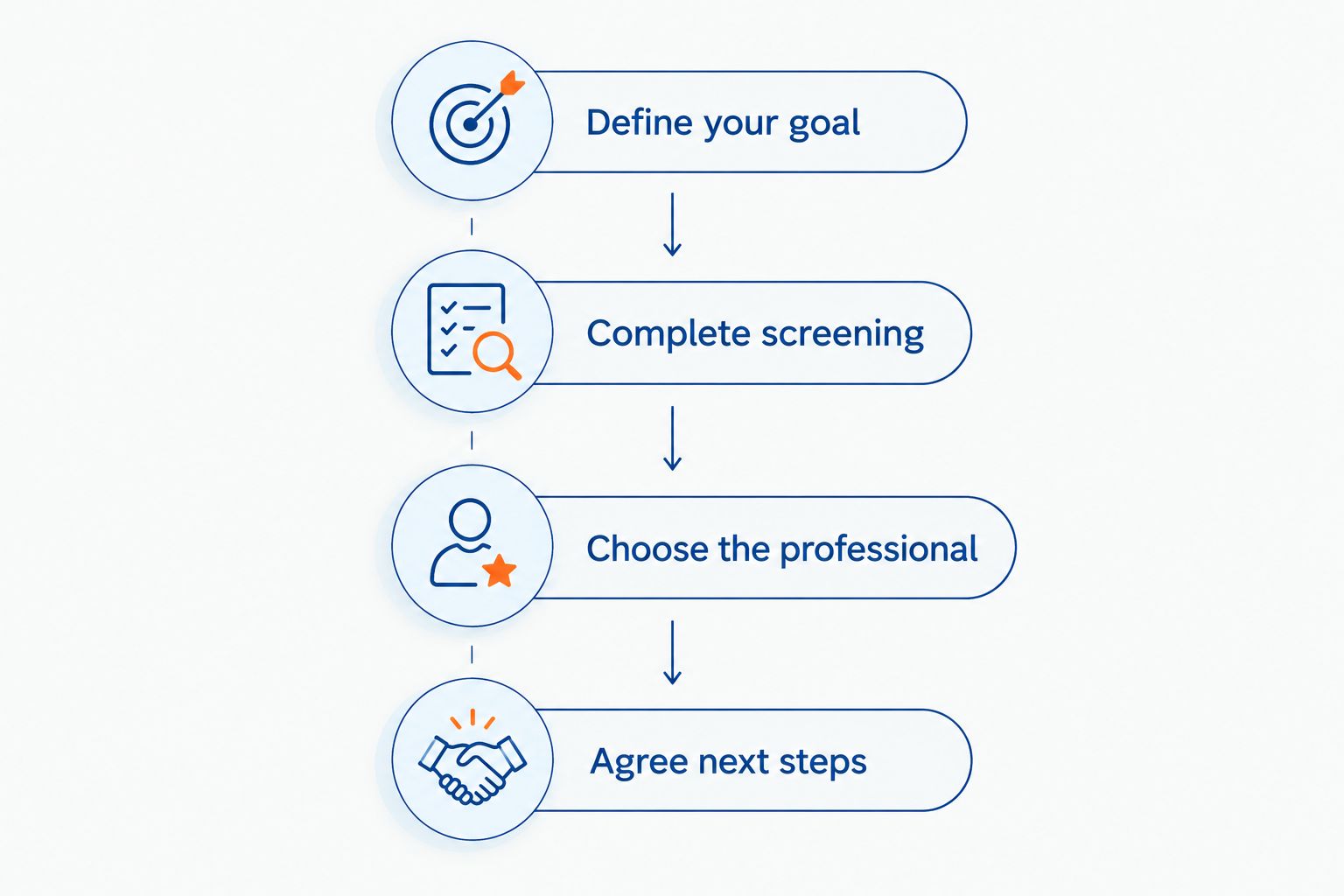
Use the following sequence to organise your questions. It is a preparation checklist, not a self-diagnosis tool or medical clearance process.
- Define your goal. Write down what you intend to do at the gym and what you want help understanding. Be specific about the activity rather than asking whether your body is ready for everything.
- Complete screening. Answer the gym's pre-exercise questions accurately. If a question raises uncertainty, ask an appropriate health professional rather than guessing or leaving out information.
- Choose the professional. Match the unanswered question to the person's role. Ask about qualifications and scope before assuming that every fitness or clinical service offers the same assessment.
- Agree next steps. If you attend an assessment, ask what it means for your planned activity, what remains uncertain and whether another professional should be involved.
A written question makes the discussion more focused. For example: you want to understand whether an existing exercise restriction applies to a particular class—not obtain an adjustment simply because the class starts next week.
What should I ask if I book a chiropractic assessment?
Ask what the assessment will involve before agreeing to it. Explain your gym plans and the particular concern that brought you there. You can also ask whether the appointment is appropriate if you are seeking advice that might fall outside chiropractic practice.
Useful questions include:
- What question is this assessment intended to answer?
- What findings would change your advice about my planned exercise?
- Are there reasons to involve my GP or another professional?
- If you propose an intervention, what are its material risks and alternatives?
- Is choosing no intervention an option?
- What would justify a further appointment?
Mychiro provides chiropractic care in Bondi Junction; it is not a general medical-clearance service. If you are considering a chiropractic assessment there, use the same questions you would ask elsewhere and discuss whether the appointment is appropriate for your concern.
The Mychiro website identifies the clinic. Its location and services do not, by themselves, establish that you need care before joining a gym.
Do I need an adjustment or an X-ray before lifting weights?
Starting weights does not, by itself, establish a need for an adjustment or an X-ray. Ask for the clinical reason for any proposed intervention or investigation. An assessment and an adjustment are separate decisions.
The Australian Commission on Safety and Quality in Health Care's Low Back Pain Clinical Care Standard addresses appropriate assessment and imaging for people with low back pain. It is not a recommendation to screen every gym beginner with spinal imaging.
For your 2026 gym plans, ask what an image would change about the proposed management. Avoid treating a scan, posture score or adjustment as a certificate that future exercise carries no risk.
Can a chiropractic check-up guarantee I will not get injured?
A chiropractic check-up cannot guarantee an injury-free gym programme. Do not interpret an assessment as permission to ignore new symptoms, existing medical advice or equipment instructions.
If someone proposes ongoing care specifically to prevent gym injuries, ask for the evidence supporting that exact recommendation in your circumstances. Evidence about a different population, condition or outcome does not answer that question.
When should I seek medical help instead of a gym check?
Do not use a routine chiropractic appointment or gym induction to assess a possible medical emergency. Healthdirect's back-pain guidance identifies symptoms requiring urgent assessment, including new bladder or bowel control problems and numbness around the groin or saddle area. New or progressive limb weakness also needs urgent medical assessment.
Chest pain, severe breathing difficulty or collapse warrants emergency help. In Australia, call 000 for a medical emergency rather than continuing a workout or waiting for a routine appointment.
These examples are not an exhaustive screening list. If you are unsure how urgently a symptom needs attention, seek medical advice rather than using this article to rule out a serious problem.
Sources to consult in 2026
The following Australian resources address different parts of this decision. They do not establish that chiropractic care is necessary before exercise:
- Australian Adult Pre-Exercise Screening System: Structured screening before exercise, developed through AUSactive, Exercise & Sports Science Australia and Sports Medicine Australia.
- Australian Commission on Safety and Quality in Health Care: The Low Back Pain Clinical Care Standard, covering assessment and management decisions for low back pain.
- Healthdirect Australia: Public guidance on back pain, warning symptoms and seeking medical help.
- Ahpra register of practitioners: Registration information for regulated health professionals, including chiropractors.
Use the current versions when making a decision. Registration establishes professional registration status; it does not validate every advertised claim or make a particular service necessary for you.
FAQ
Do I need to see a chiropractor before joining a gym?
Joining a gym does not, by itself, establish a need for a chiropractic appointment. Complete pre-exercise screening and discuss relevant symptoms or health questions with an appropriate professional.
Is a chiropractic check-up the same as medical clearance?
A chiropractic check-up is not a substitute for general medical clearance. Ask your GP or relevant medical professional about exercise considerations involving a medical condition, medication or recent operation.
Should I get an adjustment before my first weights session?
A first weights session does not automatically justify an adjustment. Any proposed intervention needs an individual clinical reason, an explanation of material risks and a discussion of alternatives.
Can I ask for an assessment without agreeing to an adjustment?
You can discuss an assessment without committing to an adjustment. Ask what is proposed and make a separate informed decision about any intervention.
Should I see a personal trainer or a health professional first?
Choose according to the question you need answered. A trainer can discuss equipment and programming, while symptoms or medical concerns belong with an appropriately qualified health professional.
Do I need an X-ray before starting the gym?
Starting the gym alone does not establish a need for an X-ray. Ask what clinical question imaging would answer and how the result would change management.
Does back pain mean I should book a chiropractic appointment?
Back pain does not automatically establish that chiropractic care is appropriate. Seek assessment from a suitable health professional, and obtain urgent medical help for warning symptoms such as new bladder or bowel control problems.
One last thing
Ask what decision an appointment will change. If you cannot identify the question, clarify it before arranging care; if the question is medical, direct it to the appropriate medical professional.
Your 2026 gym plan does not need a clinical appointment simply to make it feel complete. It needs clear information about your circumstances, the activity you intend to do and any unresolved concerns.
Related guides
- What qualifications should a Sydney chiropractor have?
- How often should you see a chiropractor?
- How chiropractors coordinate with GPs on imaging referrals