

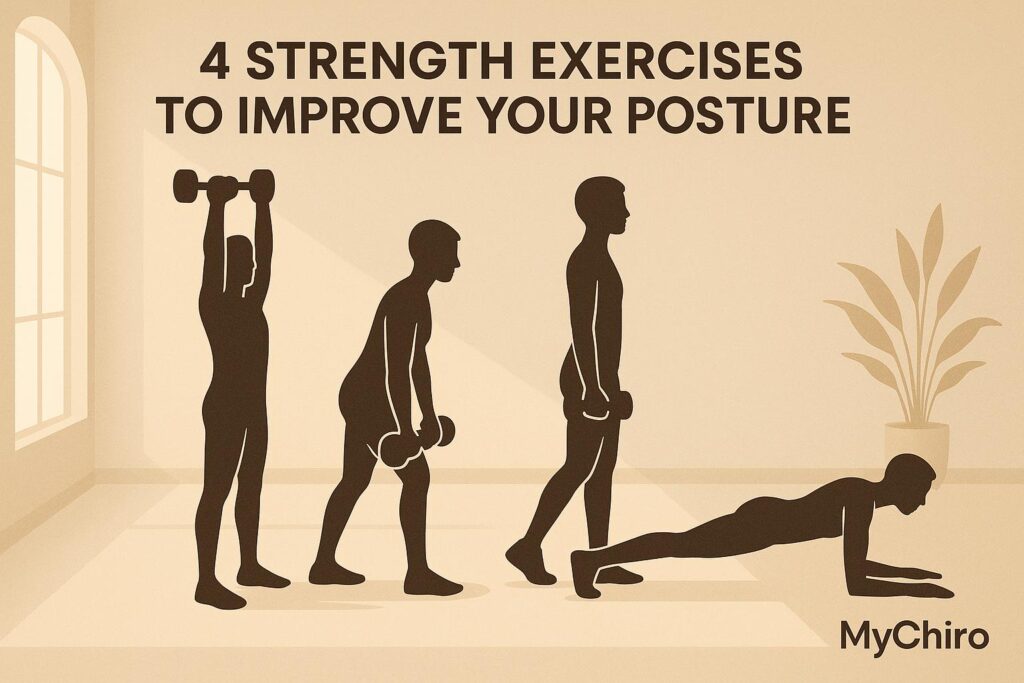
Maintaining good posture isn’t just about looking polished and confident – it’s crucial for preventing aches, pains, and dysfunction that come from long hours at a desk or behind a screen. For busy professionals, parents, and active individuals, poor posture can easily creep into everyday life, thanks to gravity and the strain of repetitive positions. But what if there were simple solutions to help make good posture easier to achieve and sustain?
In this article, we’ll uncover four targeted strength exercises that can transform your sitting posture by building the muscle support you need. These exercises don’t just focus on aesthetics – they empower you to feel better, prevent discomfort, and tackle the root causes of slumping shoulders and tech neck.
Why Strengthening Posture Muscles Matters
A good sitting posture – upright spine, shoulders gently back, chin aligned – often feels challenging to maintain because of how the body naturally defaults under gravity. Over time, slouching leads to a cascade of issues: collapsed chest, rounded shoulders, and a forward-protruding neck. These positions don’t just look and feel uncomfortable; they can contribute to chronic neck and back pain, headaches, and fatigue.
Strengthening key muscles can counteract these tendencies, improving your ability to stay aligned. It’s not just about holding a "correct" posture – it’s about reducing the effort required to maintain it. When your muscles are strong enough to resist gravity and poor habits, good posture becomes second nature.
Let’s break down the four exercises that can help you reverse poor posture tendencies and foster a healthier, more sustainable alignment.
sbb-itb-585d67d
1. Back Extensions for Upright Spinal Support
When poor posture takes hold, the upper and mid-back often collapse forward, creating a rounded spine. This exercise strengthens the spinal extensor muscles, which are responsible for keeping your trunk upright.
How to Perform:
- Lie face down on a flat surface or mat.
- Squeeze your glutes to stabilise your pelvis and draw your belly slightly inward to engage your core.
- Place your hands on your forehead, extend your arms in front of you, or keep them by your sides.
- Slowly lift your chest off the surface as high as is comfortable, keeping the movement controlled.
- Hold briefly at the top, then lower back down.
Reps and Tips:
- Perform 3 sets of 10 repetitions or until you feel mild fatigue.
- Focus on lifting your chest rather than straining your neck.
- This exercise builds endurance in the extensor muscles, helping you resist the urge to collapse when sitting.
2. Rowing Movements for Shoulder Blade Stability
Rounded shoulders are a hallmark of poor posture, caused by weak muscles that retract the shoulder blades. Rowing exercises strengthen these muscles, helping you pull your shoulders comfortably back into alignment.
How to Perform:
- Use a resistance band, cable machine, or even a bike tube secured to a sturdy anchor.
- Stand upright with a slight bend in your knees and hold the band with both hands.
- Pull your elbows back to your sides while squeezing your shoulder blades together – avoid letting your hands drift too far forward or rounding your shoulders.
- Slowly return to the starting position in a controlled motion.
Reps and Tips:
- Aim for 3 sets of 10–15 repetitions, ensuring you feel a moderate level of fatigue.
- Keep your chest neutral and avoid arching your spine.
- The key is activating the muscles between your shoulder blades, not simply moving your arms.
3. Shrugs for Shoulder Elevation Strength
Gravity naturally pulls your shoulders down, contributing to a "drooping" posture. Strengthening your upper trapezius and neck muscles through shrugs can help counteract this.
How to Perform:
- Stand with a resistance band under your feet or hold weights in each hand.
- Keep your arms straight and hands slightly away from your body.
- Lift your shoulders up towards your ears as high as possible, then lower them slowly.
Reps and Tips:
- Perform 5 sets of 10–15 repetitions, or adjust based on your endurance.
- Ensure your elbows stay locked, and focus on lifting your shoulders, not bending your arms.
- Maintain an upright posture throughout the movement to optimise results.
4. Planks to Build Core Endurance
Good posture requires a stable, neutral spine, and planks are a foundational exercise for maintaining this alignment under the pressure of gravity. This exercise builds endurance in the core and stabilising trunk muscles, which are essential for combating slouching.
How to Perform:
- Begin in a forearm plank position, either on your knees or toes, with your elbows directly under your shoulders.
- Engage your core by pulling your belly in and squeezing your glutes.
- Hold the position, ensuring your back remains straight and hips don’t sag.
Reps and Tips:
- Start with sets of 30 seconds, gradually increasing to a minute or longer as your strength improves.
- Keep your head in line with your spine to avoid neck strain.
- For added challenge, try side planks or alternating leg lifts.
Making Posture a Part of Your Routine
While these exercises are simple, they help address the key muscle groups responsible for maintaining posture – spinal extensors, shoulder stabilisers, and core muscles. The real magic lies in consistency. Incorporate these movements into your weekly routine to build strength over time. Remember, posture is shaped not only by exercises but by habits: check in with your sitting and standing alignment throughout the day, and adjust as needed.
Key Takeaways
- Good posture requires strength and endurance: Poor alignment often reflects weak muscles unable to resist gravity.
- 4 key exercises can transform your posture:
- Back Extensions: Strengthen the spinal extensors to resist slouching.
- Rowing Movements: Retract shoulders to counteract rounding.
- Shrugs: Elevate shoulders and combat drooping.
- Planks: Build core endurance for a neutral spine.
- Consistency is key: Perform these exercises 2–3 times a week to see improvements.
- Focus on form: Proper technique ensures you target the correct muscles without strain.
- Posture is dynamic: Combine strength training with mindful daily adjustments for lasting results.
Good posture doesn’t have to be a chore. By committing to these exercises and fostering better habits, you’ll feel more comfortable, energised, and confident in your body. Whether you’re looking to undo the effects of long hours at the desk or simply want to carry yourself better, making posture a priority is a worthwhile investment in your health and well-being. Start small, stay consistent, and let these simple movements reshape how you sit, stand, and move through life.
Source: "4 Physio-Approved Strength Exercises for Effortless Posture (Do These Daily)" – Your Wellness Nerd, YouTube, Mar 9, 2025 – https://www.youtube.com/watch?v=ffPO7RbbPGg


