

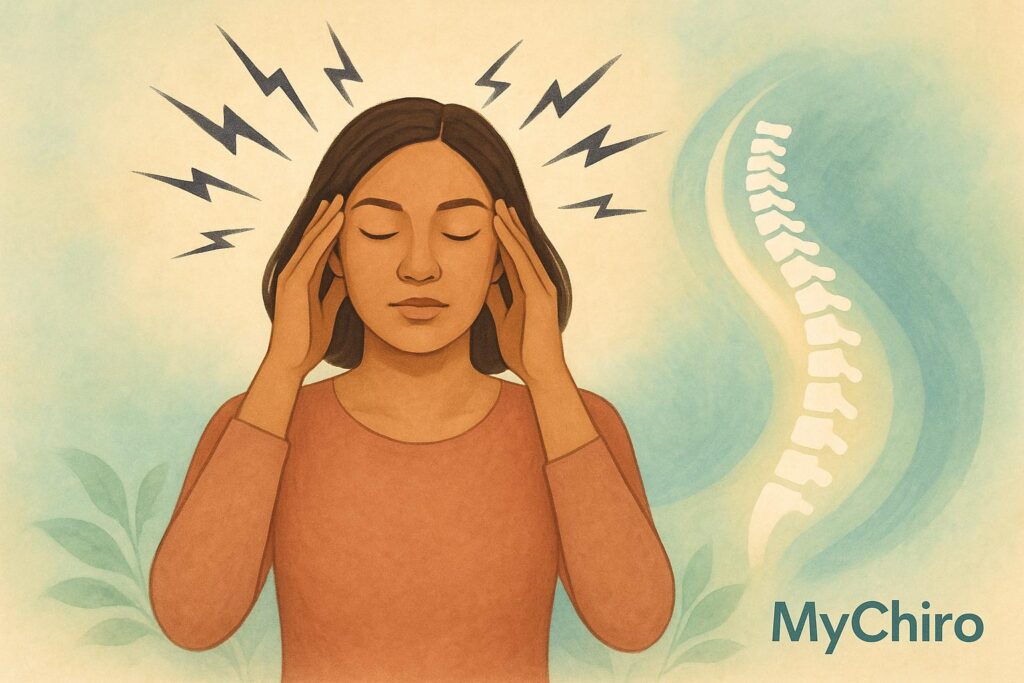
Migraines affect millions of Australians, with stress being a major trigger for up to 80% of sufferers. Stress activates pathways in the nervous system, leading to hormonal changes, inflammation, and heightened pain sensitivity. This can create a cycle where stress triggers migraines, and migraines, in turn, increase stress levels.
Chiropractic care offers a natural way to manage migraines by addressing spinal health and nervous system function. Techniques like spinal adjustments may help reduce physical tension, improve posture, and regulate stress responses. Combining chiropractic care with lifestyle changes – such as regular exercise, better sleep, and stress management – can further help reduce migraine frequency and severity.
Key takeaways:
- Stress is a leading trigger for migraines, affecting the nervous system and pain pathways.
- Chiropractic care may help by improving spinal alignment and reducing tension.
- Lifestyle changes, including posture correction, hydration, and mindfulness, enhance migraine management.
For Australians experiencing stress-related migraines, a combined approach involving chiropractic care and healthy habits can provide relief and improve daily well-being.
Chiropractic Solutions for Migraines and Headaches | The Joint Chiropractic

How Stress Triggers Migraines
Stress doesn’t just affect your mood – it can also set off a chain reaction in your body that might lead to migraines. When stress hits, it activates certain biological systems that can lower your brain’s resistance to migraine triggers, making an attack more likely.
Stress and the Nervous System
When you’re stressed, your body engages the hypothalamic-pituitary-adrenal (HPA) axis, a major system that helps the body respond to challenges. This process releases corticotrophin-releasing hormone, which then stimulates the production of cortisol – a hormone closely tied to stress. Research shows that people prone to migraines often have higher cortisol levels, suggesting that prolonged stress can make their nervous system more reactive.
This heightened reactivity can increase brain excitability and alter pain processing pathways. It can also affect serotonin, a neurotransmitter that plays a key role in regulating pain and mood, potentially creating a perfect storm for migraines to occur.
Why Stress Can Start a Migraine
Stress-related hormonal changes can directly trigger migraines by causing imbalances in the body. Elevated cortisol levels, for instance, may lead to inflammation and disrupt serotonin levels. These disruptions can make pain pathways more sensitive, so even minor stimuli might be enough to spark a migraine.
One particular stress-related mechanism involves a neuropeptide called PACAP38. Under stress, PACAP38 is released and can activate mast cells through a receptor known as MrgprB2. This activation has been linked to increased inflammation and pain sensitivity in the trigeminovascular system – an area deeply involved in migraine pain. A study led by Dr Yu Shin Kim at UT Health San Antonio found that mice without the MrgprB2 receptor didn’t experience this heightened sensitivity, highlighting the importance of the PACAP38-MrgprB2 pathway in triggering migraines.
Interestingly, stress doesn’t just trigger migraines during high-tension moments. Research published in Neurology found that a significant drop in stress levels – like the kind you might feel after a busy day – can also increase the risk of a migraine. This "let-down" effect is particularly pronounced in the first six hours after stress decreases, with individuals facing nearly five times the usual risk of an attack.
Sensitisation and Stress-Related Migraines
Stress can also lead to something called sensitisation, where the nervous system becomes overly responsive. This can happen in two ways:
- Central sensitisation: This occurs in the brain and spinal cord, where neurons become overactive and amplify pain signals.
- Peripheral sensitisation: This happens in the nerves outside the central nervous system, particularly around the trigeminal nerve, which is closely linked to migraines.
Stress can influence both types of sensitisation, making the nervous system more sensitive to triggers. Inflammatory substances released near the trigeminal nerve endings during stress can amplify this effect, potentially leading to more intense and frequent migraine episodes.
It’s no wonder that nearly 70% of people with migraines report stress as a trigger, and up to 80% say it’s a common factor in their attacks. Many also experience higher average stress levels, along with symptoms like fatigue and nervousness. When anxiety or depression is added to the mix, migraines can become even more frequent and severe.
Understanding how stress impacts the body offers valuable insight into managing migraines. By addressing the ways stress affects the nervous system, it may be possible to reduce the likelihood of attacks and improve overall wellbeing.
How Stress Affects Migraine Patterns
Stress doesn’t just trigger migraines – it can also change how they behave over time. Prolonged stress has the power to turn occasional migraines into more frequent and severe ones, creating a challenging cycle for sufferers.
Stress and More Frequent Headaches
There’s a clear link between stress levels and how often migraines occur. Research shows that for every 10-point increase on a 0–100 stress scale, there’s a 4.3% rise in headache days. That’s a significant jump.
In fact, up to 80% of migraine sufferers identify stress as a common trigger, and awareness of this connection is as high as 93.4% among those dealing with migraines. What’s tricky, though, is that it’s not just high stress that causes problems. A sharp drop in stress – often called a "let-down" headache – can also spark a migraine. Studies published in Neurology reveal that people experiencing a sudden decrease in stress levels are almost five times more likely to have a migraine within six hours. It’s thought that these headaches occur because rapid changes in cortisol, the stress hormone, can disrupt the nervous system just as much as prolonged stress.
From Occasional to Chronic Migraines
One of the more concerning effects of stress is its role in turning episodic migraines into chronic ones. Major life stressors and ongoing high stress levels often pave the way for this shift. Research has shown that people exposed to significant stressors are at greater risk of developing chronic migraines.
A stark example comes from the survivors of the 2011 Utøya mass shooting in Norway. In the aftermath of this traumatic event, researchers observed a sharp increase in persistent weekly and daily migraines among survivors. While such extreme stress is an obvious trigger, even everyday stressors – like work deadlines or family pressures – can contribute to the development of chronic migraines. Another study found that individuals with chronic primary headaches had experienced more stressful life events in the year leading up to their condition compared to those without chronic headaches.
Interestingly, people with chronic daily migraines report higher stress levels than those with episodic migraines, even when anxiety and depression are factored out. This suggests that ongoing, daily stressors – rather than isolated stressful events – play a bigger role in chronic migraine patterns. It’s a reminder that managing stress effectively is a key part of reducing migraine risks.
Stress, Sleep Problems, and Migraines
Stress and sleep are deeply connected, and this relationship can make migraines even harder to manage. Chronic stress often disrupts sleep, leading to conditions like insomnia or fragmented sleep, which in turn can worsen migraines.
Poor sleep quality is strongly linked to more frequent and severe migraines. Those who experience stress-related sleep disturbances report higher levels of pain and disability compared to migraine sufferers who sleep well. This creates a vicious cycle: stress disrupts sleep, poor sleep triggers migraines, and the resulting pain increases stress levels.
Biologically, stress activates the hypothalamic-pituitary-adrenal (HPA) axis, which plays a role in both stress responses and the early stages of migraines. This activation causes changes in cortisol and serotonin levels, promoting inflammation and making the nervous system more sensitive to migraine triggers. When sleep deprivation is added to the mix, the brain becomes even more vulnerable to attacks.
For Australians living with stress-related migraines, the effects are far-reaching. Beyond the physical pain, increased migraine frequency can disrupt work, social activities, and overall quality of life. Sick days pile up, productivity drops, and reliance on healthcare services increases. Addressing the connection between stress, sleep, and migraines is essential for maintaining daily wellbeing and reducing the burden of this condition.
sbb-itb-585d67d
How Chiropractic Care May Help Regulate the Nervous System
Stress and migraines often go hand in hand, creating a cycle that’s tough to break. Since spinal health and nervous system function are so closely linked, chiropractic care may offer a way to address the physical toll stress takes on the body. By focusing on the spine and its connection to the nervous system, chiropractic care could play a role in managing migraines triggered by stress.
Spinal Adjustments and Nervous System Function
Stress activates the hypothalamic-pituitary-adrenal (HPA) axis, which sets off a chain reaction in the body, including the release of inflammatory substances near trigeminal nerve endings. Chiropractic adjustments can help influence the autonomic nervous system, particularly the parasympathetic branch, which promotes relaxation and recovery.
By targeting spinal misalignments – especially in the cervical and upper thoracic regions that are anatomically connected to the trigeminal nerve – chiropractic care may help ease the neurological strain that makes migraines more likely. Improved spinal alignment can support better nervous system function while reducing the physical tension that often accompanies stress.
Stress often manifests physically through tight shoulders, neck tension, and poor posture, creating a feedback loop that keeps the nervous system on high alert. Spinal adjustments may help break this cycle by reducing mechanical irritation and supporting the body’s natural ability to manage stress responses.
Posture Correction for Migraine Relief
For anyone spending long hours at a desk or in front of screens, poor posture can lead to sustained tension in the neck, shoulders, and upper back. This tension may irritate the trigeminal nerve and lower the threshold for migraine attacks, making it a key concern for office workers and others in sedentary roles.
Chiropractic care can address these issues by improving spinal alignment and relieving muscle tension. When the spine is properly aligned, the nervous system can function more efficiently, which may help reduce both the frequency and severity of migraines triggered by stress. Ergonomic adjustments – like raising monitor height, improving chair support, and taking regular stretch breaks – can further complement chiropractic care.
The benefits of better posture go beyond immediate relief. By tackling the root causes of physical tension rather than just treating symptoms, chiropractic care may help the body handle stress more effectively, potentially reducing overactivation of the sympathetic nervous system.
Tailored Chiropractic Treatment Plans
Stress-related migraines are highly individual. Triggers and responses can vary not only from person to person but even from one migraine episode to the next. Because of this, a customised approach is essential.
Effective chiropractic care begins with a thorough assessment of factors like stress patterns, posture, sleep quality, and muscle tension. This might include evaluating spinal alignment, pinpointing areas of increased tension, and discussing lifestyle habits such as work environment and exercise routines.
Treatment plans are tailored to each individual’s needs. For example, someone whose migraines are linked to desk work and poor posture might benefit from cervical spine adjustments and postural exercises. On the other hand, someone dealing with high stress and disrupted sleep might find that relaxation techniques paired with spinal care work best. Regular monitoring of migraine frequency, severity, sleep patterns, and stress levels helps refine the treatment plan as needed.
Chiropractors who take an individualised approach often conduct detailed consultations that explore stress triggers, workplace setups, and any related health issues. Consulting a qualified chiropractor can help create a care plan that meets your specific needs. For instance, Dr Steve’s practice at MyChiro in Bondi Junction (https://mychiro.com.au) offers evidence-based, modern chiropractic care that aligns with these principles.
When combined with lifestyle changes, a personalised chiropractic plan can be an effective way to manage stress-related migraines.
Combining Chiropractic Care with Lifestyle Changes
Chiropractic adjustments can play a key role in supporting nervous system function. Pairing this with lifestyle changes can further help address migraine triggers and improve overall well-being.
Stress-related migraines, for instance, may respond well to a combined approach. Chiropractic care, when integrated with lifestyle changes, offers a more comprehensive way to manage these migraines. While spinal adjustments may help reduce physical tension and regulate the nervous system, they become even more effective when paired with strategies like stress management, ergonomic improvements, and collaboration with other healthcare providers. This multi-faceted method tackles the many factors that contribute to migraines.
Stress Management Methods
Stress can significantly influence both the frequency and intensity of migraines. Research using Zung’s Self-Rating Anxiety Scale has shown that high anxiety levels are linked to a greater risk of migraines, with an area under the ROC curve of 0.749. Actively managing stress and anxiety through targeted strategies can lead to fewer migraines, less pain, improved daily functioning, and better sleep.
Here are some practical ways to manage stress:
- Mindfulness and meditation: Just 10–20 minutes of daily mindfulness or meditation can help reduce cortisol levels and anxiety, complementing the physical benefits of chiropractic care.
- Regular exercise: Aim for 150 minutes of moderate activity each week – whether it’s walking, swimming, or cycling. Exercise helps normalise cortisol patterns and supports the HPA axis, enhancing the benefits of chiropractic adjustments.
- Improving sleep quality: Poor sleep is closely linked to migraines. Strive for 7–9 hours of consistent sleep each night. Stick to a regular sleep schedule and create an environment that’s cool, dark, and quiet to support your body’s recovery.
- Staying hydrated and eating well: Dehydration is a known migraine trigger. Drink 2–3 litres of water daily, adjusting for activity and climate. Eating balanced meals at regular times can also stabilise blood sugar levels and reduce stress-related hormone spikes.
Improving Workplace Setup and Daily Posture
For those who spend long hours at a desk, workplace ergonomics can make a big difference in reducing stress and preventing migraines. Poor posture often leads to muscle tension in the neck and upper back, which can activate the sympathetic nervous system and increase stress levels – both of which may contribute to migraines.
Here are some adjustments to consider:
- Monitor position: Keep your monitor at eye level and about 50–70 cm away to minimise neck and back strain.
- Chair height: Your feet should rest flat on the floor, and your knees should be at a 90-degree angle. Shoulders should stay relaxed, and elbows should form a 90-degree angle when typing. Use a footrest or cushion if needed.
- Movement breaks: Set a timer to change positions every 30 minutes to reduce muscle tension and stress hormone build-up.
- Ergonomic accessories: Items like standing desk converters, document holders, or keyboard trays can help you maintain a natural posture throughout the day.
Chiropractic care can complement these ergonomic changes by addressing postural imbalances and muscle tension. For example, practices like Dr Steve’s at MyChiro in Bondi Junction offer personalised postural assessments and practical workspace recommendations to help reduce migraine triggers.
Working with Multiple Healthcare Providers
Managing migraines often requires a team effort. A multidisciplinary approach ensures that all aspects of your health are addressed, reinforcing the benefits of chiropractic care and lifestyle changes.
Stress-related migraines are often linked to multiple factors, like anxiety and depression, which can worsen migraine frequency, pain, and sleep quality. That’s why working with a team of healthcare professionals can be so effective.
Your care team might include:
- General practitioners: For medication management and general health assessments.
- Chiropractors: To support nervous system function and provide guidance on posture.
- Psychologists or counsellors: To help address anxiety and other psychological factors.
- Lifestyle coaches: For advice on stress management and ergonomic improvements.
Open communication among your healthcare providers is key. Sharing details about your treatments allows for a coordinated plan that addresses all aspects of your migraines.
Keeping a migraine diary can also be helpful. Track details like frequency, pain intensity, duration, associated symptoms, stress levels, sleep quality, physical activity, and posture habits. After 8–12 weeks of consistent tracking, combined with lifestyle changes and chiropractic care, you may begin to notice patterns that can guide your treatment.
By integrating chiropractic care with behavioural changes, ergonomic adjustments, and medical advice, you can work towards reducing the frequency and severity of migraines over time.
This information is general in nature and not a substitute for professional medical advice.
Chiropractic care focuses on musculoskeletal health, and results vary between individuals.
Consult a qualified healthcare professional before making decisions about your health.
Conclusion
Research highlights that stress is a major trigger for migraines, affecting up to 80% of sufferers. This creates a challenging cycle: stress activates the nervous system and sets off migraines, while the pain and discomfort of migraines, in turn, add to stress levels. Breaking this cycle requires a well-rounded approach to management.
Chiropractic care, with its focus on spinal health, may help alleviate tension and support stress regulation. This can be especially helpful for those whose migraines stem from issues like poor posture, prolonged desk work, or physical strain. When combined with other strategies – such as stress management techniques, ergonomic adjustments, and healthy lifestyle choices – chiropractic care can play a role in managing migraine triggers effectively.
Tailored treatment plans are key to achieving better outcomes. These plans might include spinal adjustments, posture corrections, and stress reduction techniques, all customised to the individual. Since migraines vary greatly from person to person, collaboration with other healthcare providers, such as GPs or psychologists, can further enhance care and ensure a holistic approach.
For those in Bondi Junction, professional chiropractic care is readily accessible. Dr Steve at MyChiro offers evidence-based treatments designed to support nervous system health. With convenient online booking and a patient-focused approach, this practice provides an example of care that can fit seamlessly into your routine while aiming to improve long-term wellbeing.
By addressing multiple factors – stress, posture, and lifestyle habits – a proactive and well-rounded strategy can help reduce the burden of migraines and improve overall quality of life.
This content is for informational purposes only and should not replace professional medical advice.
Chiropractic care focuses on musculoskeletal health, and results may vary.
Always consult a qualified healthcare professional before making health-related decisions.
FAQs
Can chiropractic care help with stress-related migraines?
Chiropractic care might play a role in managing stress-related migraines by promoting better nervous system function. Many people have shared that chiropractic adjustments help ease muscle tension, enhance posture, and address spinal misalignments – factors often tied to stress and headaches.
Though outcomes can differ from person to person, chiropractic care’s focus on musculoskeletal health may reduce the frequency or severity of migraines for some. It’s always wise to consult a qualified healthcare professional to see if this approach aligns with your needs.
What are some lifestyle changes that may help manage stress-related migraines alongside chiropractic care?
Managing migraines linked to stress often requires blending chiropractic care with lifestyle tweaks. Small adjustments – like improving your posture, staying active, or using relaxation methods such as meditation or deep breathing – can help ease stress and its effects on migraines.
Focusing on essentials like quality sleep, staying hydrated, and maintaining a balanced diet also plays a key role in supporting overall well-being. Chiropractic care can further enhance these efforts by targeting spinal tension and encouraging balance in the nervous system.
How can stress contribute to migraines, and what are some ways to manage them?
Stress is a well-known trigger for migraines, often impacting the nervous system and increasing muscle tension, which can result in debilitating headaches. Those who suffer from stress-related migraines frequently experience symptoms like throbbing pain, heightened sensitivity to light or sound, and nausea – symptoms that tend to intensify during times of significant emotional or physical strain.
To manage these migraines, techniques aimed at reducing stress can be particularly helpful. Practices such as deep breathing, mindfulness, or gentle physical activity may ease tension and improve overall well-being. Additionally, chiropractic care might offer relief by addressing musculoskeletal tension and supporting nervous system function. However, it’s essential to consult with a qualified healthcare professional to determine what approach is most suitable for your specific situation.
This information is intended as a general guide and does not replace professional medical advice. Chiropractic care focuses on musculoskeletal health, and results can vary from person to person. Always seek advice from a qualified healthcare provider before making decisions about your health.


