

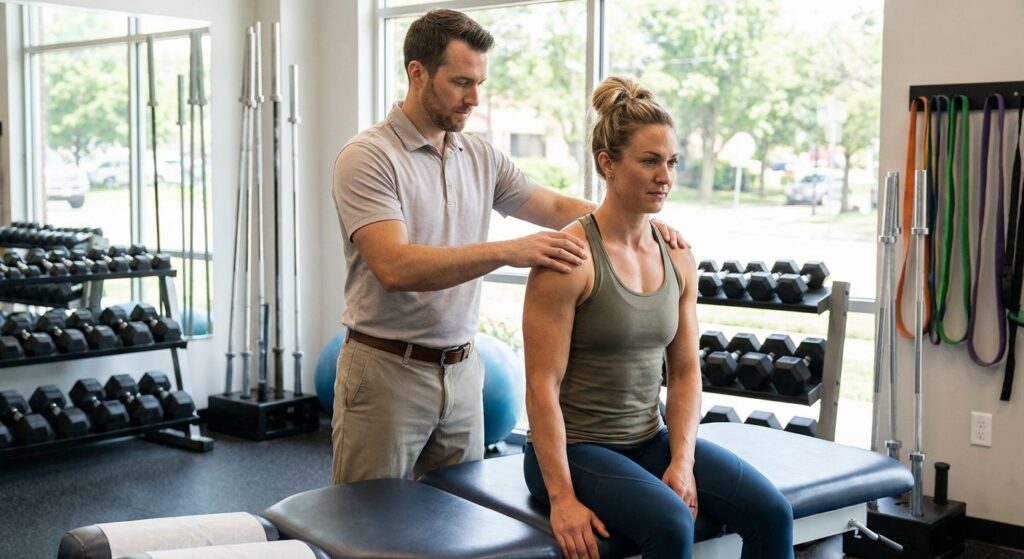
Heavy lifters break down in predictable places: low back under a loaded squat, shoulders under an overhead press, hips that lock up after a deload week that wasn't actually a deload. Finding a chiropractor for weightlifters means finding someone who treats the joint problem and understands why you're not willing to skip leg day to fix it.
- A chiropractor for weightlifters should assess squat, deadlift and press mechanics, not just poke at the sore spot.
- Spinal decompression and manual adjustments help disc-related pain in lifters when paired with exercise, not rest alone.
- Same-day availability matters more for athletes mid training-block than for occasional back pain sufferers.
- A generalist who prescribes total rest for a lifter is a red flag worth walking away from.
- MyChiro in Bondi Junction combines manual therapy with structured exercise for strength athletes in 2026.
Why this matters
Lifting under load is repeated, high-force spinal loading done on purpose, week after week. That's not a flaw in the sport, it's the sport. But it means a chiropractor who only knows how to treat a one-off tweak from lifting a couch is working with the wrong model for you.
The research on manual therapy backs this up: combined with exercise and a biopsychosocial approach, it improves short-term pain relief and function, and holds up better long-term than passive treatment alone. For a weightlifter, "passive treatment alone" usually means someone telling you to stop training. That's the wrong answer in 2026 when most training-related back pain resolves faster with modified loading, not zero loading.
Getting this wrong costs you training cycles. Getting it right at MyChiro in Bondi Junction means the plan accounts for your next competition, meet or simply your next heavy squat day, not just the pain you're in today.
Who this is for
This guide is for recreational and competitive lifters: powerlifters chasing a total, CrossFit athletes stacking Olympic lifts into metcons, bodybuilders grinding volume, and gym-goers who lift three or four times a week and keep tweaking the same spot. If your training involves a barbell loaded above 60% of your one-rep max on a regular basis, the advice below applies to you.
What to look for in a chiropractor for weightlifters
Assessment that includes your actual lifts
A generic spine check misses what matters for a lifter: hip hinge pattern, bar path on a squat, thoracic rotation on a press. Ask whether the assessment covers your specific lifts, not just range of motion in isolation. If the answer is no, the diagnosis is guessing at your cause of pain.
Manual therapy paired with exercise, not instead of it
Adjustments that reduce nerve pressure and restore joint mobility work faster when combined with targeted exercise and a biopsychosocial view of your pain, meaning stress, sleep and training load all get factored in. A chiropractor who only adjusts and sends you home is doing half the job.
Fast turnaround around your training week
A lifter mid-block can't wait ten days for an appointment. Same-day or next-day availability matters more here than for someone with an occasional ache, because a missed week of squats has a real effect on your programming.
Willingness to talk to your coach
If you have a programming coach, the chiropractor should be comfortable adjusting recommendations around your training calendar rather than issuing blanket rest orders that ignore your peaking cycle.
A clear return-to-lift plan, not vague reassurance
"Come back if it's still sore" isn't a plan. You want specific guidance: reduced load percentage, exercise substitutions, and a timeline for progressing back to full intensity.
Spinal decompression as an option for disc-related pain
For lifters with sciatica or a disc bulge from years of heavy pulling, spinal decompression combined with targeted exercise can reduce nerve pressure and speed recovery. It's not needed for every lifter, but it should be on the table when disc symptoms show up.
Care approaches worth asking about
Spinal adjustments — the workhorse. Restores joint mobility in the spine and hips that gets stiff from repeated loading patterns. Most lifters need this as a baseline, not a one-time fix. Verdict: Book it if you train more than three times a week.
Spinal decompression — the disc-specific fix. Targeted at nerve pressure from disc bulges or sciatica, common in lifters who've spent years under a barbell. Works best stacked with exercise, not as a standalone. Verdict: Consider it if you have radiating leg or arm pain.
Manual therapy plus exercise — the long game. Combines hands-on treatment with a biopsychosocial approach that accounts for training load, sleep and stress alongside the physical fix. This is the approach with the strongest evidence for lasting function, not just short-term pain relief. Verdict: Buy in if you want fewer repeat visits over 2026.
Rest-only advice with no exercise plan — the trap. Sounds cautious, feels responsible, but leaves you deconditioned and no closer to understanding what caused the pain. Verdict: Skip any provider whose only advice is "stop lifting."
Get a plan built around your training
Same-day appointments for lifters dealing with back, shoulder or hip pain.
What to avoid
- A provider who won't discuss your lift numbers. If they don't ask what you squat, deadlift or press, they're treating a generic back, not your training pattern.
- Total rest as the first and only prescription. Modified loading almost always beats zero loading for training-related pain.
- One-and-done adjustments with no exercise homework. Manual therapy without a movement component tends to relapse once you're back under a bar.
Verdict comparison
| Criteria | Generalist chiropractor | Sports-focused approach |
|---|---|---|
| Movement assessment | Symptom area only | Squat, deadlift, press mechanics reviewed |
| Exercise integration | Rarely included | Manual therapy plus targeted exercise |
| Availability | Days-long wait typical | Same-day options for training weeks |
| Return-to-lift guidance | "Rest and see" | Load percentage and timeline given |
| Disc-related pain options | Limited | Spinal decompression available |
FAQ
What’s the best chiropractic care for weightlifters?
The best approach combines manual adjustments with targeted exercise rather than adjustments alone. Lifters recover faster and see fewer repeat flare-ups when the plan includes movement correction for their specific lifts.
Is a chiropractor better than a physio for lifters?
Neither is universally better; the right choice depends on whether your issue is joint mobility (chiropractic strength) or rehab progression (physio strength). Many lifters benefit from a chiropractor who integrates exercise into the plan, closing that gap.
How often should a weightlifter see a chiropractor?
Frequency depends on training volume and current pain, ranging from a single assessment after a flare-up to periodic check-ins during heavy blocks. A clear return-to-lift plan should tell you when to come back, not leave it open-ended.
Can chiropractic adjustments improve squat and deadlift form?
Adjustments that restore hip and thoracic mobility can remove physical restrictions limiting your bar path, but they don’t replace coaching cues. The two work best together, not as substitutes.
How much does a chiropractor visit cost in Australia in 2026?
Costs vary by clinic, session length and whether it’s an initial assessment or a follow-up. Check current rates directly with the clinic you’re considering rather than assuming a flat national price.
What is spinal decompression and does it help lifters?
Spinal decompression gently stretches the spine to reduce pressure on discs and nerves, useful for lifters with sciatica or disc bulges from years of heavy pulling. It works best paired with targeted exercise rather than used alone.
Should I see a chiropractor before or after a heavy training block?
Before, if you already have nagging pain, since addressing it early prevents a bigger interruption mid-block. After a block, a check-in helps catch accumulated stiffness before it becomes an injury.
Is it safe to lift the same day as an adjustment?
Usually yes, at reduced intensity, since adjustments aim to restore mobility rather than create fragility. Ask your provider for specific loading guidance for that session rather than assuming a blanket answer.
One last thing
The lifters who recover fastest in 2026 aren't the ones who rest the longest, they're the ones who get a same-day assessment, keep training at reduced load, and follow a specific return-to-lift timeline instead of guessing when they feel "good enough." That's the difference between a missed week and a missed month.
Related guides


