

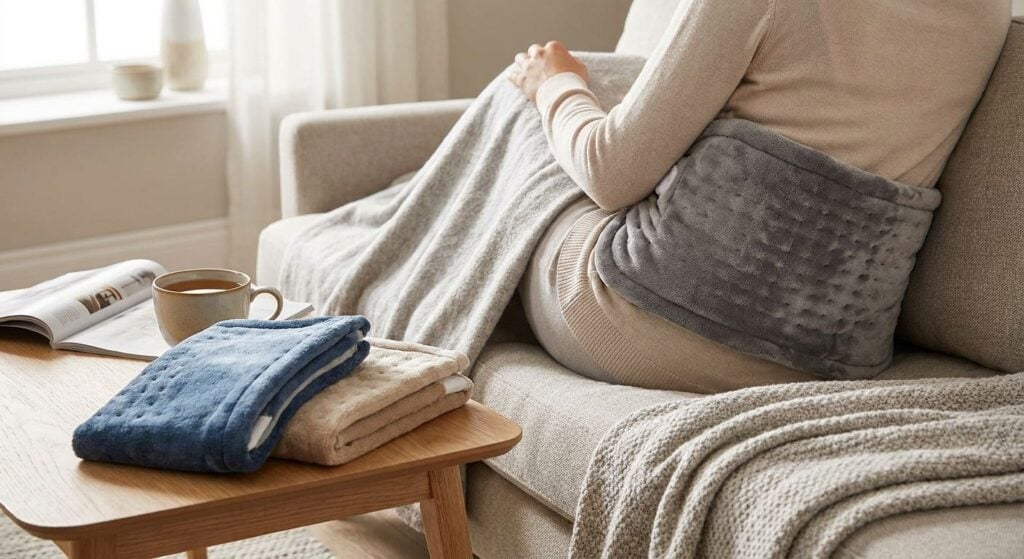
Heat is one of the simplest tools for easing a stiff or aching lower back, but not every heating pad works the same way — some plug in, some go in the microwave, and some strap on and move with you through the day. This guide ranks seven common heating pad types for lower back pain so you can match the format to your routine, budget and how you actually use it.
- Standard electric heating pads with moist heat settings suit most people looking for the best heating pad for lower back pain in 2026 – Buy.
- Microwavable wheat and flaxseed packs give cordless, low-cost warmth but cool down faster than plug-in pads.
- Infrared heating pads cost more upfront and suit people who want lower-intensity warmth over longer sessions.
- Heat is a comfort tool, not a diagnosis – persistent or worsening lower back pain is worth having assessed.
Why heat matters for lower back pain
Applying warmth to the lower back is one of the most common self-care habits people reach for, and it works by increasing local blood flow and relaxing tight surface muscles around the spine. It does not change the underlying cause of back pain, which is why heat is best thought of as a comfort measure alongside movement, posture changes and, where needed, an assessment with a health professional. The team at MyChiro in Bondi Junction sees this pattern regularly — people manage day-to-day tightness at home with heat, then come in when the discomfort is persistent, radiating, or affecting sleep and daily tasks.
Most general guidance on heat therapy suggests sessions of around 15 to 20 minutes at a time, at a comfortable warmth rather than the highest setting, with a break before reapplying. Going hotter or longer does not necessarily add benefit and raises the risk of skin irritation, particularly for people with reduced sensation, diabetes, or who are pregnant — anyone in those groups should check with a health professional before using heat therapy regularly.
How this list was ranked
Each heating pad type below is ranked on coverage area, portability, how consistently it holds temperature over a session, and how well it suits a lower back specifically rather than smaller joints. The categories reflect what's widely available in Australian pharmacies and online retailers heading into 2026, not a single brand or model, since heat therapy products vary in quality within every category. Verdicts are based on practicality for daily lower back use, not on any claim that a given product resolves the cause of back pain.
The ranked list
1. Standard electric heating pad — the reliable default
A plug-in electric pad with multiple heat settings and a large back-sized panel is the most common option people reach for first. Most models offer three heat settings and an auto shut-off timer around two hours, which matters if you tend to fall asleep with it on. Coverage typically runs 30cm x 60cm or larger, wide enough to sit across the whole lower back rather than one spot. Verdict: Buy — it's the most flexible option for regular use at a desk or on the couch.
2. Microwavable wheat or flaxseed pack — the cordless option
These packs heat in a microwave in one to two minutes and hold warmth for roughly 20 to 30 minutes before needing a reheat. They're cordless, which makes them easier to use lying down or moving between rooms, and they mould to the curve of the lower back better than a flat electric pad. The trade-off is temperature control — you can't dial down the heat mid-session the way you can with an electric pad. Verdict: Buy for casual, short-session use; Hold if you need heat for longer stretches at a time.
3. Far-infrared heating pad — the slow-and-steady pick
Infrared pads use a different heating element that's marketed as penetrating warmth rather than surface heat, and they typically run at lower peak temperatures with longer recommended session times, sometimes up to 30-40 minutes. They cost noticeably more than a basic electric pad. For people who find standard pads too intense on bare skin, the lower, steadier warmth can be more comfortable over a longer sitting or reading session. Verdict: Consider if budget allows and you prefer a gentler heat profile; Skip if you just want fast, high warmth.
4. Battery-operated heat wrap — the on-the-go option
Wrap-style pads with rechargeable batteries are built for movement — walking the dog, doing chores, sitting at a desk without being tied to a power outlet. Battery life on most models runs two to four hours per charge at a mid-level heat setting, and the wrap format keeps heat close to the lower back even while you're upright. They're pricier than a basic plug-in pad and generally run at a lower maximum temperature. Verdict: Buy for anyone whose day doesn't involve sitting still; Skip if you mainly use heat while lying down at home, where a plug-in pad does the job cheaper.
5. Adhesive heat patches — the discreet, disposable pick
Self-heating patches worn under clothing produce low, steady warmth for six to eight hours using an air-activated heating reaction, no power source or reheating required. They're thin enough to wear at work or while driving, and coverage is smaller — designed for a targeted area rather than the full lower back. They're single-use, so the ongoing cost adds up compared with a reusable pad. Verdict: Consider for travel days or workdays when a bulky pad isn't practical; Skip as a primary daily option if cost matters.
6. Heated massage pad with vibration — the multi-function pick
These combine a heating element with vibration or rolling massage nodes, aimed at people who want more than passive warmth. They tend to run larger and heavier than a basic electric pad, and pricing sits toward the higher end of the category. The added mechanical feature is a personal preference call rather than a clear upgrade over plain heat for most lower backs. Verdict: Consider if you specifically want a massage function; Hold if simple, even heat is all you're after.
7. Hot water bottle — the low-cost classic
Still widely used because it's cheap, needs no electricity or batteries, and moulds around the lower back reasonably well. Heat retention is shorter than most other options here, generally 45 minutes to an hour before it needs reboiling, and there's a real burn risk if it's overfilled with boiling water or the seal is worn. It works fine as a backup option but isn't the most practical choice for daily lower back use in 2026 given how affordable electric pads have become. Verdict: Hold as a backup; Skip as your only heat source if you use heat most days.
Comparison table
| Type | Heat source | Typical session | Verdict |
|---|---|---|---|
| Standard electric pad | Mains power | Until shut-off (~2 hrs) | Buy |
| Microwavable wheat pack | Microwave | 20-30 min | Buy |
| Far-infrared pad | Mains power | 30-40 min | Consider |
| Battery heat wrap | Rechargeable battery | 2-4 hrs per charge | Buy |
| Adhesive heat patch | Air-activated | 6-8 hrs | Consider |
| Heated massage pad | Mains power | Until shut-off | Consider |
| Hot water bottle | Boiled water | 45-60 min | Hold |
A lower back that also spends hours in a desk chair rarely improves with heat alone — pairing a heating pad with a lumbar support cushion addresses the sitting posture that often keeps the ache coming back.
Where to buy — three sourcing rules
- Check the coverage size against your actual lower back, not the packaging photo. A 30cm x 60cm panel behaves differently on a broad back than a narrow one — measure before buying online.
- Confirm an auto shut-off feature if you tend to use heat while resting or sleeping. Not every budget model includes one, and it's a genuine safety detail worth checking in the product specs.
- Buy from a retailer with a clear returns policy for unopened electrical goods, since heat tolerance is personal and a pad that suits someone else may run too hot or too mild for you.
Still dealing with ongoing lower back pain?
A chiropractic assessment can help identify what’s contributing to the discomfort.
What to avoid
- Pads without a temperature dial. A single fixed-heat setting gives you no control if the warmth is too intense on bare skin.
- Falling asleep on a pad without auto shut-off. Extended, unmonitored heat exposure raises the risk of skin irritation or burns.
- Using heat as the only response to worsening or radiating pain. Warmth may ease muscle tension, but pain that spreads down a leg or doesn't settle over a few days is worth having assessed — read more on herniated disc pain relief if that pattern sounds familiar.
FAQ
What’s the best heating pad for lower back pain in 2026?
A standard electric heating pad with multiple heat settings and full lower-back coverage suits most people in 2026, since it balances temperature control, size and cost. Battery-operated wraps are the better pick if you need heat while moving around during the day.
Is heat or ice better for lower back pain?
Heat is generally preferred for ongoing muscle tightness, while ice is more commonly used in the first 24-48 hours after a new strain or injury. Many people alternate between the two depending on how the back feels day to day.
How long should you use a heating pad on your lower back?
Most general guidance recommends sessions of 15 to 20 minutes at a comfortable, not maximum, heat setting. Reapplying after a break is generally preferred over leaving a pad on continuously for hours.
Can a heating pad help with sciatica-type pain?
Heat may help ease surrounding muscle tension for some people with sciatica-type leg pain, but it does not address nerve compression itself. Pain that radiates down the leg is worth discussing with a health professional rather than managing with heat alone.
Is infrared heat better than a standard heating pad for back pain?
Infrared pads run at a lower, steadier temperature over longer sessions, which some people find more comfortable, but there’s no established clinical evidence that it outperforms standard electric heat for lower back muscle tension. The choice mostly comes down to personal comfort and budget.
Can you sleep with a heating pad on your lower back?
Only if the pad has an auto shut-off feature, since unmonitored heat overnight raises the risk of skin irritation or burns. A microwavable pack that cools naturally over 20-30 minutes is a lower-risk option for use in bed.
When should you see a chiropractor instead of just using heat at home?
If lower back pain persists beyond a couple of weeks, worsens, radiates into a leg, or affects sleep and daily activity, an assessment can help identify what’s contributing to it. A chiropractor can discuss whether further care may be appropriate based on that assessment.
One last thing
The detail most people skip is checking the auto shut-off timer before buying, not the heat settings — a pad that shuts off after two hours protects skin far more reliably than a dial with five temperature levels you'll rarely use past medium. If your lower back pain keeps returning regardless of which heating pad you try, that pattern is more useful information for an assessment than the pad itself.
Related guides
- Best lumbar support cushion for office chairs
- Best foam roller exercises for lower back pain
- Chiropractic care for degenerative disc disease
- Chiropractic care for herniated disc pain relief


