

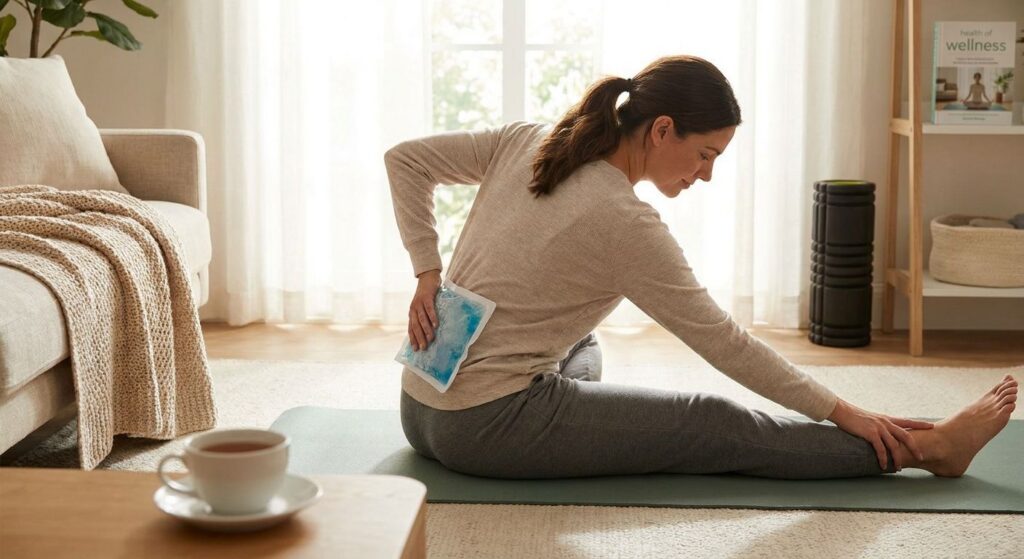
Sciatica pain that shoots from the lower back into the buttock or leg may ease with a combination of gentle movement, stretching, alternating heat and cold, and posture changes at home — though how much relief you get, and how quickly, depends on what's irritating the sciatic nerve in the first place. These home strategies address the symptom, not the underlying disc, joint or muscle issue causing the nerve irritation, so pain that worsens, or comes with numbness, weakness or pins and needles down the leg, needs assessment from a GP, physiotherapist or chiropractor rather than more home remedies.
- Gentle movement, stretching and alternating heat/cold are the main home approaches people use when researching how to relieve sciatica pain fast in 2026.
- Bed rest beyond a day or two tends to prolong sciatic nerve irritation rather than ease it.
- Numbness, leg weakness or bladder/bowel changes need same-week medical assessment, not more home treatment.
- MyChiro in Bondi Junction can assess whether the nerve irritation is coming from a disc, joint or tight muscle before you keep guessing at home.
Why this matters
The sciatic nerve is the longest and widest nerve in the body, running from the lower back through the buttock and down the back of each leg. When something compresses or irritates it — a bulging disc, a tight piriformis muscle, or narrowing around the spinal joints — the pain can travel well past the back itself, into the calf or foot.
Sciatica is a symptom, not a diagnosis on its own. Two people with the same leg pain can have completely different underlying causes, which is why a stretch that helps one person can aggravate another. If disc involvement is suspected, it's worth reading about herniated disc pain relief alongside the general approaches below, since the cause changes what actually helps.
How to relieve sciatica pain fast at home
Most people try a handful of things in the same order, roughly from easiest to most involved. None of these guarantee an outcome — how you respond depends on the underlying cause — but this is the sequence most commonly recommended as a starting point in 2026:
- Keep moving in short bursts. Ten to twenty minutes of gentle walking, several times a day, is generally better tolerated than long periods lying down.
- Try a gentle nerve-friendly stretch, such as the seated piriformis stretch or the knee-to-opposite-shoulder stretch, holding each position for 20 to 30 seconds without forcing range of motion.
- Alternate heat and cold. Ice for 15 to 20 minutes can calm acute irritation; a heat pack for 15 to 20 minutes later in the day may ease muscle tightness around the nerve.
- Adjust how you sit. A lumbar support cushion and regular position changes every 30 to 40 minutes reduce sustained pressure through the lower back and hip.
- Ask a pharmacist about over-the-counter options if pain is affecting sleep or daily tasks — dosing and suitability should be checked against your own health history.
- Change your sleep position. Side-lying with a pillow between the knees, or lying on your back with knees supported, takes pressure off the nerve for some people; see best sleeping positions for sciatica for the full breakdown.
Movement and walking
Sitting still for long stretches tends to compress the disc space more than standing does, which is part of why bed rest often makes sciatic pain feel worse rather than better. Short, frequent walks keep blood flow moving around the nerve root without loading the spine the way sitting does.
The goal isn't a long workout — it's frequency. Five short walks across a day generally beat one long one when a nerve is irritated.
Stretching and gentle mobility work
Stretches that target the piriformis muscle and the lower back can reduce some of the mechanical pressure contributing to nerve irritation, particularly when the piriformis itself is the source of tightness rather than the disc. Movement should stay within a comfortable range — a stretch that reproduces sharp, shooting leg pain is a signal to back off, not push through.
Yoga-style mobility work built around the hips and lower back is also widely used alongside stretching; the yoga poses for lower back pain guide covers positions commonly included in this kind of routine.
Heat, cold and posture support
Cold therapy is generally used in the first day or two after a flare-up, when inflammation is more likely to be driving the pain. Heat tends to be introduced once the acute stage settles, to help ease surrounding muscle tension.
A firm chair with proper lumbar support, or a rolled towel placed at the small of the back, keeps the spine in a more neutral position through the workday — small, repeated adjustments matter more here than any single product.
“Bed rest beyond a day or two tends to prolong sciatic nerve irritation, not ease it.”
Why sciatica pain varies from person to person
How quickly someone notices a difference — and which home strategies actually help — depends on what's driving the nerve irritation:
- Disc bulge or herniation pressing directly on a nerve root, often worse with sitting or bending forward
- Piriformis muscle tightness in the buttock, which can mimic disc-related sciatica but responds differently to stretching
- Spinal stenosis, a narrowing around the nerve pathways that tends to affect older adults and worsens with standing or walking
- Prolonged sitting posture, common in desk-based or shift work, which increases sustained pressure through the lower back
- Pregnancy-related nerve pressure, where changes in posture and ligament laxity can irritate the nerve
- Repetitive lifting or twisting, which places uneven load through the lower back over time
Given this range of causes, an assessment that identifies which of these is actually happening — rather than treating all sciatica the same way — tends to guide better decisions about what to try next.
Get the nerve irritation assessed
A chiropractor can check whether disc, joint or muscle involvement is behind your sciatica.
Does walking help sciatica or make it worse?
Walking in short, frequent bouts of 10 to 20 minutes generally helps rather than worsens sciatic nerve irritation, because it avoids the sustained compression that comes with sitting or lying still for long periods. Pain that sharply worsens during walking, rather than easing with movement, is worth raising with a health professional rather than pushing through.
Should I use ice or heat for sciatica?
Ice for 15 to 20 minutes is generally used in the first day or two after a flare-up, when inflammation is likely driving the pain, while heat for 15 to 20 minutes is introduced once the acute stage has settled to ease surrounding muscle tightness. Alternating the two, rather than relying on only one, is a common approach through 2026.
When should I see a chiropractor for sciatica?
It's reasonable to have sciatica assessed by a chiropractor, physiotherapist or GP when home approaches haven't shifted the pain after a week or two, or when the pain is affecting sleep, work or daily movement. A chiropractor can examine the lower back and hip mechanics and discuss whether further imaging or referral is appropriate, following a proper assessment.
FAQ
How can I relieve sciatica pain fast at home?
Short walks, gentle stretching, alternating heat and cold, and posture adjustments are the main home approaches people try for sciatica pain in 2026. How much relief you notice, and how fast, depends on the underlying cause of the nerve irritation, so persistent pain still needs assessment.
Is bed rest good for sciatica?
Bed rest beyond a day or two is generally not recommended for sciatica, since prolonged lying down can increase pressure on the disc space. Short, frequent movement is usually better tolerated than extended rest.
What sleeping position is best for sciatica pain?
Side-lying with a pillow between the knees, or lying on the back with the knees supported, are commonly used positions to reduce nerve pressure overnight. Individual comfort varies, and a mattress that’s too soft or too firm can undo the benefit of either position.
How long does sciatica usually take to settle?
Recovery time varies widely depending on the underlying cause, from a muscle-related flare-up to a disc-related nerve compression. Pain that isn’t trending in a better direction after a couple of weeks of self-management is worth having assessed.
Can stretching make sciatica worse?
Stretching can aggravate sciatica if it reproduces sharp, shooting leg pain, which is a sign the movement is loading the nerve rather than easing tension around it. Gentle, pain-free range of motion is the general guide, and a health professional can tailor stretches to the specific cause.
Does sitting all day make sciatica worse?
Sitting for long, unbroken periods tends to increase pressure through the lower back and disc space, which can aggravate sciatic nerve irritation. Standing up, walking briefly and changing position every 30 to 40 minutes reduces that sustained load.
When is sciatica an emergency?
Sudden leg weakness, numbness in the groin or inner thigh, or loss of bladder or bowel control alongside sciatica-type pain needs urgent medical assessment, not home treatment. These are signs of possible significant nerve involvement that require prompt review.
Can a chiropractor help with sciatica?
A chiropractor can assess the lower back and hip mechanics contributing to sciatic nerve irritation and discuss options that may be appropriate following that assessment. Chiropractic care is one part of a broader approach that can include exercise, posture changes and, where indicated, referral to another health professional.
One last thing
The detail most people miss: prolonged sitting often loads the lower back and disc space more than standing does, which is part of why a desk job can aggravate sciatica as much as manual lifting work. If your pain consistently worsens through the afternoon at a desk, the fix might be less about the chair and more about how often you're getting out of it.
Related guides