

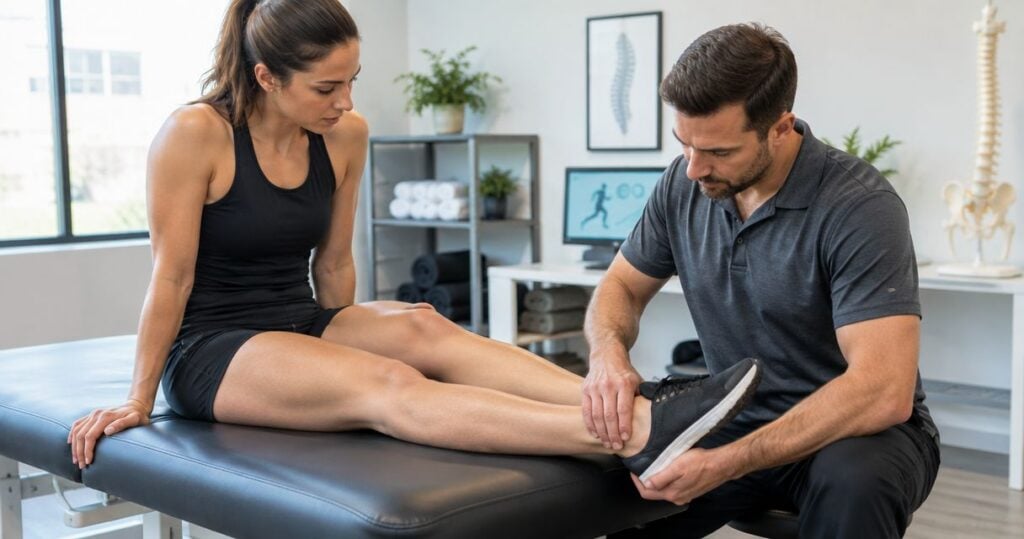
Achilles tendonitis chiropractic care for runners is an assessment-based approach to calf, ankle and lower-limb mechanics, aimed at addressing the training and biomechanical load feeding into Achilles pain rather than treating the tendon in isolation. Runners have different needs than a desk-based patient with the same tendon complaint: training volume, footwear cycles, hill sessions and gait all change how the tendon is loaded week to week, and any plan has to account for that.
- Achilles tendonitis chiropractic care for runners looks at calf, ankle, hip and gait mechanics alongside training load, not the tendon alone.
- Reducing weekly mileage and adding eccentric calf loading are the first two moves most runners can start without an appointment.
- A chiropractor can assess ankle mobility and hip or lower back restrictions that may be adding to Achilles load, alongside a GP or physiotherapist.
- Sudden sharp pain, a popping sensation or inability to bear weight needs same-day medical assessment, not a wait-and-see approach.
Why this matters for runners
Achilles tendon pain in runners tends to build gradually across weeks of training rather than appearing from one bad run, which means most runners keep training through the early stages and only look for help once mileage or pace is affected. That delay changes what a recovery plan needs to cover by the time someone books in.
A runner's Achilles pain is rarely just a calf problem. Foot strike pattern, hip stability, lower back mechanics and even shoe wear all feed into how much load the tendon absorbs on each stride, which is why a narrow, tendon-only view often misses the contributing factor. MyChiro in Bondi Junction sees this pattern regularly in runners training around the eastern suburbs coastal paths, where hard pavement and hill sections add load quickly once volume increases.
Any plan discussed here is general education. Persistent, worsening or unusual symptoms should be raised with a GP, physiotherapist or chiropractor for an individual assessment before changing a training or rehab plan.
How runners can approach Achilles tendonitis
Reduce training load before anything else
The first move for most runners is adjusting volume and intensity, not stopping altogether. Complete rest tends to deondition the calf and Achilles further, so a load reduction is usually the more sustainable starting point.
- Cut weekly mileage by roughly a third rather than to zero
- Pause hill repeats and speed intervals until morning stiffness settles
- Apply a same-day pain rule: if pain rises during a run or lingers more than 24 hours after, scale back further
- Swap one or two runs for low-impact cross-training such as swimming or cycling
- Keep easy-pace runs on flatter, softer surfaces where possible
Check footwear and running surface
Worn-out shoes and abrupt surface changes are common, fixable contributors to Achilles irritation in runners.
- Replace running shoes showing visible heel or midsole wear
- Avoid switching heel-to-toe drop suddenly (for example, moving from a 10mm to a 0mm drop shoe)
- Rotate between two pairs of shoes rather than running every session in one pair
- Note whether pain tracks with a recent surface change, such as more hill or trail running
- Consider a gait assessment if pain persists despite these changes
Build calf and ankle strength
Strength and load capacity work is the part of Achilles recovery with the most consistent backing in the research literature, and it is something most runners can start at home.
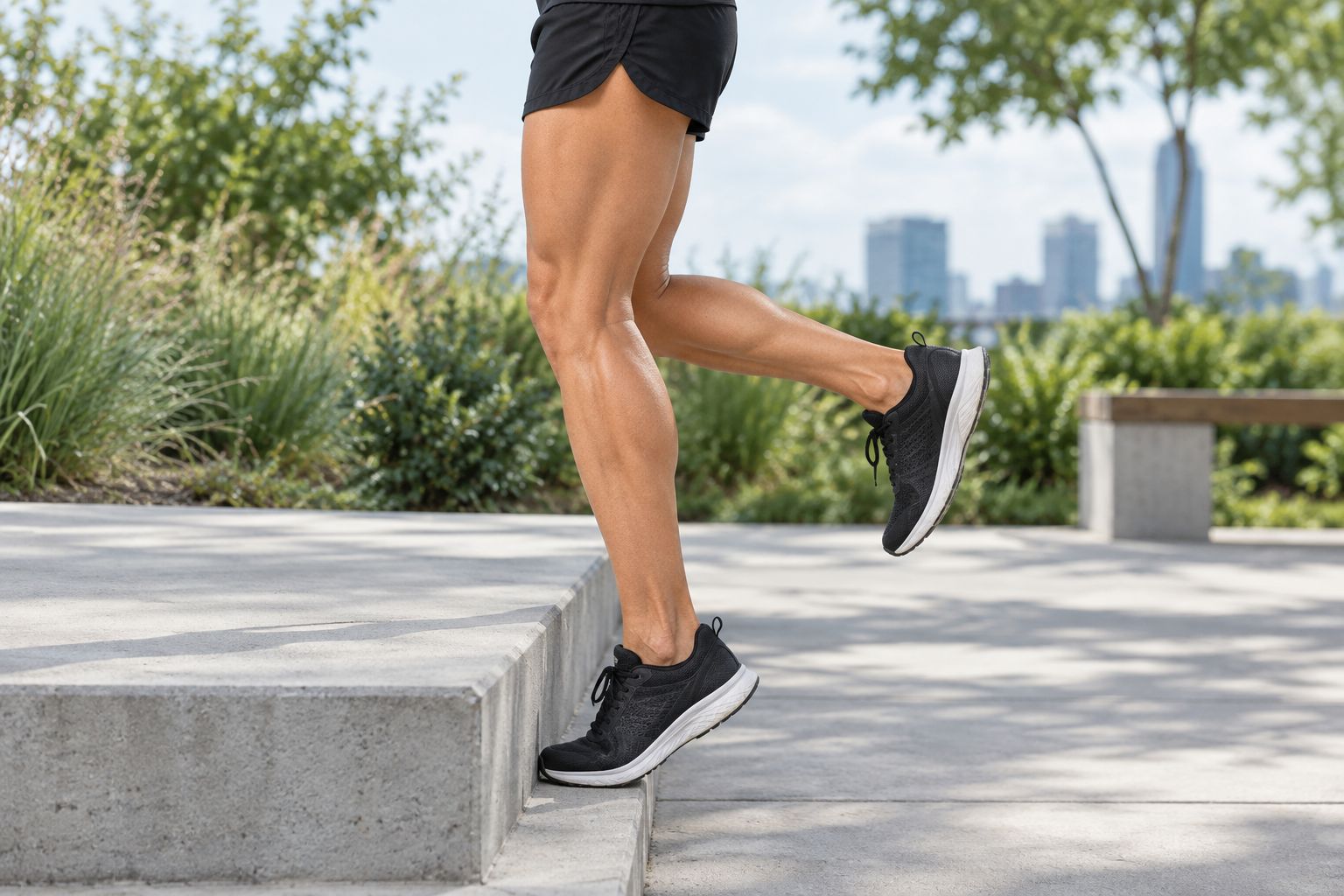
- Eccentric heel drops off a step, done slowly on the way down
- Isometric calf holds against a wall for building tolerance without high load
- Ankle mobility drills to keep dorsiflexion range from tightening further
- Gradual progression from double-leg to single-leg calf raises
- Light plyometric work only once daily strength work is pain-manageable
Get a biomechanical assessment
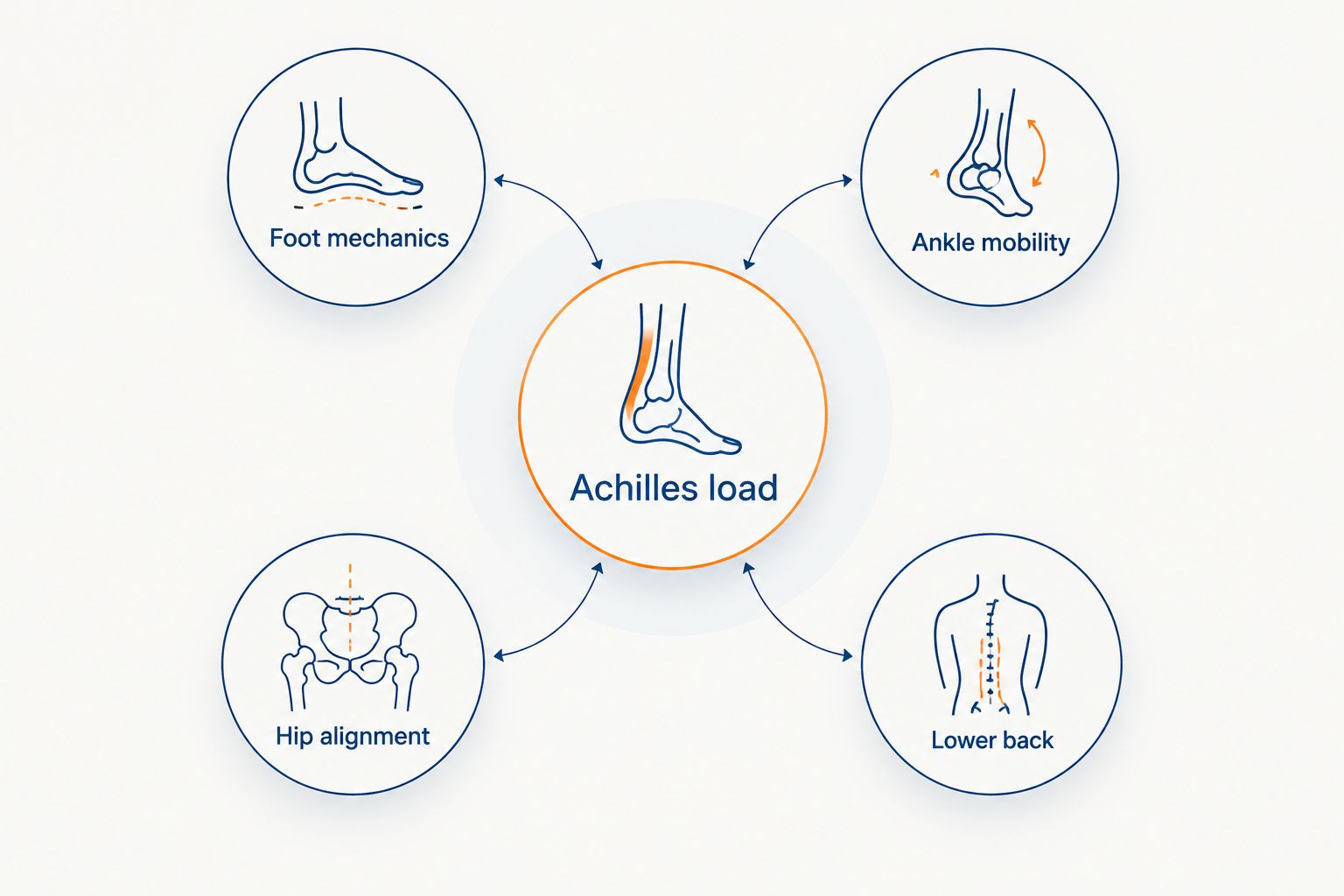
This is where a chiropractor's role in Achilles tendonitis care usually starts, once training load and footwear have been reviewed. Achilles pain that doesn't settle with the steps above often has a contributing pattern further up the chain.
- Foot mechanics, including pronation and arch behaviour under load
- Ankle joint mobility and any restriction limiting dorsiflexion
- Hip alignment and stability during single-leg stance
- Lower back and pelvis position affecting stride mechanics
- Previous injury history that may be shifting load onto the Achilles
A chiropractor can assess how ankle, hip or lower back restrictions may be adding to calf and Achilles loading, and that assessment can be discussed as one part of a wider plan alongside a GP or physiotherapist. Findings from a running-specific assessment for shin splints often overlap with what shows up in an Achilles assessment, since both conditions relate to lower-leg load distribution.
Discuss manual therapy and adjustments where appropriate
Manual therapy and chiropractic adjustments may be appropriate for some runners following an assessment, used alongside a loading program rather than instead of one.
- Joint mobilisation of the ankle and foot where restriction is identified
- Soft tissue work on the calf and lower leg
- Session-by-session monitoring of pain and range of motion
- Coordination with a structured eccentric loading program
- Agreed follow-up points to reassess progress
Discuss an Achilles assessment
Talk through calf, ankle and gait mechanics with a chiropractor in Bondi Junction.
Track symptoms and know the red flags
Achilles pain that behaves normally responds gradually to load management. Some presentations need medical attention sooner.
- Keep a simple pain diary noting morning stiffness and post-run pain
- Track weekly mileage against pain levels to spot patterns early
- Watch for swelling or a visible lump along the tendon
- Seek same-day medical assessment for sudden sharp pain, a popping sensation, or an inability to rise on the toes, as this can indicate a tendon tear requiring urgent review
Return to running gradually
Rebuilding running volume too fast is one of the most common reasons Achilles pain recurs after a runner starts feeling better.
- Use a walk-run progression before returning to continuous running
- Apply the same 24-hour pain rule used during the initial load reduction
- Add distance before adding pace, and pace before adding hills
- Keep strength work running alongside the return-to-run plan, not stopping once symptoms ease
- Reassess with a chiropractor, physiotherapist or GP before resuming speed sessions or races
Runners managing knee or hip symptoms alongside Achilles pain often find the mechanics overlap; a chiropractic assessment for knee and hip pain in runners covers some of the same chain.
Comparing options for Achilles tendonitis in runners
| Option | Best for | Key limitation |
|---|---|---|
| Rest and load management | Early, mild pain with recent volume increase | Doesn't address underlying mechanics on its own |
| Structured eccentric loading program | Confirmed tendinopathy needing tendon capacity rebuilt | Requires weeks of consistency to show change |
| Chiropractic assessment and manual therapy | Runners with hip, foot or gait-related contributing factors | Works best combined with a loading program, not as a standalone approach |
| Footwear or orthotic changes | Pronation or surface-related irritation | Doesn't address strength deficits alone |
| GP or sports physician review | Persistent, worsening or non-mechanical pain | Doesn't provide hands-on rehab directly |
Common mistakes runners make with Achilles tendonitis
- Stopping running completely with no alternative loading. Full rest without cross-training or calf work lets the tendon and calf deondition further.
- Relying on ice alone. Ice can ease discomfort short-term but doesn't rebuild the tendon's load capacity the way eccentric work does.
- Adding hills or speed work back too soon. This is the single most common cause of Achilles pain returning after a runner starts feeling better.
- Ignoring hip and lower back mechanics. Treating Achilles pain as a purely local calf issue misses contributing factors further up the chain.
- Switching shoe types abruptly. Moving between very different heel-drop shoes without a transition period adds sudden new load to the tendon.
FAQ
Can a chiropractor help with Achilles tendonitis in runners?
A chiropractor can assess ankle, hip and lower back mechanics that may be contributing to Achilles load in runners, and discuss findings alongside a loading program. This is typically one part of a broader plan involving a GP or physiotherapist, not a standalone approach.
What is the difference between Achilles tendonitis and Achilles tendinopathy?
Tendonitis technically refers to acute inflammation, while tendinopathy describes the more common overuse pattern seen in runners involving tendon degeneration over time. Most persistent Achilles pain in runners falls into the tendinopathy category, which responds differently to rest alone.
How long does Achilles tendonitis take to settle in runners?
Recovery timelines vary by how long symptoms have been present and how training load is managed during recovery, so no fixed timeline applies to every runner. Consistent load management and strength work over several weeks is the typical approach discussed with a health professional.
Should I stop running completely with Achilles tendonitis?
Complete rest is not always necessary and can deondition the calf further in many cases. Reducing volume and intensity while continuing modified training is the approach most commonly discussed, guided by pain response.
What exercises help Achilles tendonitis in runners?
Eccentric heel drops, isometric calf holds and gradual single-leg calf raise progressions are commonly used for building tendon load tolerance. These are typically introduced and progressed with guidance from a physiotherapist or chiropractor.
When should a runner see a doctor instead of a chiropractor for Achilles pain?
Sudden sharp pain, a popping sensation, swelling with a visible lump, or an inability to rise on the toes needs same-day medical assessment rather than a chiropractic appointment. These symptoms can indicate a tendon tear.
Do orthotics help with Achilles tendonitis?
Orthotics or footwear changes may help runners whose Achilles pain is linked to pronation or a specific running surface, though they don’t address strength deficits on their own. They’re usually discussed as one part of a wider plan.
One last thing
Most runners search for how to keep running through Achilles pain, when the more useful question is how much load reduction is actually needed. A third off weekly mileage, kept up for two to three weeks alongside daily calf loading, settles more cases than most runners expect before they even look at footwear or manual therapy.
Related guides
- Chiropractic care for shin splints in runners
- Chiropractic care for runners with knee and hip pain
- Chiropractic care for ankle sprains and instability
- How to choose the right chiropractor for your condition


