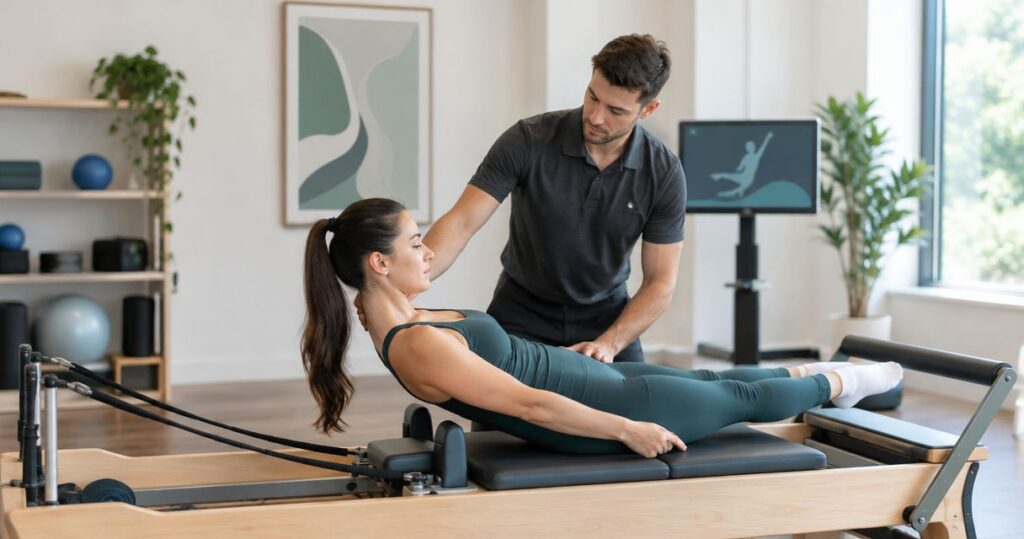
Instead of relaying different instructions between appointments, combine chiropractic and pilates through a shared plan that records your goals, agreed exercise boundaries and review points. This 2026 guide explains how to organise reformer training alongside chiropractic care without assuming you need both.
- Chiropractic and pilates need separate reasons for inclusion, not an automatic combined package.
- MyChiro provides chiropractic care in Bondi Junction; ask separately about reformer training arrangements.
- Share agreed exercise guidance with your reformer instructor, with your consent.
- Choose session timing and exercise changes through individual discussion, not a universal timetable.
Why this matters
Chiropractic appointments and reformer classes involve different decisions. An appointment does not automatically establish which exercises suit you, and a class booking does not establish whether chiropractic care is appropriate.
MyChiro provides chiropractic care for local patients in Bondi Junction, Sydney. If you are considering the clinic, distinguish its stated chiropractic care from any separately arranged Pilates instruction. Do not assume either provider offers the other service or routinely exchanges information.
The practical aim is clarity, not a claim that combining services produces a particular result. Your 2026 plan should explain why each service is included, who makes which decisions and when you will reconsider the arrangement.
| Component | Role in the plan | Practical advantage | Limitation to discuss |
|---|---|---|---|
| Chiropractic care | Assessment and discussion of chiropractic care, including adjustments where appropriate | A setting to discuss whether chiropractic care belongs in your plan | A chiropractic appointment is not a reformer class or an automatic reason to continue appointments |
| Reformer Pilates | Instructor-led exercise using a reformer | A setting to practise the agreed exercise programme | Class instruction is not a substitute for medical assessment of new or unexplained symptoms |
Neither component earns a place simply because the other is already booked. Ask each provider to explain the purpose of their involvement in terms you understand.
Before you start
- Gather your information. Bring your current exercise schedule, relevant health information, existing professional advice and the reformer studio's intake requirements. Share sensitive information directly rather than through a group chat.
- Confirm responsibilities and permission. Ask who will supervise the exercise, who will answer health questions and how information can be exchanged with your consent. Check the chiropractor's registration through Ahpra and ask the instructor about their qualifications and scope.
- Check the hidden scheduling problem. A booked class does not guarantee the instructor can accommodate your individual instructions. Confirm that before booking adjacent appointments; do not wait until you are on the reformer.
This workflow concerns coordination, not an exercise prescription. If symptoms are new, unexplained or changing, discuss assessment with a qualified health professional rather than using this article to select exercises.
Your shared brief
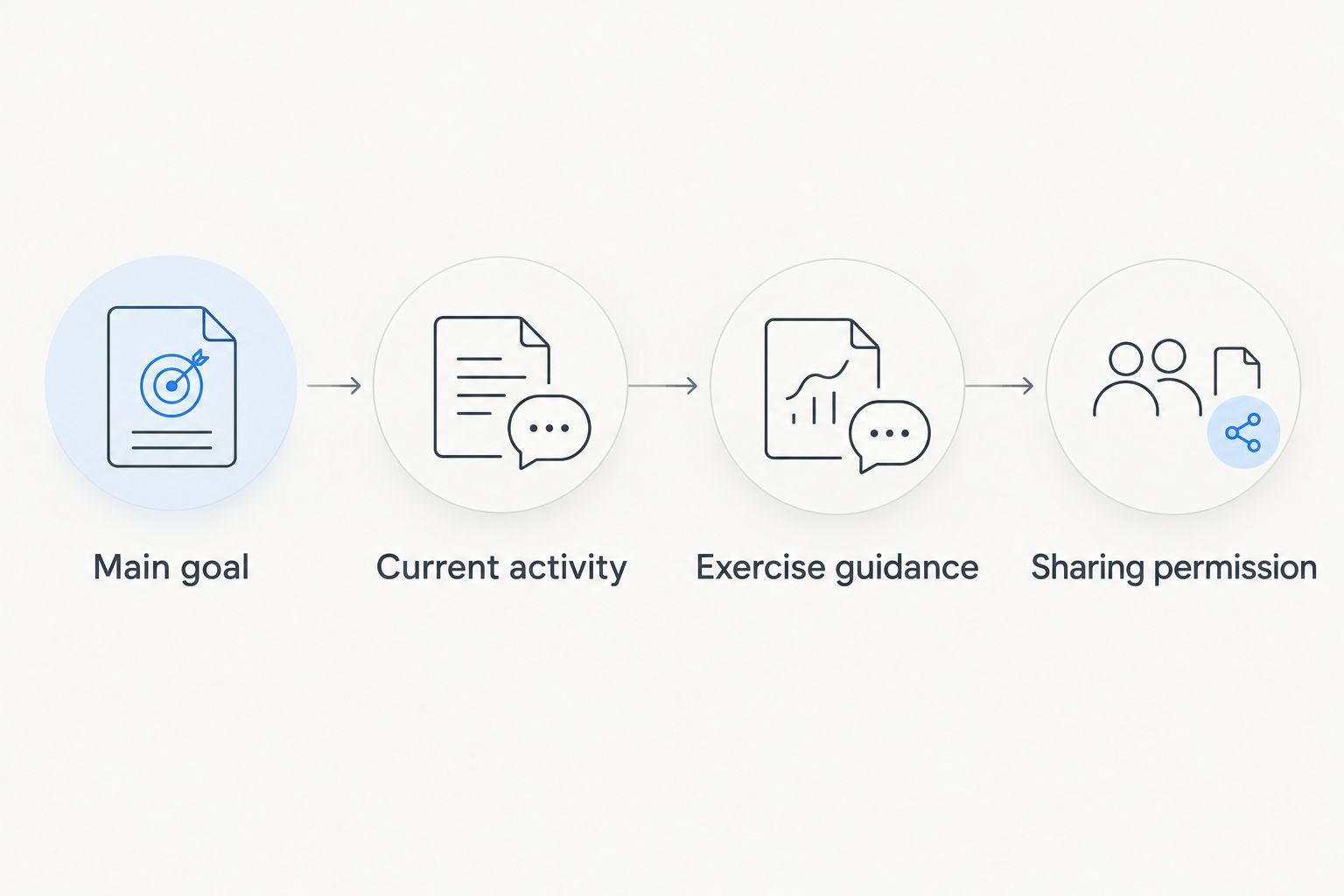
Create a note you control, on paper or in a document. The bold labels below are suggested headings for your own worksheet, not fields in a clinic or studio booking system.
- Write your goal. Under Main goal, describe what you want to participate in, such as attending a reformer class or returning to an existing routine. Avoid promising yourself a particular clinical outcome.
- Record the current routine. Under Current activity, list your classes, other exercise and relevant work demands. Include activities outside the studio so the conversation is not limited to one session.
- Collect agreed guidance. Under Exercise guidance, record what the assessing health professional actually advises. Ask for clarification rather than translating an unfamiliar term into your own restriction.
- Confirm consent. Under Sharing permission, identify which provider may receive which information. You can share a relevant summary without distributing your complete health history.
Set aside 10 minutes for this administrative task; that is a planning suggestion, not a recommended exercise duration. Keep the brief short enough to read before a class.
Expected result: you have a written summary that distinguishes your goal, your routine and the advice you have actually received. Both providers can identify unanswered questions without relying on your memory of separate conversations.
Your session arrangement
Do not start with a rule about whether adjustments or Pilates must come first. Start with the advice relevant to your circumstances and the practical demands of the proposed class.
- Ask about timing directly. Describe the class you intend to attend and ask whether there are individual instructions about exercise around the appointment. Request a clear answer about that session rather than assuming general advice applies.
- Describe the class accurately. Tell the health professional whether it is an introductory session, an established routine or a class with unfamiliar exercises. Tell the instructor which details remain unresolved.
- Confirm the instructor's capacity. Ask whether the proposed format allows the supervision and changes you have discussed. If it does not, resolve that mismatch before attending.
- Write the arrangement down. Record the proposed appointment and class sequence, along with any conditions attached to it. Label your calendar entry 2026 session plan so it is easy to distinguish from an older note.
Do not turn an example schedule into a standing prescription. A suitable arrangement needs a reason, and that reason should remain open to review.
Expected result: you know whether the proposed class fits the advice you have received. If the answer is unclear, you have a specific question to resolve rather than a timetable built on assumptions.
Your reformer handover
The handover should tell the instructor what has been agreed, without asking the instructor to interpret a diagnosis or choose a chiropractic technique.
- Share the relevant summary. Provide your exercise guidance before the class, using the studio's accepted communication method. Ask the instructor to confirm they have read it.
- Clarify exercise decisions. Ask who will select or change the exercises, equipment settings and movement instructions. Do not copy another participant's settings or use this article as equipment guidance.
- Agree on communication. Establish how you will tell the instructor that you want to pause, ask a question or decline an exercise. You do not need to complete every movement offered in a class.
- Resolve vague instructions. If the advice is simply to avoid strenuous activity, ask the advising professional what that means for the actual class. Do not ask the instructor to guess the intended meaning.
Expected result: the instructor understands the relevant instructions and can explain whether the class can accommodate them. You know how to raise a concern without improvising a new programme yourself.
Your review record
Use a brief record to support a conversation, not to diagnose yourself or judge whether an adjustment has worked. Keep observations separate from explanations.
- Record what happened. Use 3 fields: Session details, Your observations and Questions. Note the activity and any relevant changes without assigning a cause.
- Describe rather than label. Write that a particular movement felt different, for example, rather than deciding that a joint moved out of place. Give the provider information they can assess.
- Choose a review point. Agree when the plan will be reconsidered and what would prompt earlier contact. Do not create an indefinite appointment schedule from a single discussion.
- Replace outdated instructions. Date each update and keep one current version. Mark superseded guidance clearly so an old message does not continue to shape your classes.
Expected result: your next discussion starts with an accurate account of your activity and questions. The 2026 review record also makes it easier to identify whether anyone has actually changed the plan.
When your reformer programme changes
A second workflow applies when you already attend reformer classes and the instructor proposes a different class format or programme. You do not need to rebuild every administrative detail, but you should identify what has changed.
Use this sequence whenever a proposed change conflicts with existing guidance:
- Describe the change. Ask the instructor to explain the new exercise demands in plain language.
- Compare the instructions. Check the proposal against your current written guidance, without deciding for yourself that a restriction no longer matters.
- Clarify the conflict. Send the specific question to the professional who issued the guidance. Include the instructor's description rather than a shortened interpretation.
- Update the brief. Share any revised instructions with consent and remove the superseded version.
Keep the terminology precise during these conversations. A discussion of non-surgical spinal decompression concerns a different intervention from a reformer exercise programme; the term should not be used interchangeably with Pilates or taken as evidence that you need both services.
If someone proposes another intervention, ask what it involves and why it is being considered separately. Adding another service is a new decision, not a routine step in combining chiropractic and pilates.
Troubleshooting your combined plan
The providers give conflicting instructions
Do not average the advice or choose whichever instruction suits your diary. Identify the exact conflict and ask the providers to clarify it directly, with your consent.
Until it is resolved, do not use this guide to overrule either professional's individual instructions. A general article cannot settle a disagreement about your circumstances.
The class cannot accommodate the agreed guidance
Ask the instructor what the class format can actually support. Do not assume a group setting can provide the same supervision as an individual session.
Discuss a different arrangement if needed, without treating that as a recommendation for additional paid sessions. You can also defer the booking while the question is clarified.
You cannot tell which appointment influenced a change
Record the sequence without deciding that one service caused the change. Share the account with the relevant health professional and ask how the plan should be reviewed.
Do not deliberately repeat an uncomfortable activity to test a theory. Your role is to report what happened, not conduct a treatment experiment.
Symptoms change before a scheduled review
Contact an appropriate health professional rather than waiting simply because a review date is already booked. Do not label new or worsening symptoms as a necessary part of progress.
Sudden weakness, new loss of bladder or bowel control, or numbness around the groin requires urgent medical assessment. Do not attend a reformer class or chiropractic appointment instead of seeking urgent medical care.
Customise your workflow
A workable combined plan can become simpler, not busier. Ask whether each component still has a clear purpose and whether the communication arrangement is proportionate to your needs.
If MyChiro is providing your chiropractic care, bring the same brief to the discussion rather than maintaining separate versions for each provider. Ask the Pilates instructor to identify any programme changes that need clarification.
If you are also considering another exercise professional, keep the roles distinct. The guide to combining chiropractic care with exercise physiology covers a related coordination question; it does not mean another provider must be added to your plan.
Review the reason for each service before adding more appointments. Your 2026 plan should remain a record of considered decisions, not a checklist of services to accumulate.
FAQ
Can I combine chiropractic and pilates reformer training?
Whether chiropractic care and reformer Pilates belong in the same plan depends on your circumstances and assessment. Discuss the purpose of each service, relevant exercise guidance and communication arrangements rather than assuming both are necessary.
Should I do reformer Pilates before or after a chiropractic appointment?
Ask the assessing health professional about your proposed class and appointment sequence. This guide does not prescribe a universal order or waiting period.
Do I need chiropractic adjustments to start Pilates?
A Pilates booking is not, by itself, a reason to have chiropractic adjustments. Complete the studio’s intake process and discuss any health concerns or existing exercise instructions with an appropriate health professional.
What should I tell my Pilates instructor about chiropractic care?
Share relevant exercise guidance and any agreed limitations, with your consent. Ask the instructor to confirm whether the class can accommodate those instructions before you attend.
Does MyChiro provide reformer Pilates classes?
MyChiro is described as a chiropractic clinic and wellness centre in Bondi Junction. Confirm any Pilates arrangements directly rather than assuming reformer classes are included.
How many chiropractic appointments and Pilates classes should I book?
There is no appointment count prescribed by this guide. Ask why each service is proposed, when the arrangement will be reviewed and what would justify continuing or changing it.
What if I feel different after attending both sessions?
Record what you attended and what changed, then discuss the observations with an appropriate health professional. Do not assume the change proves either service helped or caused harm.
One last thing
Ask who will update the written plan when advice changes. Information sharing alone does not establish responsibility, and two providers can otherwise leave you holding two different versions.
Keep one dated brief that you can access. That small administrative decision gives your next conversation a clear starting point without adding another appointment.
Related guides
- Preparing for your first chiropractor appointment
- Combining chiropractic care with physiotherapy in one plan
- Questions about how often to see a chiropractor