
For running with lower back or hip pain, start by comparing comfortable everyday running shoes that fit your feet; consider stability, wide-fit or trail options only when their features match your needs. This 2026 guide compares shoe categories, not treatments: no shoe recommendation here establishes a clinical benefit for back or hip pain.
- Compare everyday running shoes for fit and comfort before considering additional support features.
- Stability, wide-fit and trail shoes serve different footwear needs; none is a diagnosis-based prescription.
- Mychiro provides chiropractic care in Bondi Junction; this running-shoe guide does not recommend a clinical service.
- Persistent or worsening back or hip pain needs assessment, not repeated footwear purchases.
Why this matters
A running shoe needs to suit your foot, running surface and preferred feel. A back-pain label does not tell you which width, cushioning level or support design to choose, and a comfortable fitting does not explain the cause of your symptoms.
Choose footwear for fit and intended use, not a promise of pain relief. If symptoms keep returning, change your stride or interfere with everyday activity, discuss them with a qualified health professional. Mychiro is a chiropractic clinic and wellness centre in Bondi Junction, Sydney; its clinic information describes the practice.
For this 2026 comparison, the order is a shopping sequence rather than a clinical ranking. Start with an ordinary running shoe, then consider a different category when you can identify a specific reason for doing so.
What makes a running shoe worth considering?
Use these criteria before comparing logos or model names:
- Foot shape: Check toe space, forefoot width, heel hold and pressure across the top of your foot.
- Immediate comfort: Notice pinching, rubbing, slipping or an uncomfortable arch contour during fitting.
- Underfoot feel: Compare cushioning directly. A softer sensation is a preference, not evidence of a back-pain benefit.
- Running surface: Match the outsole to the roads, paths or trails you actually use.
- Familiarity: Identify differences from your current shoes rather than changing several features without a reason.
- Individual context: Bring prescribed orthoses, relevant footwear advice and your usual running socks to the fitting.
Do not select a shoe solely from an arch-height chart or the location of your pain. Those details do not establish an individual footwear prescription.
Running-shoe categories at a glance
| Order | Category | Consider for | Feature to compare | Main limitation |
|---|---|---|---|---|
| 1 | Neutral everyday running shoes | A starting point for ordinary road-running footwear | Fit and cushioning feel | The category label does not establish suitability |
| 2 | Stability running shoes | Comparing additional underfoot guidance | Shape and feel of support features | Support can feel intrusive |
| 3 | Wide-fit running shoes | A forefoot that feels cramped in standard widths | Width without excess length | Extra width can leave the heel loose |
| 4 | Trail running shoes | Running on unsealed trails | Outsole tread and terrain-specific construction | Trail features are not necessarily useful on roads |
| 5 | Minimalist running shoes | An established preference for minimal footwear | Low-profile construction and ground feel | A substantial change from conventional trainers |
These categories overlap. A trail shoe can have a wide fit, and an everyday road shoe can include stability features. Compare the actual pair rather than treating the label as a complete description.
1. Neutral everyday shoes: a starting point for road running
Neutral everyday running shoes provide a straightforward category to compare when you do not have an individual recommendation for particular support features. They come in different shapes and cushioning styles, so “neutral” does not mean that every pair feels alike.
Begin with how the shoe fits your foot. A familiar brand or an appealing appearance should not outweigh pressure at the toes or a heel that repeatedly slips.
Neutral everyday shoe advantages:
- A useful starting category for comparing ordinary road-running footwear.
- Different cushioning feels can be compared within the category.
- The choice does not require you to assign yourself a foot-type diagnosis.
Neutral everyday shoe limitations:
- The label does not guarantee comfort.
- It does not establish a benefit for back or hip pain.
Consider for: Runners comparing road shoes without a specific footwear prescription.
Verdict — Hold: Try the fit before deciding; do not purchase because the shoe is advertised for back pain.
2. Stability shoes: compare when support features interest you
Stability running shoes include design features intended to guide movement underfoot. The construction differs between models, and the word “stability” does not tell you exactly how a shoe will feel.
Compare a stability shoe with a neutral option rather than assuming more support is preferable. Describe any pressure or discomfort to the fitter, particularly if an underfoot feature feels intrusive.
Stability shoe advantages:
- Offers a distinct support feel to compare during fitting.
- Provides an option when a clinician has recommended evaluating this category.
- Can be considered alongside other fit requirements, including width.
Stability shoe limitations:
- Support features can feel uncomfortable.
- The category is not an automatic recommendation for flat feet or back pain.
Consider for: Runners comparing additional guidance features or following individual footwear advice.
Verdict — Hold: Choose only after comparing comfort and any relevant professional advice, not because support is described as corrective.
3. Wide-fit shoes: consider width before adding length
Wide-fit running shoes are worth comparing when standard-width shoes squeeze your forefoot. Going up a size changes length as well as fit; it does not necessarily address the part of the shoe that feels cramped.
Check the whole shoe rather than the toe box alone. A roomy forefoot still needs a heel and midfoot fit that does not leave your foot sliding around.
Wide-fit shoe advantages:
- Offers an alternative to increasing shoe length for forefoot space.
- Lets you compare width separately from cushioning preference.
- Can accommodate a broader foot shape when the individual model fits.
Wide-fit shoe limitations:
- Width labels differ between manufacturers.
- A wider version can also feel loose in areas where you do not need space.
Consider for: Runners whose forefoot feels compressed in standard-width shoes.
Verdict — Hold: Compare standard and wider versions where possible, checking heel hold as carefully as toe space.
4. Trail shoes: choose for the surface you run on
Trail running shoes use terrain-focused outsole designs, including tread patterns intended for off-road use. Some also include protective construction for contact with rough ground; check the individual shoe rather than assuming every trail model has the same features.
Select this category because you run on trails, not because a rugged appearance suggests greater back support. For mixed routes, explain the surfaces you use to the fitter.
Trail shoe advantages:
- Offers outsole options designed around off-road terrain.
- Provides a category to compare for unsealed running routes.
- Lets you assess terrain features alongside ordinary fit requirements.
Trail shoe limitations:
- Trail-focused tread is not a back-pain intervention.
- Construction suited to one surface does not establish suitability for another.
Consider for: Runners using bush tracks and other unsealed trails.
Verdict — Hold: Match the shoe to your route and foot, not to claims about spinal protection.
5. Minimalist shoes: a separate footwear choice, not a remedy
Minimalist running shoes generally use less cushioning and structure than conventional running trainers. Designs vary, so examine the specific shoe rather than relying on the category name.
A minimalist shoe can be a substantial departure from familiar footwear. Do not interpret a natural-running label as evidence that the shoe will address lower back or hip symptoms.
Minimalist shoe advantages:
- Offers a low-profile feel for runners who prefer minimal footwear.
- Provides less material between the foot and running surface.
- Makes a distinct comparison with more structured trainers.
Minimalist shoe limitations:
- The feel differs substantially from many conventional running shoes.
- Minimal construction does not establish a clinical benefit.
Consider for: Runners with an established preference for minimal footwear and an appropriate individual running plan.
Verdict — Wait: If pain is prompting the switch, discuss that decision with a qualified health professional first.
How these categories are ordered
The 2026 order follows the criteria above: ordinary intended use first, then a specific fit, support or terrain requirement. It is not a ranking of pain relief, injury prevention or clinical outcomes.
Mychiro's running-shoe guide does not rank named products because a model-specific recommendation requires more than a category label. A shoe's place in a list cannot replace an individual fitting or assessment.
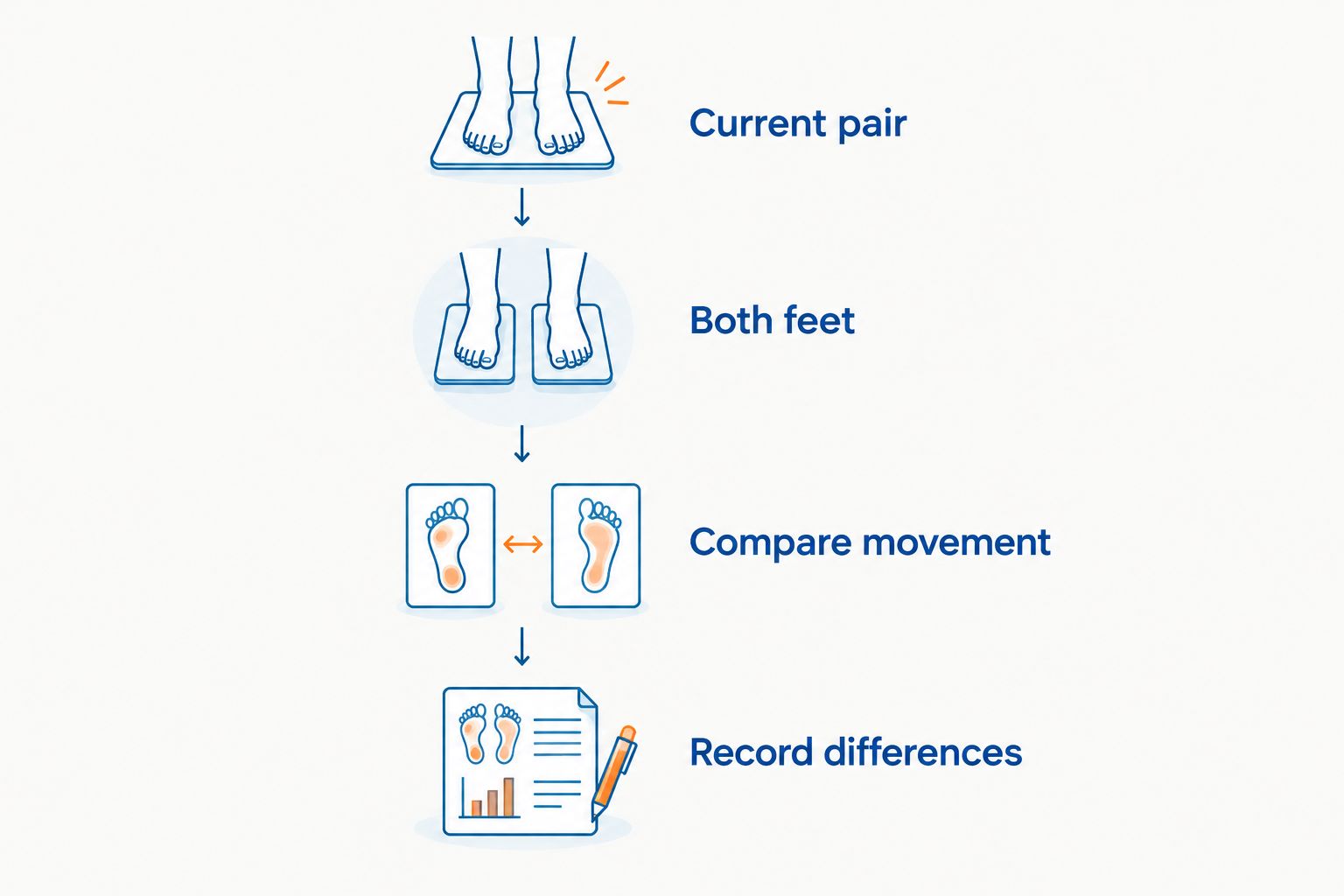
A practical fitting sequence
Start with your current pair
Bring your usual running shoes and socks. Explain what you like, where you notice pressure and whether discomfort occurs during running, afterwards or during unrelated activities.
Keep the description specific. “My toes touch the front” gives a fitter a different problem to investigate from “the arch feels intrusive”. Neither observation identifies the cause of back pain.
Check both feet
Try both shoes while standing. General NHS footwear advice commonly recommends around 1 cm of space beyond the longest toe; use that as a fitting check, not a substitute for assessing width and heel hold.
Your toes should not be forced against the front or sides. Check that the upper does not press uncomfortably across your foot, including when you wear any prescribed orthoses.
Compare movement
Walk in each pair and, where the fitting setting permits, try an easy jog. Notice slipping, rubbing, pressure and whether the shoe feels awkward rather than concentrating only on softness.
A brief fitting checks immediate comfort. It cannot establish how a shoe will perform over your usual running route or whether it will influence symptoms.
Record the differences
Write down the category, size, width and features you compared. Record your observations in plain language rather than using labels such as “corrected alignment”.
For your 2026 shortlist, keep fit and symptom observations separate. That makes the information more useful if you later discuss footwear and running with a health professional.
When assessment matters more than shoe shopping
Persistent, worsening or recurring back or hip pain deserves a discussion with a qualified health professional. Explain your symptoms, running routine, recent changes and any effect on walking, sleep or daily activities; do not assume footwear is the cause.
Seek urgent medical assessment for back pain accompanied by new bladder or bowel changes, numbness around the groin or saddle area, or progressive leg weakness. These warning signs are described in Healthdirect Australia's back-pain guidance and are not matters for a shoe fitting.
Pain following significant trauma, or pain accompanied by fever or feeling seriously unwell, also warrants medical assessment. Mychiro's educational guide to back-pain assessment provides related reading, not a substitute for urgent care.
Which running-shoe category should you choose?
Start with a comfortable everyday running shoe that fits, then change category for a specific reason. Choose a wider fit for a width problem, compare stability features when relevant to your preferences or individual advice, and select trail construction for trail use.
Do not use this 2026 guide to prescribe yourself footwear for a diagnosis. If the main problem is ongoing pain rather than an obvious fitting issue, assessment is the next decision—not another shoe category.
FAQ
Which running shoes should I choose if I have lower back pain?
Choose by individual fit and intended use rather than a back-pain marketing label. Comfortable everyday running shoes provide a starting category to compare, but a fitting does not establish the cause of pain or a clinical benefit.
Are stability running shoes preferable to neutral shoes for hip pain?
Hip pain alone does not establish which category you should choose. Compare fit and comfort, and discuss persistent symptoms or an existing footwear prescription with a qualified health professional.
Does more cushioning mean more protection for my back?
A softer underfoot feel does not establish a back-pain benefit. Compare cushioning as a comfort preference rather than treating it as evidence of spinal protection.
Should I buy a larger running shoe if my forefoot feels tight?
Compare width as well as length before choosing a larger size. Extra length does not necessarily address forefoot pressure and can leave the shoe loose elsewhere.
Should I switch to minimalist running shoes because my back hurts?
Back pain is not a reason to assume minimalist footwear is appropriate. If symptoms are prompting a substantial footwear change, discuss the decision with a qualified health professional.
Can a running shop diagnose why my hip hurts?
A shoe fitting is not a clinical assessment of hip pain. A fitter can help compare footwear, while persistent or worsening symptoms need assessment by a qualified health professional.
What back-pain symptoms need urgent medical attention?
New bladder or bowel changes, saddle-area numbness or progressive leg weakness with back pain need urgent medical assessment. Do not delay medical care to try different footwear.
One last thing
Bring the shoe that disappointed you to the next fitting. Its size, shape and uncomfortable areas give you something concrete to compare—more useful than asking for a shoe that promises to address back pain.
Keep the decision narrow: footwear selection is about the pair on your feet. It is not a diagnosis of your back or hip.
Related guides
- Lower back pain when sitting: causes and practical steps
- How to prepare for your first chiropractor appointment
- What qualifications should a Sydney chiropractor have?