


For side sleepers comparing knee pillows in 2026, start with a regular bed pillow between your knees and adjust its thickness until the position feels comfortable. A contoured knee pillow is another option if an ordinary pillow keeps shifting. This Mychiro guide compares pillow shapes and explains when hip pain needs medical assessment rather than another sleep accessory.
- For a side sleeper comparing knee pillows, a regular bed pillow is the starting option because you can adjust its position.
- Choose a contoured knee pillow when a regular pillow shifts; check whether its fixed shape feels comfortable.
- A body pillow supports the knees and ankles together but takes up more bed space.
- A knee pillow cannot identify the cause of hip pain; seek medical advice for persistent or concerning symptoms.
Why this matters
A pillow between your legs changes where your knees and ankles rest while you sleep. It does not tell you why your hip hurts, and a shape that feels comfortable to someone else might not suit your usual position. In 2026, the useful buying question is not which pillow has the strongest pain-relief claim. It is which shape lets you settle comfortably without repeatedly repositioning it.
Start by noticing where you feel pressure: at the upper hip against the mattress, between your knees, or along your lower leg. Then check whether the pillow stays where you put it when you roll slightly forward or backward. If placing a pillow between your legs increases pain, stop using that arrangement.
Mychiro is a chiropractic clinic in Bondi Junction, not a knee-pillow seller. Pillow selection is a comfort decision; ongoing hip pain calls for a separate assessment of its possible causes.
The ranked verdict
Start with a regular bed pillow if you want to test different positions. Consider a contoured knee pillow if the pillow slips away, a body pillow if you want support along both legs, or a thin flat pillow if thicker options feel intrusive. These are use-case recommendations, not a claim that one pillow treats hip pain.
What makes a useful knee pillow for side sleeping?
Use these criteria before comparing shapes. Each one describes something you can check in your own sleeping position rather than a medical outcome.
- Comfortable spacing: Your knees can rest against the pillow without you forcing your legs into position.
- Support where you want it: Decide whether you want a pillow at the knees alone or along the knees and ankles.
- Position through movement: Notice whether it remains in place when you make your usual small movements in bed.
- Easy adjustment: Check whether you can change its height or position without starting again with another pillow.
- Bed-space fit: Make sure the pillow does not crowd you or anyone sharing the bed.
- Everyday handling: Consider whether its size makes it practical to move, store and clean according to its care instructions.
These criteria matter more than a product label saying it is designed for hip pain. Such a label does not establish the cause of your symptoms or predict how the pillow will feel to you.
Knee pillow options at a glance
| Option | Best for | Standout feature | Key limitation |
|---|---|---|---|
| Regular bed pillow | Trying different leg positions | Can be folded or repositioned | Can bunch or move during sleep |
| Contoured knee pillow | Keeping a pillow between the knees | Shaped resting space for the legs | Fixed shape limits adjustment |
| Body pillow | Supporting the knees and ankles together | Runs alongside more of the body | Takes up more bed space |
| Thin flat pillow | People who dislike a thick spacer | Less material between the legs | Can shift or feel insufficient |
The 2026 comparison is deliberately about pillow types, not named products. No product specifications or side-by-side test results are available here, so the decision rests on fit and practical trade-offs rather than an unsupported product ranking.
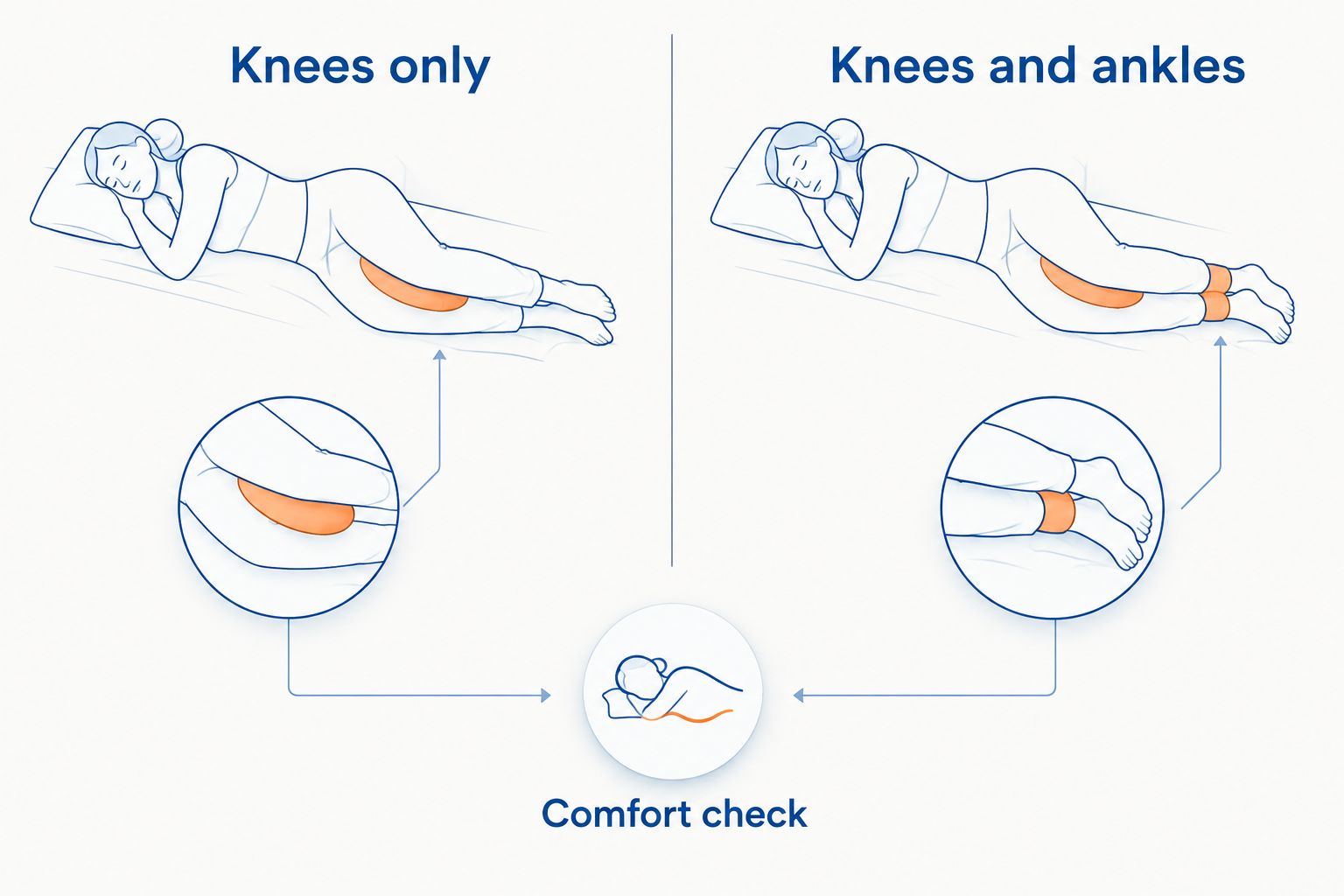
A pillow touching only the knees feels different from one extending to the ankles. Try both arrangements without assuming either is medically necessary. What matters for this comparison is whether you can rest in the position comfortably and change it when you need to.
1. Regular bed pillow: for trying different positions
A regular bed pillow is the starting option because you can place it between your knees, move it lower, or fold it if the shape allows. You can test where you prefer support before choosing a pillow with a fixed contour. Do not pack extra material between your legs simply because the pillow looks thin; use the arrangement that feels comfortable.
Regular bed pillow pros:
- Lets you change the position without switching pillow types.
- Can span the knees and part of the lower legs, depending on its size.
- Gives you a straightforward way to compare thinner and thicker arrangements.
Regular bed pillow cons:
- Can bunch up or slide as you move.
- Its shape is not designed to stay between the knees.
- A bulky pillow can take up more space than you want.
Best for: A side sleeper who wants to work out whether leg support feels comfortable before selecting a dedicated shape.
Verdict: Try. In 2026, a regular bed pillow is the default starting point, not a treatment for hip pain.
2. Contoured knee pillow: for a pillow that shifts
A contoured knee pillow has shaped surfaces intended to sit between the legs. That shape offers a more defined place for your knees than a regular pillow, but it also leaves less room to alter the spacing. Check the actual shape against your usual position rather than assuming a contour will suit it.
Contoured knee pillow pros:
- Has a defined position between the knees.
- Is more compact than a body pillow.
- Makes it easy to see whether knee-only support suits you.
Contoured knee pillow cons:
- A fixed shape can feel awkward if you prefer a different leg position.
- It does not necessarily support the ankles.
- You still need to check how it feels when you turn in bed.
Best for: A side sleeper who likes support between the knees but finds an ordinary pillow difficult to position.
Verdict: Consider. Choose a contoured knee pillow for its shape, not for an unverified promise about hip pain.
3. Body pillow: for knees and ankles together
A body pillow sits alongside more of your torso and legs. You can position it so both the knees and ankles have something to rest against, rather than keeping a small pillow at one point. Its length changes how much room you have in bed, so check that you can still move comfortably.
Body pillow pros:
- Offers a place to rest both knees and ankles.
- Can be repositioned along the length of the body.
- Lets you hold part of the pillow if that feels natural in your sleeping position.
Body pillow cons:
- Occupies more bed space than a small knee pillow.
- Can be awkward to rearrange when you change sides.
- Its length is unnecessary if you only want something between the knees.
Best for: A side sleeper who prefers contact along the legs rather than support at the knees alone.
Verdict: Consider. A body pillow fits the longer-support use case; it is not an automatic upgrade from a smaller pillow.
4. Thin flat pillow: for minimal spacing
A thin flat pillow places less material between the legs than a bulky bed pillow. It suits someone who wants to try gentle separation but finds a thick pillow distracting. You can move it between the knees or extend it lower, depending on its size and your comfort.
Thin flat pillow pros:
- Keeps the arrangement simple.
- Takes up less room than a body pillow.
- Can be moved or removed easily if your position changes.
Thin flat pillow cons:
- Can slip out of place.
- Might not reach both knees and ankles.
- Offers little adjustment beyond where you place it.
Best for: A side sleeper who wants only a small amount of material between the legs.
Verdict: Try if thicker pillows feel intrusive. Skip it if you spend the night retrieving it from the bed.
How to check the fit before choosing a shape
Use a simple comfort check rather than trying to hold a prescribed pose. Lie in your usual side-sleeping position and place the pillow where you naturally want it. Ask yourself whether you can relax your legs, whether the pillow creates a pressure point, and whether moving slightly makes it slip away.
Next, compare support at the knees with support extending toward the ankles. Neither arrangement is a universal answer to hip pain. If an option feels worse, remove it; if it stays comfortable, note which shape produced that arrangement. This is a way to compare pillows, not a test for a hip condition.
The 2026 buying decision becomes clearer after that check: choose a contoured pillow when its shape fits, a body pillow when you want longer contact, or a regular pillow when adjustability matters more. Avoid choosing by an advertised clinical outcome that has not been established for your situation.
How these options were ranked
The order follows the criteria above: room to adjust, where the pillow provides contact, how it sits during movement and how much bed space it uses. A regular pillow comes first because it allows a side sleeper to compare positions before committing to a fixed shape. The other options each answer a different practical preference; they are not ranked by evidence that one reduces hip pain more than another.
No named pillow was assessed for this 2026 guide. Foam density, cover fabric and dimensions vary by product, so check those details on any product you are considering rather than assuming every pillow in a category is identical.
When a pillow is not the next step
A pillow cannot distinguish a positioning preference from a joint, muscle or other health concern. If hip pain persists, interrupts sleep repeatedly or affects your daily activities, discuss it with a qualified health professional. Explain where the pain occurs, when it started and which movements or positions change it; that information is more useful than the pillow type alone.
Seek prompt medical assessment for severe hip pain after a fall or injury, inability to bear weight, or pain accompanied by fever. Do not use a pillow experiment to delay that assessment. A clinician can advise whether any care or referral is appropriate following assessment.
Mychiro provides chiropractic care and spinal adjustments in Bondi Junction. Whether a chiropractic assessment is appropriate for an individual concern depends on the circumstances; this pillow guide does not make that determination.
Which knee pillow should you choose?
Choose a regular bed pillow as your starting option if you have not yet established which position feels comfortable. Move to a contoured knee pillow when you want a defined place between the knees, or choose a body pillow when you want contact extending to the ankles. Select a thin flat pillow when bulk is the main obstacle. None should be used to push through worsening pain.
That is the 2026 verdict for side sleepers: match the pillow to the position you can comfortably maintain, not to a promise that an accessory will address the cause of hip pain. Mychiro recommends keeping the pillow decision separate from any decision to seek assessment.
FAQ
Which knee pillow should a side sleeper try first?
A regular bed pillow is a practical first option because you can change where it sits between your legs. If it shifts or feels bulky, compare a contoured or thinner pillow.
Is a contoured knee pillow better than a regular pillow?
A contoured knee pillow offers a more defined shape, while a regular pillow is easier to reposition. Choose according to which arrangement feels comfortable in your usual sleeping position.
Should a side sleeper put the pillow between the knees or ankles?
Try support at the knees and then compare it with an arrangement extending toward the ankles. Neither position is required for everyone, and you should stop if either increases pain.
Can a knee pillow resolve hip pain?
A knee pillow cannot establish or address the cause of hip pain. Persistent pain, disrupted sleep or difficulty with daily activities warrants advice from a qualified health professional.
Is a body pillow suitable for side sleeping?
A body pillow is an option if you want somewhere to rest both your knees and ankles. Check whether its size leaves you enough space to change position comfortably.
When should hip pain be assessed urgently?
Seek prompt medical assessment for severe hip pain after a fall or injury, inability to bear weight, or pain with fever. Do not delay assessment while testing pillows.
One last thing
Before replacing a pillow, check whether the discomfort comes from the pillow itself or from trying to hold a position you would not otherwise choose. You do not need to keep your legs in one fixed arrangement all night. If a comfortable position remains hard to find, a pillow purchase is not a substitute for discussing the hip pain with a qualified health professional.
Related guides
- Choosing a mattress for back comfort and support
- Choosing a pillow for side sleepers with neck pain
- Sleep positions to consider with sciatica pain