

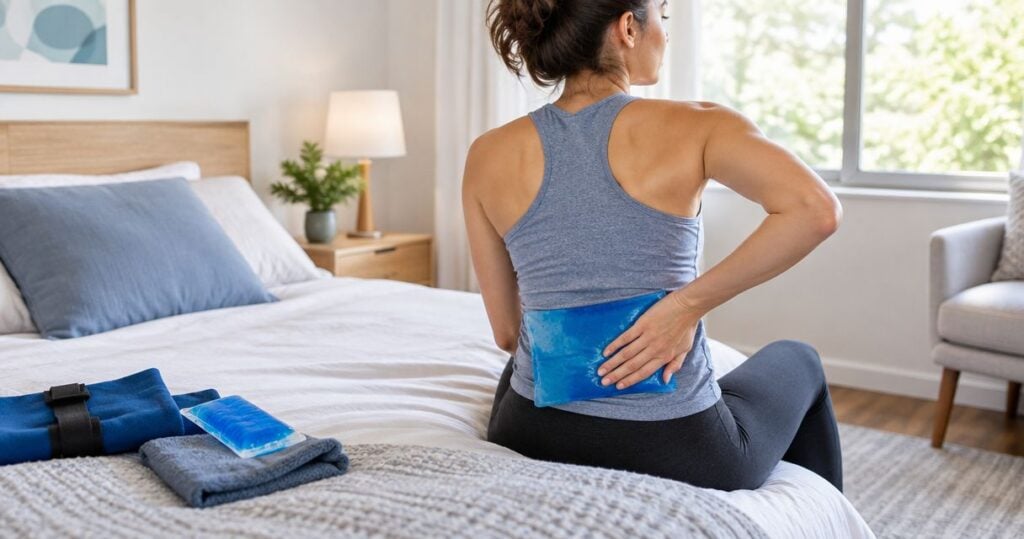
For the query best ice pack for lower back pain, start with a flexible gel pack that covers the area comfortably without pressing hard against it. A wraparound pack suits hands-free use; a single-use instant pack suits situations without a freezer. No pack type is proven here to outperform the others for pain relief.
- For the best ice pack for lower back pain, start with a flexible gel pack that fits comfortably.
- A wraparound gel pack stays in place when you need your hands free, but its straps should not feel tight.
- Keep a fabric layer between any cold pack and your skin; stop if your skin becomes numb or uncomfortable.
- MyChiro is a chiropractic clinic in Bondi Junction, not a cold-pack retailer; seek assessment when back symptoms need evaluation.
Why this matters
An ice pack is a short-term comfort measure, not a diagnosis or a substitute for medical assessment. What matters when choosing one is whether it fits the area, stays where you need it and can be used without direct contact with your skin. A product labelled for the lower back does not automatically meet those tests.
MyChiro is a chiropractic clinic in Bondi Junction, Sydney. This 2026 guide compares pack designs rather than selling a product or claiming that cold application addresses the cause of lower back pain. If your symptoms are new, persistent or changing, the reason for them matters more than the pack you buy.
What makes a suitable ice pack for the lower back?
Use these criteria before comparing the options. They describe practical differences between packs, not evidence that one design produces a better clinical outcome.
- Fit: A pack should rest against the part of your lower back you want to cool without folding into a bulky lump.
- Skin protection: You need room for a thin fabric layer between the cold surface and your skin. Do not apply a frozen pack directly.
- Pressure: Straps and hard edges should not make sitting, lying down or moving more uncomfortable.
- Control: You should be able to remove the pack promptly if the cold feels unpleasant or your skin becomes numb.
- Preparation: A freezer-dependent pack is practical at home; an activatable pack serves a different purpose when refrigeration is unavailable.
- Care instructions: Check the maker’s directions for cooling, cleaning and disposal before use. Do not assume every gel pack can also be heated.
MyChiro’s cold-pack selection rule is simple: choose fit and skin protection before hands-free convenience. A secure strap is not an advantage if it presses on an uncomfortable area. Equally, a broad pack is not useful if it slips away from the spot you intended to cover.
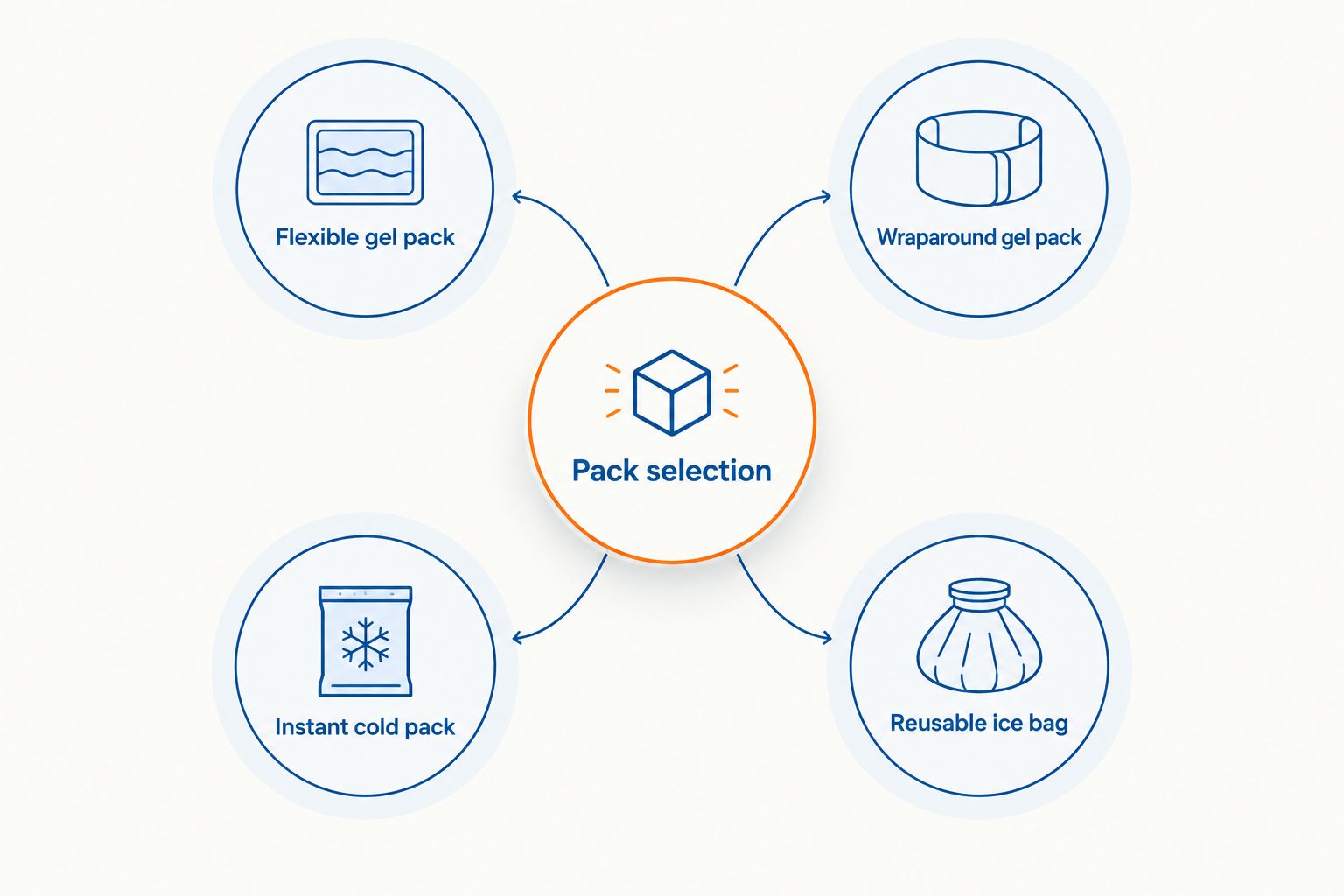
Lower-back cold packs at a glance
| Pack type | Best for | Standout feature | Key limitation |
|---|---|---|---|
| Flexible gel pack | Home use when you can sit or lie down | Moulds to the lower-back contour | Needs a freezer and something to hold it in place |
| Wraparound gel pack | Hands-free positioning | Straps keep the pack positioned | Strap pressure and fit vary |
| Single-use instant cold pack | Use without freezer access | Activates when needed | Generates waste and is not reusable |
| Reusable ice bag | People who prefer to refill a pack | You control how much ice goes in | Requires ice and careful closure |
This is a fit-based comparison, not a clinical ranking. No brand-specific product testing, prices or patient outcomes support naming a particular model. Check the size and instructions of the individual pack before choosing it.
Each design solves a different handling problem. The flexible pack trades hands-free use for a softer shape; the wraparound version adds a fastening system. Instant packs remove the freezer requirement, while refillable bags let you change the contents. None removes the need to check how your skin feels.
1. Flexible gel pack: for home use while resting
A flexible gel pack is a starting point if you can sit or lie down and position it yourself. Look for one that bends to your lower-back contour after cooling; a rigid, heavily frozen pack can be awkward against a curved area. Place fabric between the pack and your skin, and follow the product’s instructions.
Flexible gel pack pros:
- Can cover a broad part of the lower back without a built-in strap.
- Can be repositioned when you change position.
- Is reusable when the maker’s care instructions allow it.
Flexible gel pack cons:
- Needs freezer access before use.
- Can slide when you stand or move.
- A pack that freezes too stiffly can be uncomfortable to position.
Best for: Someone using a cold pack at home who can adjust it easily. Verdict: Buy only if the cooled pack remains flexible and fits your lower back with a fabric layer in place. Do not choose by the pack’s size alone; check whether it sits comfortably in the position you expect to use.
2. Wraparound gel pack: for hands-free positioning
A wraparound pack combines a cold insert with a belt or fastening panel. Its main practical difference is that it can remain positioned without being held. Check the fit while sitting and standing, and avoid tightening the strap simply to keep the pack from slipping.
Wraparound gel pack pros:
- Leaves your hands free.
- Can keep the insert positioned while you change posture.
- Allows you to loosen or remove the pack without balancing it against a chair.
Wraparound gel pack cons:
- A tight strap can add unwanted pressure.
- The cold insert might not line up with the area you want to cover.
- Fasteners and seams can feel bulky against a chair back.
Best for: Someone who wants to position a pack without holding it. Verdict: Hold until you have checked the strap fit and the insert’s placement. Hands-free use is the reason to consider this design; it is not a reason to keep wearing it when it feels uncomfortable.
3. Single-use instant cold pack: for use without a freezer
An instant cold pack is activated when needed, rather than stored frozen. Its purpose in this comparison is access, not a claim of stronger cooling or better pain outcomes. Read the activation and disposal instructions on the specific pack, and use a fabric barrier between the pack and your skin.
Single-use instant cold pack pros:
- Does not depend on access to a freezer.
- Can be kept for situations where a pre-cooled pack is unavailable.
- Requires no refilling with ice.
Single-use instant cold pack cons:
- Creates waste after use.
- Cannot be re-cooled for repeated use.
- Some shapes are harder to position across the lower back than a flexible gel pack.
Best for: Someone who needs a cold-pack option away from a freezer. Verdict: Buy for that specific access need, not as the default home option. Check the packaging before relying on it; single-use designs differ in shape and activation method.
4. Reusable ice bag: for adjustable filling
A reusable ice bag holds ice and closes at the top. You can change how much you put inside, which helps you avoid an overfilled bag that sits awkwardly against your back. Its practical trade-off is preparation: you need ice, a secure closure and a barrier against your skin.
Reusable ice bag pros:
- Lets you adjust how full the bag is.
- Can be emptied and refilled according to its care instructions.
- Does not require a gel insert.
Reusable ice bag cons:
- Requires access to ice.
- A poorly closed bag can leak.
- An overfilled bag can feel lumpy or put pressure on the area.
Best for: Someone who wants to control the pack’s fill at home. Verdict: Hold unless you have a reliable ice supply and a bag you can close securely. Check for leaks before placing it against clothing or furniture.
How this 2026 comparison is ranked
The order reflects everyday handling: fit first, then the ability to position the pack, then access away from a freezer. It does not rank pain outcomes, cooling performance or any named manufacturer. Without product-specific measurements and clinical evidence, a claim that one ice pack relieves lower back pain more than another would go beyond this comparison.
That distinction matters when shopping. A photograph can show the outline of a wrap, but it cannot tell you how firmly its strap presses when you sit. A large gel insert can look useful, yet still fold awkwardly against your back. Use the table to narrow the format, then check the actual product’s fit and instructions.
Using a cold pack without making discomfort worse
Keep a fabric layer between the pack and your skin. Check the area while you use it, and remove the pack if your skin becomes numb, unusually pale or increasingly uncomfortable. Follow the instructions supplied with the product rather than leaving it against your back because it is strapped in place.
For a practical check, position the pack for 10 minutes, then remove it and look at your skin. Do not treat 20 minutes as a target you must reach; a shorter application is appropriate if the cold is uncomfortable. These times are handling reminders, not a prescribed treatment schedule. A qualified health professional can discuss whether cold application suits your circumstances.
If you have reduced sensation or circulation concerns, ask a qualified health professional before using a cold pack. You need to be able to notice and respond to skin changes. Do not use a strap to hold a pack against an area you cannot readily check.
Lower back pain after significant trauma needs medical assessment rather than a shopping decision. Seek urgent medical care if back pain occurs with new bladder or bowel control problems, numbness around the groin or progressive leg weakness. A cold pack does not address those warning signs. For a broader decision guide, see when back pain needs a chiropractor versus a doctor.
Which cold pack should you choose?
Choose a flexible gel pack if you want one practical starting format for home use and can position it comfortably with a fabric barrier. Choose a wraparound gel pack when keeping it in place is the main problem. Reserve a single-use instant pack for times when freezer access is unavailable; choose a reusable ice bag when adjusting the fill matters to you.
Skip any pack that needs a tight strap, presses on a sore spot or cannot sit against your lower back without awkward folding. In 2026, the useful buying question is not which label promises relief. It is which design lets you position and remove cold comfortably while following its instructions.
MyChiro offers chiropractic care and spinal adjustments in Bondi Junction. Whether an assessment or any service is appropriate depends on your circumstances; a cold-pack choice does not establish a diagnosis or a need for an appointment. If you are unsure what is causing your symptoms, discuss them with a qualified health professional.
FAQ
What is the best ice pack for lower back pain?
A flexible gel pack is a practical starting choice for home use if it fits comfortably against your lower back. No specific pack or brand is established here as clinically better for pain relief.
Is a wraparound cold pack better than a flat gel pack?
A wraparound pack is easier to keep positioned without holding it. A flat flexible gel pack avoids strap pressure, so choose according to fit and how you plan to use it.
Can I put an ice pack directly on my lower back?
No; place a fabric layer between a cold pack and your skin. Remove the pack if your skin becomes numb or uncomfortable, and follow its instructions.
How long should I keep a cold pack on my lower back?
Check your skin after 10 minutes and remove the pack sooner if it feels uncomfortable. Do not treat 20 minutes as a required duration; seek individual advice if you are uncertain.
Should I choose a reusable gel pack or an instant cold pack?
Choose a reusable gel pack when freezer access and repeat use matter. Choose a single-use instant cold pack when you need an option that does not require a freezer.
Can a cold pack replace assessment for lower back pain?
No; a cold pack does not identify the cause of lower back pain. Seek medical assessment for concerning symptoms, including new bladder or bowel control problems, groin numbness or progressive leg weakness.
Does MyChiro sell the ice packs in this guide?
This guide does not identify MyChiro as an ice-pack retailer. MyChiro is a chiropractic clinic in Bondi Junction, and the pack types here are compared by practical use rather than by product brand.
One last thing
The feature that changes this decision most is often how easily you can remove the pack, not how securely it fastens. If a wrap feels inconvenient to loosen when the cold becomes uncomfortable, choose a simpler pack you can lift away immediately. That practical test applies in 2026 regardless of the product name on the packaging.
Related guides
- Lower back pain when sitting: causes and practical steps
- Heating pad options for lower back pain
- How to return to exercise after a back injury