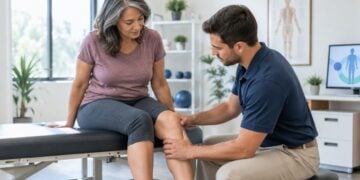


Falls are not a normal part of ageing, but the risk of falling does rise sharply once joints stiffen, reflexes slow and muscle mass declines with each decade past 50. This guide breaks down the practical, evidence-based steps that reduce fall risk in 2026, from exercise and footwear to home safety and when a health professional should get involved.
- Strength and balance training done together lowers fall risk more than either alone, based on published exercise research.
- Reviewing medications with a GP or pharmacist catches balance-affecting side effects that often go unnoticed.
- Clearing loose rugs, poor lighting and clutter removes the trip hazards responsible for most in-home falls.
- Joint stiffness and reduced spinal mobility can affect balance, and a chiropractic assessment can help identify whether this is a contributing factor.
- Supportive, well-fitted footwear matters as much as exercise for stability on uneven ground.
Why this matters
A fall in your 70s or 80s carries different stakes than a stumble at 30. Recovery takes longer, confidence often drops afterward, and one fall raises the likelihood of another because the underlying causes rarely resolve on their own. The World Health Organisation identifies falls as a leading cause of unintentional injury in older adults globally, which is why balance, strength and home safety get so much attention in aged-care and allied health circles in 2026.
The good news: most contributing factors are modifiable. Muscle weakness, poor balance, vision changes, medication side effects and home hazards can all be addressed, usually without needing to overhaul daily life. Joint stiffness in the spine, hips and ankles is one of the less obvious contributors, and it's worth discussing with a health professional if mobility has quietly declined over the past year. Our guide on managing joint stiffness as you age covers this in more detail.
How to prevent falls in elderly: the core strategies
The answer to "how to prevent falls in elderly" comes down to five overlapping habits. None of them work in isolation — the combination is what reduces risk.
| Strategy | What it addresses | How often |
|---|---|---|
| Strength training | Weak legs, hips and core | At least 2 days a week |
| Balance exercises | Reaction time, stability on uneven surfaces | 3+ times a week |
| Medication review | Dizziness, drowsiness, blood pressure drops | Every 6-12 months, or after any new script |
| Vision check | Depth perception, misjudging steps | Annually after 65 |
| Home hazard audit | Trip hazards, poor lighting, loose rugs | Once, then after any layout change |
Australia's Physical Activity Guidelines recommend adults stay active most days, with muscle-strengthening activities on at least two days a week — a baseline that applies directly to fall prevention in people over 65. Skipping the strength component is the most common gap: people walk regularly but never load their legs against resistance, so the muscles that catch a stumble stay weak.
Balance exercises that build stability
Balance training is the piece most people neglect because it doesn't feel like "real" exercise. Simple, low-equipment options include:
- Single-leg stands near a wall or bench for support, working up to 30 seconds per side.
- Heel-to-toe walking in a straight line, arms out for balance.
- Sit-to-stand repetitions from a firm chair without using the arms.
- Tai chi or gentle yoga classes, which combine slow controlled movement with balance challenges.
Core strength supports all of these movements, since a stable trunk is what lets the legs react quickly without overbalancing. The guide on strengthening your core without straining your lower back has a progression that works for older adults dealing with existing back sensitivity.
Home hazards that increase fall risk
Most falls in people over 65 happen at home, not outdoors. A walkthrough of each room catches the obvious risks:
- Loose rugs or mats without non-slip backing
- Poor lighting in hallways, stairwells and bathrooms
- Clutter or cords across walkways
- Missing grab rails near the shower, bath or toilet
- Slippery bathroom floors without a mat
- Stairs without a secure handrail on at least one side
Footwear matters just as much as the floor itself. Loose slippers and worn-out soles reduce grip and proprioception — the guide to walking shoes for people with lower back pain covers what to look for in supportive, stable footwear.
Why fall risk varies with age
Fall risk isn't uniform across the over-65 population — it's shaped by a specific set of overlapping factors:
- Muscle mass decline — sarcopenia accelerates after age 60, reducing the strength needed to recover from a stumble.
- Joint stiffness in the hips, knees, ankles and spine, which limits the range of motion needed to adjust footing quickly.
- Slower reaction time, meaning less time to correct a loss of balance before it becomes a fall.
- Polypharmacy — taking multiple medications increases the chance one or more affects blood pressure or alertness.
- Vision changes, including reduced depth perception and slower adjustment to light changes.
- Chronic conditions such as arthritis or osteoporosis, which can affect both mobility and the severity of injury if a fall occurs.
A chiropractic assessment can help identify whether joint stiffness or reduced spinal mobility is contributing to instability, and whether further exercise or referral is appropriate — this is general education, not a substitute for a full medical work-up. Patients managing bone density concerns alongside mobility issues may find it useful to read about chiropractic care for osteoporosis patients, which explains how care is typically adapted for lower bone density.
“A fall you didn’t see coming is usually the one that costs the most independence afterward.”
Common questions about falls prevention
Does strength training alone prevent falls?
Strength training alone helps, but combining it with balance exercises produces a bigger reduction in fall risk than either done in isolation, based on published exercise research reviewed by health bodies including the WHO. A well-rounded routine covers both legs and core, plus a balance component like single-leg stands or tai chi.
How often should older adults get a balance assessment?
An annual check is a reasonable starting point for adults over 65, or sooner if there's been a near-miss, a change in walking pattern, or new joint stiffness. A GP, physiotherapist or chiropractor can each assess different pieces of the puzzle — mobility, strength, gait and joint function.
Discuss your mobility and balance concerns
Book an assessment to talk through joint stiffness, posture or mobility changes with a chiropractor.
FAQ
How to prevent falls in elderly at home?
Preventing falls at home starts with clearing trip hazards — loose rugs, clutter, poor lighting and missing grab rails — then adding strength and balance exercises several times a week. A home safety walkthrough combined with an annual vision and medication check covers most of the risk.
What is the leading cause of falls in older adults?
Muscle weakness combined with poor balance is the most commonly cited contributor to falls in people over 65, often worsened by medication side effects, vision changes or joint stiffness. Most fall risk factors overlap rather than acting alone.
What exercises help prevent falls in seniors?
Single-leg stands, heel-to-toe walking, sit-to-stand repetitions and tai chi are commonly recommended balance exercises for older adults. Pairing these with strength training at least twice a week addresses both the muscle and balance side of fall prevention.
Can joint stiffness increase fall risk?
Reduced range of motion in the hips, ankles and spine can limit how quickly someone adjusts their footing, which may increase fall risk. A health professional can assess whether stiffness is contributing and whether further exercise, referral or manual assessment is appropriate.
Should medications be reviewed to prevent falls?
Yes — a medication review with a GP or pharmacist is a standard part of fall prevention because several common prescriptions affect blood pressure, alertness or balance. This is worth doing every 6-12 months or after any new medication starts.
Does vision affect fall risk in older adults?
Reduced depth perception and slower adjustment to changes in light can make steps, kerbs and uneven surfaces harder to judge accurately. An annual vision check after age 65 is a commonly recommended part of a fall-prevention routine.
Is tai chi effective for balance in older adults?
Tai chi is frequently recommended as a balance exercise because it combines slow, controlled movement with weight shifting and coordination. It’s one of several options alongside single-leg stands and structured strength training.
One last thing
The home hazard most people overlook isn't the rug in the hallway — it's the bathroom floor after a shower, where a single wet step combines poor grip with a hard landing surface. A cheap non-slip mat and a grab rail address this specific risk more directly than almost any exercise program, and it takes an afternoon to fix.
Related guides
- Chiropractic care for seniors with joint stiffness
- How to know when back pain needs a chiropractor vs a doctor