

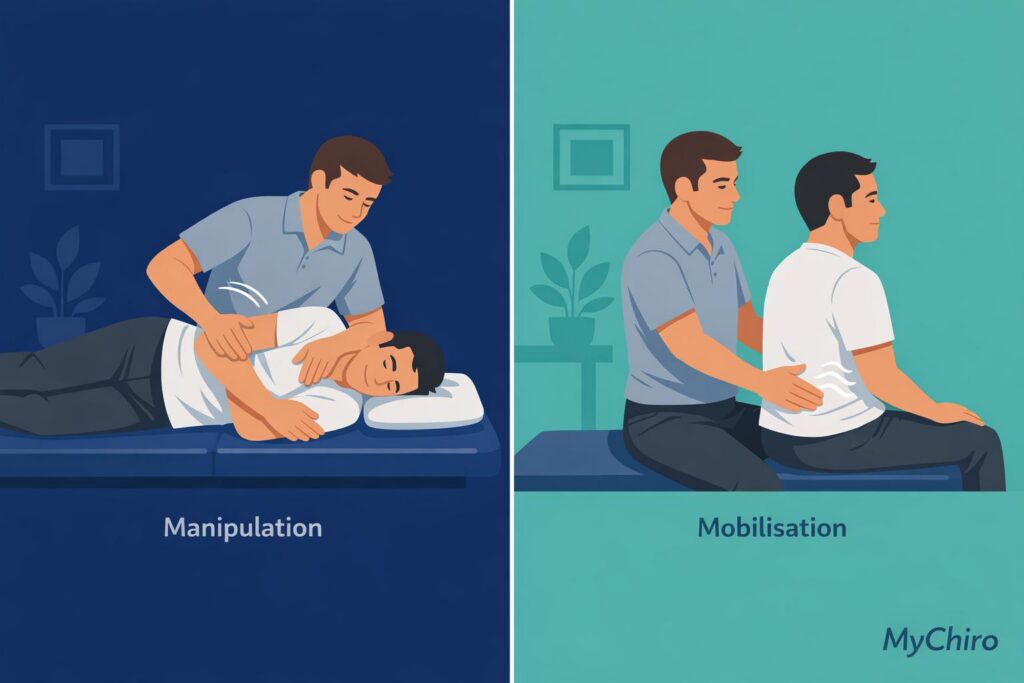
When it comes to relieving back pain, improving joint movement, or addressing stiffness, two common techniques are spinal manipulation and spinal mobilisation. Both methods aim to reduce discomfort and improve function, but they differ in how they’re performed and when they’re recommended. Here’s a quick breakdown:
- Spinal Manipulation: Uses quick, controlled thrusts to move a joint slightly beyond its usual range, often producing a "pop" sound. It’s typically used for chronic stiffness or restricted mobility.
- Spinal Mobilisation: Involves slow, gentle movements within the joint’s natural range, without any cracking sound. It’s better suited for sensitive conditions like acute pain or osteoporosis.
Quick Comparison
| Feature | Spinal Manipulation | Spinal Mobilisation |
|---|---|---|
| Force | High-velocity thrust | Low, gentle pressure |
| Speed | Fast (milliseconds) | Slow and controlled |
| Range of Motion | Beyond the joint’s natural range | Within the joint’s natural range |
| Cavitation | Produces a "pop" sound | No sound |
| Best For | Chronic stiffness, limited mobility | Acute pain, sensitive conditions |
Both approaches can be effective, but the choice depends on your condition, sensitivity, and preferences. Always consult a qualified practitioner to determine the right treatment for you.
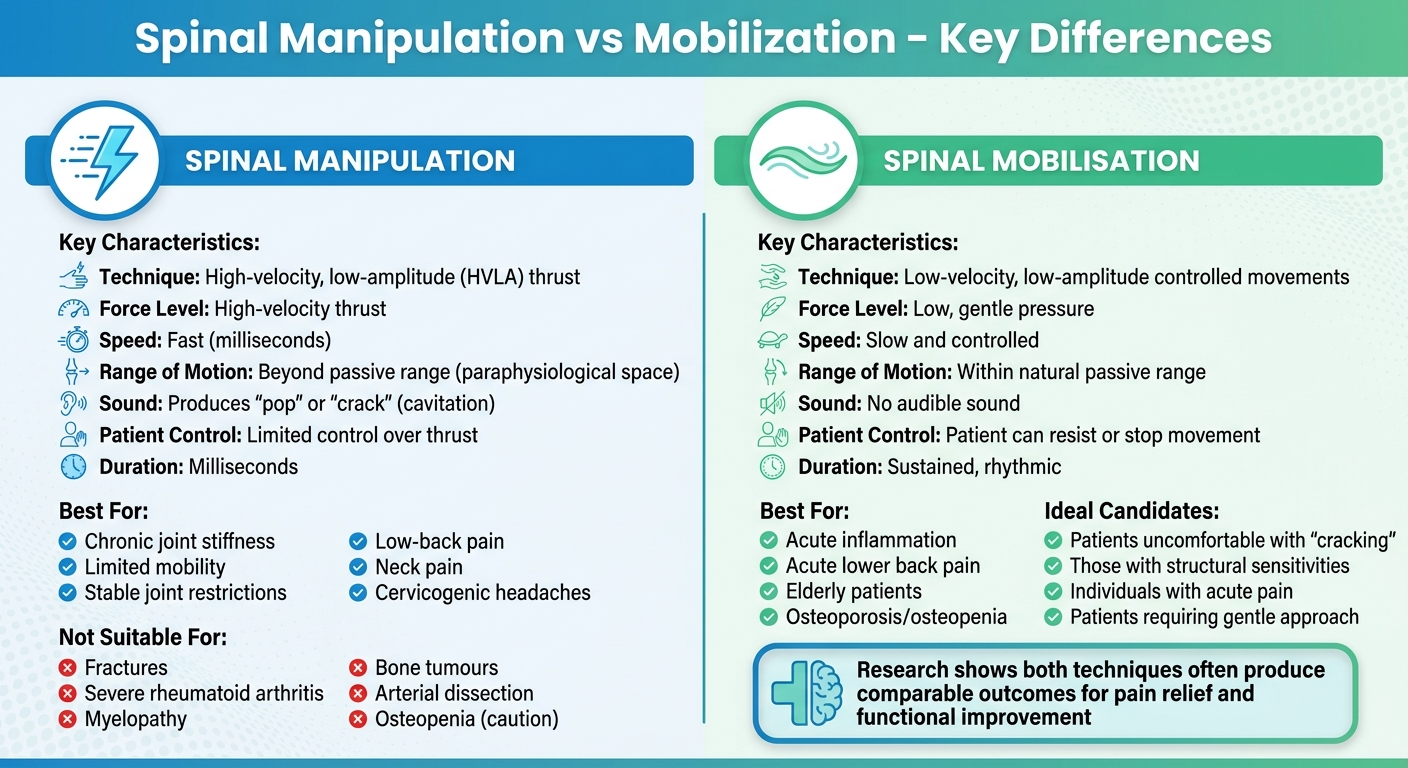
Spinal Manipulation vs Mobilization Comparison Chart
The difference between mobilisation and manipulation / HVLA and LVLA
sbb-itb-585d67d
What is Spinal Manipulation?
Spinal manipulation involves a high-velocity, low-amplitude (HVLA) thrust applied to a joint. This is a quick, controlled movement that lasts just milliseconds and takes the joint slightly beyond its usual range of motion.
How the Technique Works
During spinal manipulation, the thrust causes a rapid separation of joint surfaces, which leads to cavitation. This process produces the familiar "pop" sound often associated with chiropractic adjustments.
"The pop heard during a chiropractic adjustment is not incidental. It is the defining acoustic signature of spinal manipulation – more precisely called high-velocity, low-amplitude thrust (HVLAT)." – Chiropractic Authority
This technique is believed to stimulate mechanoreceptors and proprioceptors within the joint capsules and muscles. This stimulation activates descending inhibitory pathways, which may help reduce pain sensitivity. According to a 2017 systematic review published in The Spine Journal, HVLA procedures can create neurophysiological changes, such as altered pain pressure thresholds, almost immediately after being performed.
Common Uses
The mechanics of spinal manipulation explain its application in various clinical settings. Practitioners often use it to address joint restrictions, acute pain, limited mobility, and segmental hypomobility. It’s frequently utilised for conditions like low-back pain, neck pain, and cervicogenic headaches. The goal is to restore proper joint movement and potentially influence pain perception through neurological pathways.
Who May Benefit
The biomechanical and neurophysiological effects of spinal manipulation highlight why some individuals find relief with this approach. It may be particularly helpful for those dealing with chronic joint restrictions or specific mobility issues, as long as no contraindications exist.
Before performing this technique, practitioners carefully screen for contraindications such as fractures, ligamentous instability (e.g., severe rheumatoid arthritis), active myelopathy, bone tumours, or known arterial dissections. While spinal manipulation is generally considered safe when carried out by a qualified professional, it may not be suitable for everyone. Individuals with osteopenia, highly acute or irritable tissue conditions, or certain vascular concerns should approach this treatment with caution.
What is Spinal Mobilisation?
Spinal mobilisation offers a gentler alternative to the fast, high-force thrusts commonly associated with manipulation techniques. Instead of delivering a sudden movement, mobilisation involves slow, controlled motions that guide the joint within its natural range of movement using low-velocity, low-amplitude techniques.
How the Technique Works
This method relies on rhythmic, controlled pressure to move the joint through its available range of motion. Practitioners often use the Maitland grading system, which categorises mobilisation into Grades I through IV based on the amplitude and position within the movement range. Grade V, however, is reserved for manipulation techniques.
"Spinal mobilization, by contrast, operates entirely within the joint’s passive range of motion. No thrust, no cavitation, no audible release." – Chiropractic Authority
The slow, deliberate pace of mobilisation allows patients to better tolerate the treatment and reduces discomfort. By applying sustained pressure, the technique activates specific mechanoreceptors – such as Ruffini endings and interstitial type III and IV afferents. This process creates a phenomenon called viscoelastic tissue creep, where the tissues temporarily become more pliable, resulting in a loosened sensation. This measured approach makes mobilisation a key tool in many clinical settings.
Common Uses
Mobilisation is commonly used to address joint stiffness, improve flexibility, and restore limited joint movement. It is often applied in cases of chronic conditions, acute lower back pain, or when a more gentle approach is needed. The primary aims are to ease pain, improve joint function, and increase range of motion – all without the abrupt force of high-velocity techniques.
Who May Benefit
This softer approach is especially beneficial for individuals who may not tolerate more forceful methods. It’s often recommended for:
- Elderly patients
- Those with conditions like osteoporosis or osteopenia
- Individuals experiencing acute inflammation or muscle guarding
Mobilisation is also an excellent choice for those with structural sensitivities, such as disc-related pain or certain forms of arthritis. Additionally, it’s a preferred option for patients who feel uneasy about the "cracking" sound or intensity of manipulation techniques. This makes it a versatile and patient-friendly option in chiropractic and physical therapy practices.
Main Differences Between the Two Techniques
Side-by-Side Comparison
Spinal manipulation and mobilisation share the goal of improving joint function and reducing discomfort. This is particularly relevant when using chiropractic care for sciatica and other nerve-related issues. However, they achieve this through very different mechanical methods.
| Attribute | Spinal Manipulation | Spinal Mobilisation |
|---|---|---|
| Force | High-velocity thrust | Low force, gentle pressure |
| Speed | Fast (milliseconds) | Slow and controlled |
| Patient Control | Limited patient control over the thrust | Patient can resist or stop the movement |
| Range of Motion | Beyond passive range (paraphysiological space) | Within natural passive range |
| Cavitation | Common (audible "cracking" sound) | None |
| Primary Goal | Restore alignment and joint function | Increase range of motion and reduce pain |
This breakdown highlights how each technique differs in its mechanical approach and application.
Implications for Treatment
These mechanical differences play a key role in determining which technique is better suited for specific situations. Factors like joint mobility, the presence of contraindications, tissue sensitivity, and patient preferences are all considered when deciding between the two.
"The choice between them depends on the patient’s condition, preferences, and the recommendations of a chiropractor." – Lakeside Chiropractic
For example, mobilisation is often preferred for elderly patients or those with osteopenia, where high-force methods might pose additional risks. Its slower, gentler movements are also better suited for individuals dealing with acute inflammation or muscle guarding, where the body is less likely to tolerate sudden, forceful adjustments.
When Each Approach May Be Used
The decision to use manipulation or mobilisation often depends on the patient’s unique circumstances and how their condition presents itself. Understanding these factors helps guide the most suitable treatment choice.
When Manipulation May Be Appropriate
Spinal manipulation is often a go-to for chronic, stable joint restrictions or cases where joint mobility is limited. This technique is particularly effective for patients who are comfortable with the quick, high-velocity thrusts and the accompanying cavitation sound (that familiar "pop"). It’s also a logical next step if mobilisation hasn’t delivered the desired results.
However, not everyone is a candidate for manipulation. Conditions like fractures, severe rheumatoid arthritis, myelopathy, bone tumours, or arterial dissection make this approach unsuitable. Proper screening is essential to ensure safety.
When Mobilisation May Be Appropriate
Mobilisation tends to be the better option when dealing with acute inflammation or heightened tissue sensitivity. Its slower, controlled movements are ideal for elderly patients, those with osteopenia or osteoporosis, and individuals with musculoskeletal conditions that require a gentler touch.
This technique is also helpful for managing acute lower back pain, discogenic pain, or other situations where a cautious approach is necessary. Patients often appreciate the ability to moderate the intensity of mobilisation themselves, making it a more comfortable experience.
Similar Outcomes in Many Cases
Despite their differences, manipulation and mobilisation often lead to comparable results in terms of pain relief and functional improvement. Research backs this up. A 2011 Cochrane Systematic Review found no significant difference between spinal manipulative therapy (SMT) and other interventions for chronic low-back pain. Similarly, a 2013 Cochrane review reported that SMT was no more effective for acute low-back pain than inert interventions or other recommended therapies.
"High-quality evidence suggests that there is no clinically relevant difference between SMT [spinal manipulative therapy] and other interventions for reducing pain and improving function in patients with chronic back pain." – Cochrane Systematic Review
Both manipulation and mobilisation aim to improve joint mobility and reduce pain sensitivity through neurophysiological effects. Ultimately, the choice often comes down to the patient’s specific condition, preferences, and safety considerations, rather than one technique being inherently superior to the other.
Summary
Main Differences Reviewed
Spinal manipulation and mobilisation differ in both technique and purpose. Manipulation uses quick, forceful thrusts to move a joint slightly beyond its usual range of motion, often resulting in that characteristic "pop" sound caused by cavitation. On the other hand, mobilisation involves slower, controlled movements or sustained pressure that stay within the joint’s natural range, without any audible release. This slower approach allows the patient to remain in control and even stop the movement if necessary.
These methods are applied in different scenarios. Manipulation is often ideal for tackling chronic joint stiffness or when a patient is comfortable with the rapid thrust and accompanying sound. Mobilisation, however, is more suitable for situations like acute inflammation, for older adults, or for individuals with conditions such as osteoporosis. Despite their differences, both techniques aim to improve joint function and alleviate pain through neurophysiological effects. Some studies even suggest that their outcomes may be comparable. Ultimately, the choice of technique depends on the individual’s specific needs.
The Need for Individual Assessment
Since these techniques differ, a personalised evaluation is vital. A professional assessment helps identify contraindications, evaluate joint mobility, screen for potential red flags, and determine whether the issue is acute or chronic. It also takes into account the patient’s personal preferences.
This thorough evaluation not only ensures safety but also helps guide the selection of the most appropriate treatment. While minor, short-term side effects may occur, a skilled practitioner can balance these risks against the benefits and recommend the best approach for each individual.
Next Steps
With these considerations in mind, a customised consultation can help determine the most effective care for your musculoskeletal health. Dr Steve in Bondi Junction provides chiropractic care focused on the nervous system, tailored to your needs – whether you’re dealing with chronic stiffness, recovering from acute pain, or aiming to maintain overall joint health.
This information is general and not intended as a substitute for professional medical advice.
Chiropractic care focuses on musculoskeletal health, and results can vary between individuals.
Always consult a qualified healthcare provider before making health-related decisions.
FAQs
How do I know if I need manipulation or mobilisation?
Choosing between spinal manipulation and mobilisation often comes down to your specific condition, treatment goals, and how your body reacts to each method.
Manipulation involves a quick, precise thrust applied near a joint’s end range of motion, aiming to restore movement or alleviate discomfort. On the other hand, mobilisation uses slower, more controlled movements within the joint’s natural range, offering a gentler approach.
A qualified healthcare professional can evaluate your situation and suggest the best option for your needs. When performed by an experienced practitioner, both techniques are generally safe and can contribute to better musculoskeletal health.
Is the “pop” during manipulation necessary for results?
When you hear that "pop" during spinal manipulation, it’s actually the sound of gas escaping from a joint capsule after a quick, controlled movement (known as a high-velocity, low-amplitude thrust). But here’s the thing: the "pop" isn’t what makes the treatment effective. Both manipulation and mobilisation techniques can improve spinal health and mobility, whether or not you hear that satisfying sound. The actual benefits come from the technique itself, not the noise.
What risks or red flags should be considered before treatment?
Potential risks can involve discomfort or even injury, especially if conditions like osteoporosis, spinal instability, or nerve-related issues are present. It’s crucial to share any health concerns or recent injuries with your practitioner. Doing so ensures the treatment is adjusted to suit your specific needs and helps reduce potential risks.


