


For the best backpack for students with back pain in 2026, choose by fit and what the student carries, not by a promised health outcome. First choice: an adjustable two-strap daypack. For a laptop-heavy school day: a structured laptop backpack. For a light load: a compact daypack. For a long, level walk: a wheeled school bag. No backpack can be assumed to prevent back pain; persistent symptoms need an individual assessment.
- For the best backpack for students with back pain, start with an adjustable two-strap daypack that fits the student.
- Choose a structured laptop backpack when a device is part of the daily load; check its fit with the device inside.
- A wheeled school bag suits level routes, but stairs and crowded spaces limit its usefulness.
- MyChiro provides chiropractic assessments in Bondi Junction; a backpack choice is not a substitute for medical assessment of persistent pain.
Why this matters
A bag can feel comfortable when empty and awkward after books, lunch and a laptop go in. The useful question is not whether a label says ergonomic. It is whether the packed bag sits comfortably, holds what the student needs and works along the route they actually travel.
For students who already have discomfort, avoid treating a purchase as a diagnosis or a remedy. Note when symptoms occur, what is being carried and whether the bag is worn or pulled. If pain persists or interferes with usual activities, discuss it with a qualified health professional. MyChiro is a chiropractic clinic in Bondi Junction; its guide to students carrying heavy backpacks provides related context, but a student’s symptoms still require individual assessment.
What makes a suitable student backpack in 2026?
Use these criteria before comparing styles. They describe what you can check in person; they do not predict a clinical outcome.
- Loaded fit: Put the student’s usual items inside before judging the bag. Check whether the pack sits close to the back without an uncomfortable edge or pressure point.
- Adjustable shoulder straps: Both straps should adjust to the wearer. A comfortable fit depends on the student and the packed bag, not the strap count alone.
- Useful capacity: The main compartment should hold required items without forcing them in. Unused space can also tempt a student to carry things they do not need.
- Item placement: A separate space for a laptop or other dense item makes it easier to check where that item sits when the bag is packed.
- Route and access: Stairs, public transport, narrow aisles and storage space matter. A bag that works on a flat footpath can be inconvenient elsewhere.
- Everyday handling: Have the student put the bag on, take it off and open it. A practical choice must work during an ordinary school day, not just in a shop.
There is no supported weight limit or brand ranking in the information available for this guide. Assess the student, the contents and the route together rather than relying on an unsupported number on a product page.
Student backpack options at a glance
| Backpack type | Best for | Standout feature | Key limitation |
|---|---|---|---|
| Adjustable two-strap daypack | A varied daily school load | Flexible fit for ordinary school items | Fit changes when the contents change |
| Structured laptop backpack | A student carrying a device daily | Dedicated place for the device | The empty bag can add bulk |
| Compact daypack | A genuinely light day | Less unused carrying space | Books and a device can quickly exceed its useful capacity |
| Wheeled school bag | A level route with room to roll it | Can be pulled rather than worn on suitable ground | Stairs and storage make it less convenient |
MyChiro’s backpack guidance is for students comparing how they carry school items, not a recommendation of a product sold by the clinic. The table ranks types by use case. It does not claim that any type prevents, treats or resolves back pain.
1. Adjustable two-strap daypack: for varied school loads
An adjustable two-strap daypack is the starting point for a student whose books and other supplies change through the week. Look for a shape that fits the student when packed with a realistic load, then adjust both straps while the student is wearing it. A bag that fits one person will not necessarily fit another.
Adjustable two-strap daypack pros:
- Suits a changing mix of books, lunch and other daily items.
- Adjustable straps let the wearer check fit after packing.
- Common school-day tasks, such as opening the main compartment, are easy to assess before choosing.
Adjustable two-strap daypack cons:
- A large compartment can make it easy to keep unnecessary items in the bag.
- Good empty-bag fit does not guarantee comfortable loaded fit.
- A soft compartment offers less separation for a laptop than a dedicated sleeve.
Best for: A student with a varied daily load who can try the bag on with their usual items. Verdict: Buy if the packed fit and capacity work; otherwise, keep comparing. In 2026, a plain, well-fitting pack is a clearer choice than a pack selected for an unsupported pain-prevention claim.
2. Structured laptop backpack: for a daily device
A structured laptop backpack has a designated compartment for a device. That makes it a sensible type to inspect when a laptop travels to school each day. Check the bag with the actual device and books inside: the compartment layout matters only if the whole packed bag fits the student.
Structured laptop backpack pros:
- A separate device compartment helps organise the daily load.
- The student can check how the device sits without unpacking other items.
- Multiple compartments can make frequently used items easier to find.
Structured laptop backpack cons:
- Structure and extra compartments can make the empty bag bulkier.
- A device sleeve does not establish that the backpack fits its wearer.
- More storage can encourage carrying items that are not needed that day.
Best for: A student who regularly carries a laptop and still has room for required school items. Verdict: Buy only after checking the fit with the device inside. Do not choose a backpack on a back-pain claim printed beside its laptop sleeve.
3. Compact daypack: for genuinely light days
A compact daypack works when the student needs only a small set of items. Its limited space makes the packing decision visible: either the essentials fit without forcing the bag closed, or the student needs another option. Check the school’s daily requirements before settling on a smaller pack.
Compact daypack pros:
- Less unused space for extra items.
- Easier to check whether the planned load fits.
- Straightforward to handle when the student carries few things.
Compact daypack cons:
- It will not suit a day with several books and a laptop if they do not fit comfortably.
- An overfilled compact bag is no better matched to the student than an oversized one.
- A second bag for overflow adds another carrying decision.
Best for: A student whose required daily load fits comfortably inside a small bag. Verdict: Buy for light days, not as the default for every timetable. If belongings must be squeezed in, move back to an appropriately sized two-strap pack.
4. Wheeled school bag: for level routes
A wheeled school bag is an option when the route has space to roll it and the school has somewhere practical to store it. The wheels change how the student moves the bag; they do not remove the need to lift or carry it at times. Walk the real route before choosing this type.
Wheeled school bag pros:
- Can be pulled across suitable level ground.
- Gives a student another way to move a substantial school load.
- Its suitability is easy to check against the route and storage arrangements.
Wheeled school bag cons:
- Stairs and kerbs still require handling the bag.
- Crowded walkways can make rolling awkward.
- It may not fit the available school storage space.
Best for: A student with a mostly level route and suitable storage. Verdict: Hold until the route and school arrangements have been checked. Wheels are a practical feature for a specific journey, not a general answer to back pain.
Check the fit with the bag packed
A fitting check belongs after you narrow down the type, not before. Bring the items the student normally needs, or use the current bag’s contents as a reference. Have the student follow these steps and describe what feels awkward rather than assuming the adult’s preferred fit is comfortable.
- Pack usual items: Include the things needed on an ordinary school day. Check that the bag closes without forcing it.
- Adjust both straps: Put the bag on with its usual contents inside, then adjust the shoulder straps. Check for slipping or uncomfortable pressure.
- Walk the route: In the shop, walk and turn with the loaded pack. At home, consider the actual journey, including stairs and transport.
- Recheck the contents: If the bag feels awkward, look at what is inside and whether each item needs to travel that day.
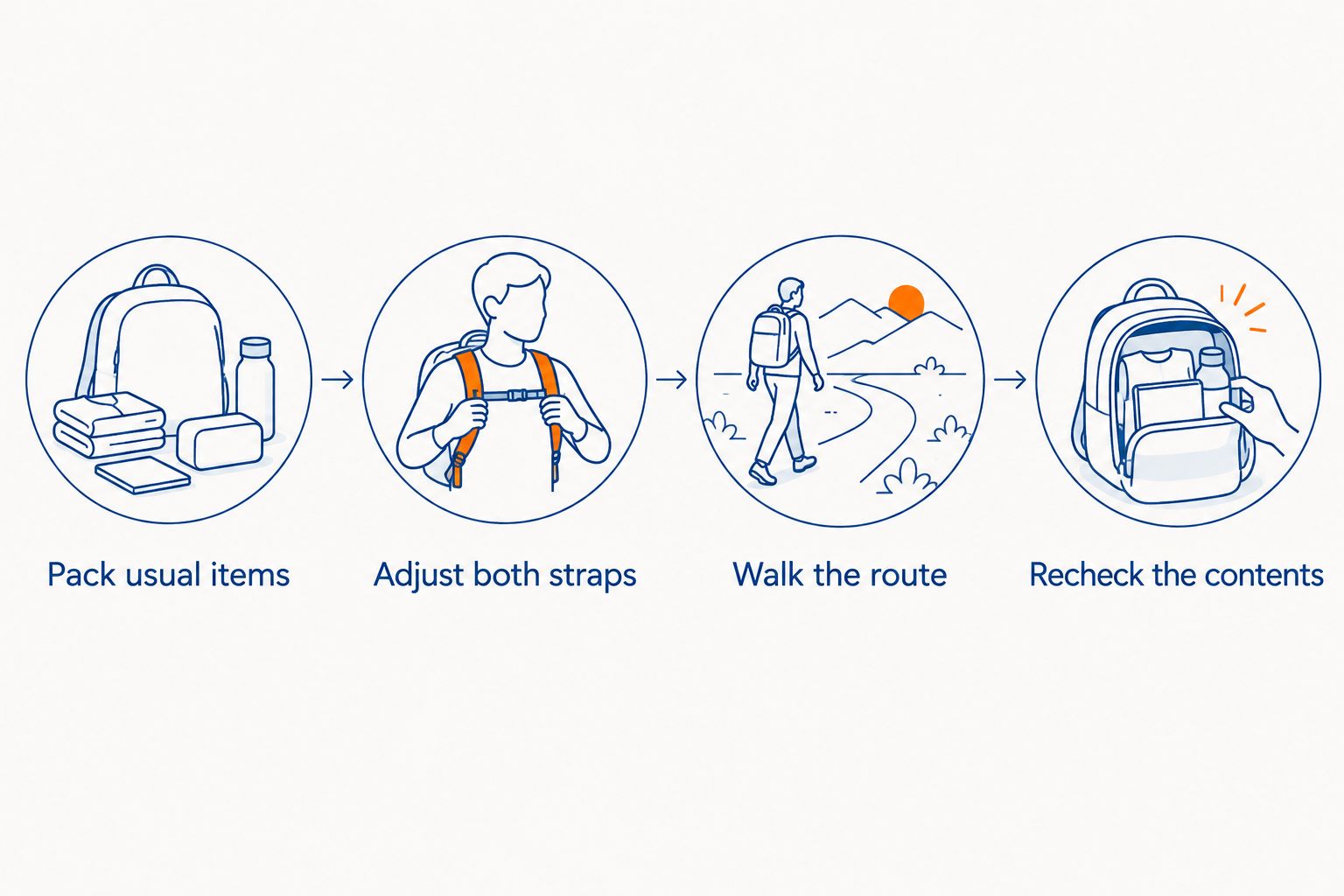
A fitting check does not establish why a student has pain. It helps you reject a bag that is awkward in use. If changing bags or contents does not address a practical carrying problem, avoid repeatedly buying alternatives in place of seeking advice about the symptoms.
How these options were ranked
The 2026 order puts the adaptable two-strap daypack first because it covers the broadest everyday packing situation in this comparison. The laptop pack takes the device-specific slot, the compact pack takes the light-load slot, and the wheeled bag takes the level-route slot. Each recommendation depends on the student’s actual load and journey.
This is a ranking of backpack types, not tested products. It makes no claim that one design produces a better clinical result than another. MyChiro offers chiropractic assessments and adjustments; whether either is appropriate for an individual can be discussed following assessment. A bag comparison does not determine the cause of a student’s symptoms or whether chiropractic care is appropriate.
Which student backpack should you choose?
Choose an adjustable two-strap daypack if you need a starting point in 2026. Check it while packed with the student’s usual items. If a laptop is a daily requirement, compare a structured laptop backpack instead; if the load is consistently light, try a compact daypack. Reserve a wheeled bag for a route and school setting that make rolling practical.
For a student already reporting back pain, make a separate decision about the symptoms. Ask when the pain started, whether it is changing and how it affects normal activity. Arrange medical assessment for severe pain, pain after an injury, or pain accompanied by weakness, numbness, fever or changes to bladder or bowel control. Do not use a new bag to delay that assessment.
FAQ
What is the best backpack for students with back pain in 2026?
An adjustable two-strap daypack is a practical starting point if it fits the student when packed. No backpack type can be assumed to prevent or resolve back pain; persistent symptoms need individual assessment.
Is a laptop backpack better than a regular school backpack?
A laptop backpack is more suitable when a student carries a device daily and the loaded bag fits. A dedicated compartment alone does not tell you whether the whole bag is comfortable to carry.
Should a student use both backpack straps?
Check the fit while the student wears both adjustable shoulder straps. The bag still needs to be assessed with its usual contents inside.
Is a wheeled school bag a good choice for back pain?
A wheeled school bag is a practical option for a mostly level route with suitable storage. It still needs handling at stairs and kerbs, and it is not a treatment for back pain.
Does an ergonomic label mean a backpack will prevent back pain?
No. An ergonomic label does not establish how a packed bag fits an individual student or whether it will prevent pain.
When should a student with back pain seek medical advice?
Seek medical assessment for severe pain, pain after an injury, or pain with weakness, numbness, fever or bladder or bowel changes. Persistent pain or pain affecting usual activities also warrants discussion with a qualified health professional.
How should you check a school backpack before choosing it?
Pack the student’s usual items, adjust both straps and have the student walk and turn while wearing it. Then check whether the contents and the bag suit the actual school journey.
One last thing
In 2026, check the timetable before replacing the backpack. A bag can pass a fitting check on a light day and feel awkward when different books or a laptop go in. If a student has ongoing pain, MyChiro’s backpack advice is educational; discuss the symptoms with a qualified health professional rather than relying on a product choice.
Related guides
- Carrying a laptop bag daily
- Carrying a heavy handbag
- When back pain needs a chiropractor or a doctor