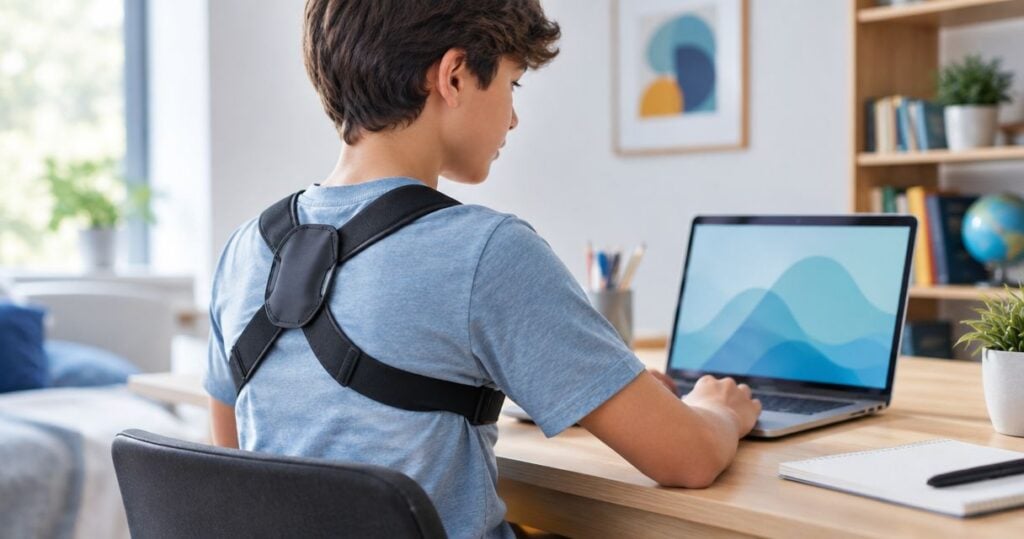
If you are concerned about a child or teenager’s posture, start by considering comfort, movement and whether there are symptoms or a visible change that needs assessment. A wearable posture brace is not a routine solution for children, and a product comparison cannot establish whether a brace is appropriate.
- Top pick for the best posture corrector for kids in 2026: a well-fitted school backpack plus daily movement, not a brace alone.
- Do not start a posture brace for a child without appropriate professional advice about whether it is indicated.
- Australian guidelines recommend at least 60 minutes of moderate to vigorous activity daily for ages 5 to 17.
- A new spinal curve, unexplained night pain, numbness or pain after injury in a child warrants medical assessment rather than a posture device.
Top pick: a well-fitted school backpack with a daily movement habit. Best for teenagers on long screen days: a study setup change. Best for short-term, supervised use: a posture brace, after assessment. These are general education points, not a diagnosis or a treatment plan for any individual child.
Why this matters
Parents search for a posture corrector because a child is slumping at the desk, rounding over a phone or carrying a heavy bag. The urge to buy something that pulls the shoulders back is understandable.
The catch: posture is not one fixed position. Children grow in spurts, and a relaxed, varied posture is normal. What tends to matter more is how long a child stays in one position and how much they move in a day.
That shifts the question from "which brace?" to "which change fits my child's day?" Each option below owns a different slot, so you can pick by situation rather than by product category.
What makes a good posture option for kids
Use these criteria to check any ranking, including this one:
- Fits a growing body. Adjustable and sized for the child, not an adult product scaled down.
- Encourages movement. Supports activity rather than locking the body into one position.
- Fits the real routine. Works for school, homework or screens, whichever causes the problem.
- Low risk of dependence. Does not replace the child's own muscle use for long periods.
- Knows its limits. Includes clear guidance on when to see a health professional.
Posture options at a glance
| Option | Best for | Standout feature | Key limitation |
|---|---|---|---|
| 1. Well-fitted school backpack | Daily school carry | Addresses load every school day | Does not help at the desk |
| 2. Daily movement routine | Long-term habits | Builds the child's own muscle use | Needs consistency and buy-in |
| 3. Ergonomic study setup | Homework hours | Fixes the cause at the desk | Needs adjusting as the child grows |
| 4. Screen height and device habits | Phone and tablet use | Costs little to change | Relies on the child following it |
| 5. Posture brace or corrector | Short, supervised use | Gives a physical reminder | May be uncomfortable; not a long-term answer |
| 6. Professional assessment | Ongoing or one-sided concerns | Rules out issues that need referral | Needs a booked appointment |
1. Well-fitted school backpack: best for daily school carry
A school bag is carried five days a week, which makes it the most repeated posture load in many children's lives. A well-fitted pack sits close to the back, uses both padded shoulder straps and stays within a sensible share of body weight. A common guide is around 10% of body weight.
If you are shopping, the best backpacks for students to prevent back pain guide covers the features to look for.
Backpack pros:
- Addresses a load the child carries every school day
- Wide, padded straps spread pressure across the shoulders
- A chest or waist strap can help keep the load close to the body
- Cheap to review: you can check fit and weight tonight
Backpack cons:
- Does nothing for posture at a desk or on a phone
- Children often wear one strap over a shoulder regardless of design
- Lockers and timetables decide how heavy the bag gets
Best for: primary and secondary students who carry books and devices daily. Verdict: Buy, and check it first.
2. Daily movement routine: best for long-term habits
Australian movement guidelines recommend children aged 5 to 17 get at least 60 minutes of moderate to vigorous physical activity every day. Varied activity such as swimming, climbing, ball games and bodyweight exercise keeps the trunk, hips and shoulders working through different positions.
A short routine of simple exercises at home can sit on top of that. Ask a qualified health professional to check any exercises before you start, especially if a child already has pain.
Movement pros:
- Builds the child's own muscle use rather than relying on a device
- Suits every age and needs no equipment
- Supports general health beyond posture
Movement cons:
- Results depend on consistency, which is hard to enforce
- Teens may resist anything framed as a posture exercise
- Does not address a poor desk setup by itself
Best for: families who want one habit that supports posture and general health together. Verdict: Buy (time, not money).
3. Ergonomic study setup: best for homework hours
A child sitting at an adult-sized desk and chair often perches forward or slumps. A setup that suits the child's size helps them sit without strain: feet supported, screen near eye level, forearms resting comfortably.
A footrest can help smaller children whose feet do not reach the floor. The guide to under-desk footrests for improved posture explains what to check.
Study setup pros:
- Targets the cause during long homework sessions
- Many fixes use items already at home, like a cushion or a stack of books
- Easy to revisit as the child grows
Study setup cons:
- Needs regular readjusting during growth spurts
- Kitchen tables and beds are the real study spots for many teens
- Even a good setup does not replace regular movement breaks
Best for: children and teens with set homework hours at a desk. Verdict: Buy a setup tweak before a brace.
4. Screen height and device habits: best for phone and tablet use
A head tipped forward over a phone is the pattern behind most "tech-neck" concerns. Raising the device toward eye level, resting the elbows and taking short breaks changes the load on the neck.
Australian guidelines suggest limiting recreational screen time to no more than 2 hours a day for ages 5 to 17. Whether or not that target is realistic in your house, fewer unbroken stretches in one position is a useful aim.
Screen habit pros:
- Costs little or nothing
- Helps the whole family, parents included
- Pairs well with a movement routine
Screen habit cons:
- Depends on the child remembering, so you may need house rules
- Hard to police on a bus or in bed
- Tablets on laps are the hardest habit to change
Best for: teens and younger children who spend long periods looking down at devices. Verdict: Buy (free), and set one household rule.
5. Posture brace or corrector: best for short, supervised use
This is the product people actually mean by a posture corrector: a strap or vest worn across the shoulders and upper back. It gives a physical reminder when the shoulders roll forward.
It also has real limits. A brace works from the outside, so the child's muscles may do less of the work while it is on. Fit matters for a growing body, and an uncomfortable brace usually ends up in a drawer. For adult-focused detail, see the best posture correctors for desk workers guide, but note those products are not sized for children.
Brace pros:
- A tactile reminder during a set task, like homework
- Easy for a child to understand
- Can be paired with exercises for a short, defined period
Brace cons:
- May be uncomfortable, and children outgrow them quickly
- Does not build the child's own muscle use on its own
- Can mask an underlying issue that needs assessment
Best for: short periods of supervised use after a health professional has looked at the child's posture. Verdict: Hold until you have had an assessment.
“A brace can remind a child to sit tall, but movement and a workable setup do the daily work.”
6. Professional assessment: best for ongoing or one-sided concerns
If a shoulder looks higher than the other, the spine seems to curve, or posture complaints come with pain, an assessment gives you an answer a product cannot. A registered chiropractor can examine posture and movement, discuss findings with the family and refer on to a GP or other practitioner where needed.
MyChiro, a chiropractic clinic in Bondi Junction, Sydney, offers chiropractic assessments for local patients. Whether chiropractic care is appropriate for a child is something to discuss with a qualified health professional after assessment, not something to assume in advance.
For background on scoliosis in teenagers, read about chiropractic care for scoliosis in teenagers.
Assessment pros:
- Looks at the individual child rather than guessing
- Can identify when referral to a GP or other practitioner is needed
- Gives tailored advice on bags, desks and exercises
Assessment cons:
- Requires booking and a visit
- Not every concern needs an appointment
- Does not replace daily habits at home
Best for: children with uneven shoulders, ongoing complaints or any visible asymmetry. Verdict: Buy when something looks off.
Discuss posture concerns with us
Talk to a registered chiropractor in Bondi Junction about your child’s posture.
How we ranked
The order follows the criteria above. Options that address a daily load or the cause (bag, movement, desk, screens) rank ahead of an external brace because they build the child's own habits. The brace sits fifth because it has the most limits, and the assessment sits last only because it is not needed for every child.
Red flags: when to see a doctor first
Posture products and exercises are for ordinary postural habits. Seek medical assessment from a GP before trying any of them if your child has:
- Pain at night or pain that keeps getting worse
- Numbness, tingling or weakness in the arms or legs
- A visible curve or one shoulder or hip clearly higher
- Pain following a fall, sports injury or accident
- Fever, unexplained weight loss or generally being unwell alongside back pain
This list is general education, not a complete screen. When in doubt, ask.
Which option should you choose?
Start with the free and low-cost basics: check the bag, add movement, adjust the desk and set a screen rule. If posture still worries you after a few weeks, book an assessment before buying a brace.
In 2026, the best posture corrector for kids is usually not a single product but a well-fitted school backpack combined with daily activity and a desk setup that suits the child's size.
FAQ
What is the best posture corrector for kids?
There is no single best option for every child. A well-fitted backpack, daily movement and a suitable study setup come first, and a brace is better treated as a short-term reminder after assessment.
Are posture correctors suitable for children?
Some children may use one briefly, but suitability depends on the child. Children are still growing, so discuss it with a qualified health professional before buying.
How heavy should a school bag be?
A common guide is around 10% of the child’s body weight. Both padded straps should be worn and the bag should sit close to the back.
How much exercise do children need each day?
Australian guidelines recommend at least 60 minutes of moderate to vigorous activity a day for ages 5 to 17. Varied activity supports general health, including posture.
Can a posture brace replace exercise?
No. A brace gives an external reminder, while exercise builds the child’s own muscle use. The two are often discussed together.
Is slouching a sign of a serious problem?
Usually not. Relaxed, varied posture is normal in growing children. Visible curves, night pain, numbness or pain after trauma should be checked by a doctor.
Should I see a chiropractor about my child’s posture?
If posture concerns persist or something looks uneven, an assessment can help. A registered chiropractor can discuss findings and refer on where appropriate.
Where can I check for scoliosis signs at home?
A simple home check can flag a possible concern, but it is not a diagnosis. Any suspected curve needs professional assessment.
One last thing
Children copy what they see. If a parent sits upright at a desk, keeps the phone at eye level and goes for a walk after dinner, the child is more likely to follow. In 2026, the cheapest posture upgrade for most families is changing the adults' habits first.
Related guides