

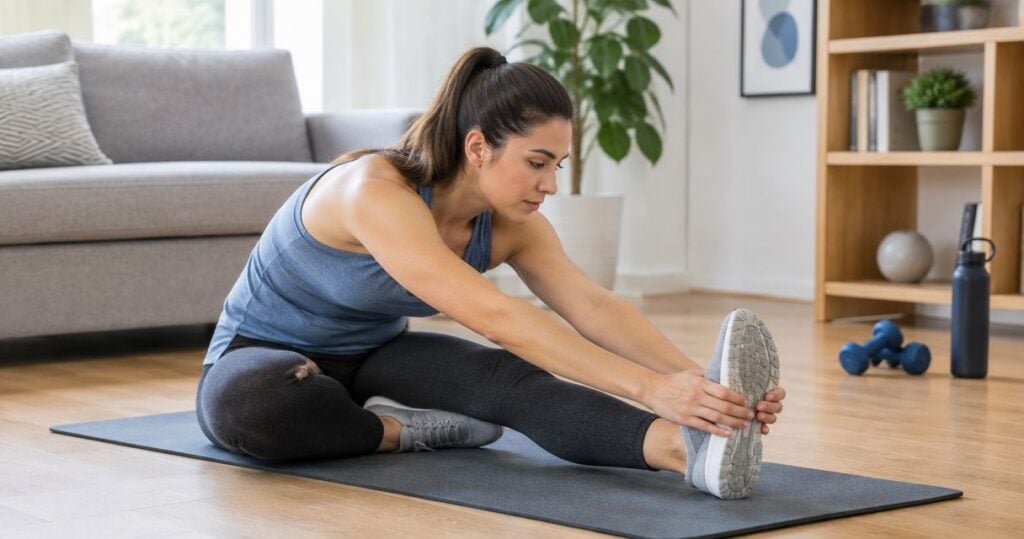
Tight hamstrings behind lower back pain ease with three static stretches held for 20 to 45 seconds, repeated two to three times a day: the supine strap stretch, the standing hamstring stretch, and the seated forward fold. When tightness keeps coming back despite daily stretching, a pelvic tilt or nerve tension is usually the reason — a pattern stretching alone won't resolve.
- Standard guidance in 2026 for tight hamstrings and lower back pain is holding a static stretch for 20 to 45 seconds, two to three times a day.
- Persistent tightness after weeks of stretching often points to nerve tension or a pelvic tilt, not a short muscle.
- A weak core lets the pelvis tilt forward again after every stretch session, resetting hamstring tension.
- See a qualified health professional if tightness or pain hasn’t eased in two to three weeks, or if pain runs down the leg.
Why this matters
Tight hamstrings and lower back pain show up together often enough that people assume one causes the other outright. It's more roundabout than that: short, tense hamstrings pull on the pelvis, tilting it backward and flattening the natural curve in the lower spine. A chiropractor in Bondi Junction sees this pattern regularly at MyChiro, where the pelvic tilt, not the hamstring itself, is often what's driving repeat tightness.
That flattened curve changes how load moves through the lumbar discs and facet joints during standing, bending and sitting. Stretching the hamstrings eases some of that pull, which is why it's a standard piece of self-management advice for lower back pain through 2026. But hamstring tightness is also a common symptom of sciatic nerve irritation — the nerve runs directly behind the hamstring muscles, so pulling on an irritated nerve during a stretch can feel identical to muscle tightness. Working out which one you're dealing with changes what actually helps.
How do you stretch tight hamstrings for lower back pain?
| Stretch | Hold time | Sets | Best for |
|---|---|---|---|
| Supine strap stretch | 30 seconds | 3 per leg | Beginners, balance issues |
| Standing hamstring stretch | 20-30 seconds | 2-3 per side | Quick breaks at a desk |
| Seated forward fold | 30-45 seconds | 2-3 | Full posterior chain stretch |
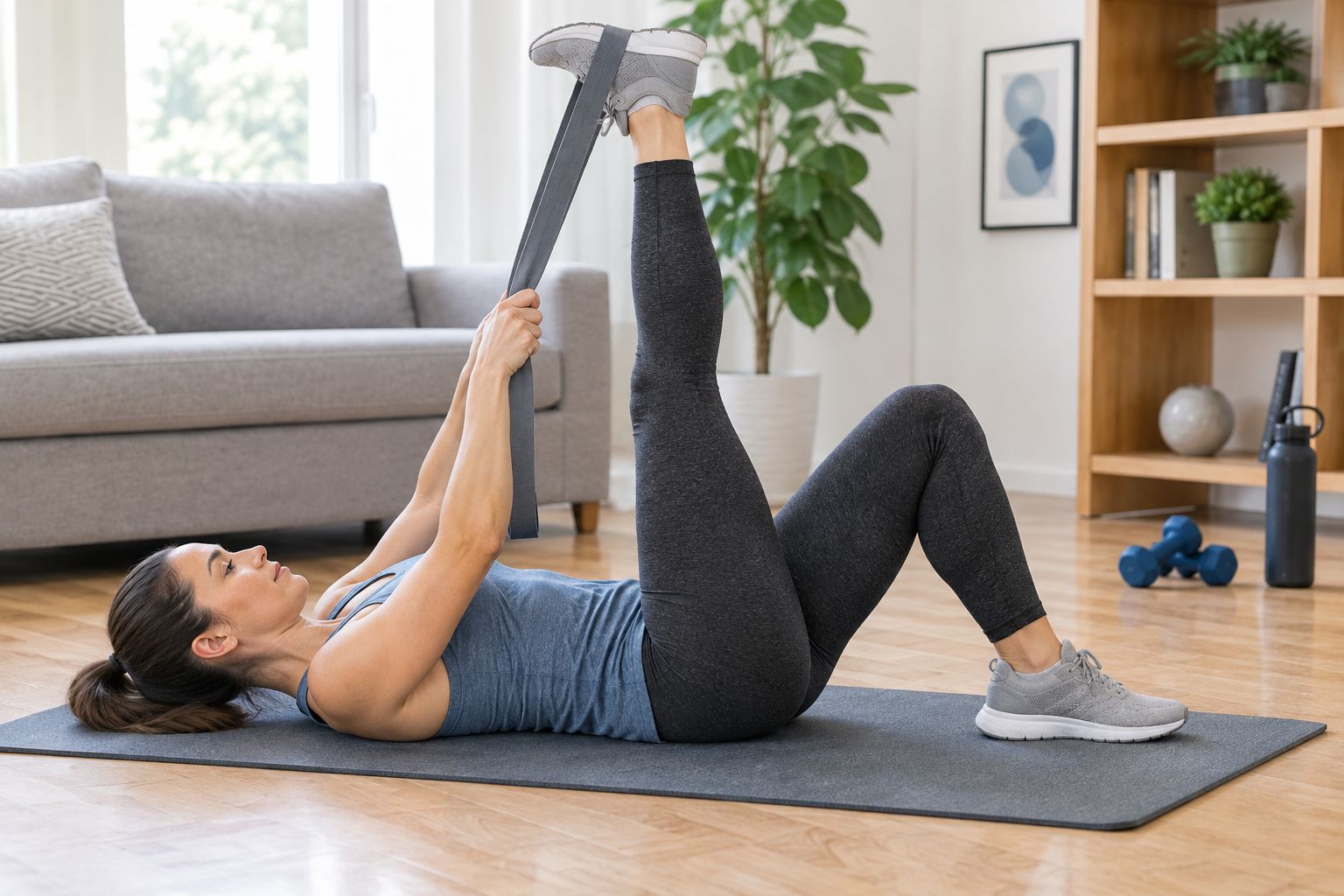
- Supine hamstring stretch with a strap or towel. Lie on your back, loop a strap around the ball of one foot, bend the other knee with the foot flat on the floor, and straighten the strapped leg toward the ceiling. Hold 30 seconds, three sets each leg.
- Standing hamstring stretch. Prop one heel on a low step or curb, keep that knee straight without locking it, and hinge forward from the hips. Hold 20 to 30 seconds each side.
- Seated forward fold. Sit with both legs straight in front of you, hinge from the hips rather than rounding the lower back, and reach toward your feet only as far as feels comfortable. Hold 30 to 45 seconds.
- Run the sequence once in the morning and once in the evening. Two to three sessions a day is the standard guidance for tight hamstrings tied to lower back pain in 2026, since hamstring length resets within hours of prolonged sitting.
Hip flexor tightness frequently travels alongside hamstring tightness, especially in people who sit for long stretches during the day. If your front hip feels just as tight as the back of your thigh, the stretches for tight hip flexors routine targets that companion pattern directly.
Supine strap stretch: hold 30 seconds, three sets
This is the easiest version to control because the floor supports your spine and the strap does the pulling instead of your arms. Keep the lower back flat against the floor rather than arching, and only pull the leg to the point of a mild stretch, not a sharp pull. It suits people who find standing versions awkward on balance or who feel dizzy bending forward.
Standing hamstring stretch: hold 20-30 seconds each side
Prop the heel on something knee-height or lower — a step, a low chair, a curb — and hinge from the hip joint rather than rounding through the shoulders. This version fits into a short break at a desk or between tasks, which is part of why it gets recommended so often for people with sedentary jobs.
Seated forward fold: hold 30-45 seconds
Sit tall first, then hinge forward from the hips with a straight-ish spine before letting the upper back round slightly at the bottom of the movement. This stretch loads the lower back more than the other two, so if it pulls sharply down the back of one leg or worsens lower back pain, stop and check with a qualified health professional before continuing.
Why hamstring tightness varies
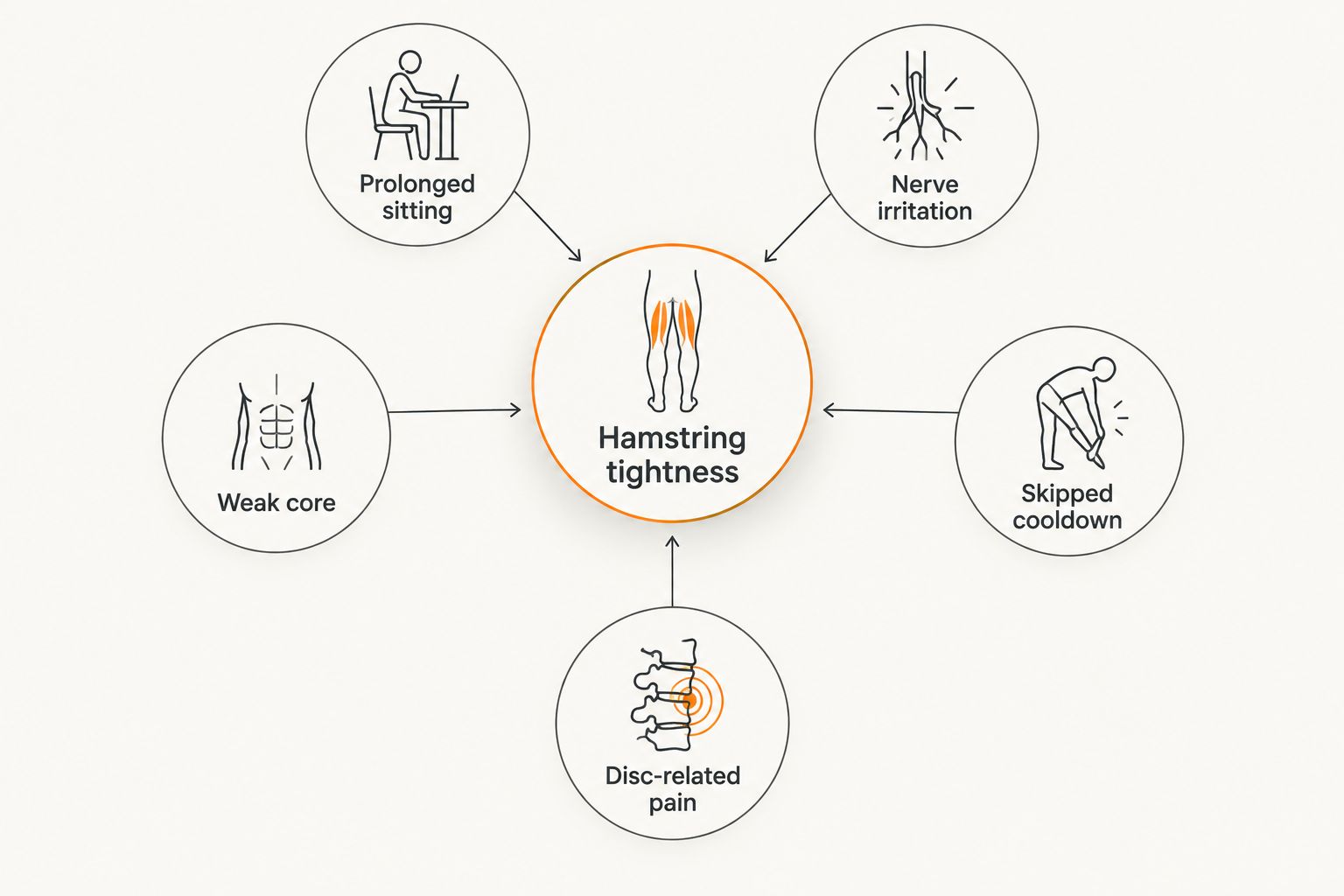
Not everyone's hamstrings tighten for the same reason, and the cause usually decides whether stretching alone is enough:
- Prolonged sitting — desk jobs, driving, shift work — keeps the hip flexors short and the pelvis tilted in a position that keeps hamstrings under constant low-grade tension.
- Sciatic nerve irritation can feel exactly like a tight hamstring, particularly when the sensation runs down the back of the thigh rather than staying local to the muscle.
- A weak core lets the pelvis tilt forward every time you stand up, resetting hamstring tension shortly after a stretch session ends.
- Skipped cooldowns after running, cycling or weightlifting leave hamstrings shortened following activity, compounding day to day if it happens repeatedly.
- Disc-related lower back pain sometimes produces referred tightness in the hamstring on the same side as the disc issue.
- Old injuries or leg length differences can keep one hamstring consistently tighter than the other, regardless of how much you stretch it.
Stretching addresses the muscle side of this picture. When hamstring tightness keeps returning alongside recurring lower back pain, a chiropractor can assess pelvic alignment, posture patterns and nerve involvement before suggesting anything beyond a stretch routine. Pairing stretching with core-strengthening exercises that don't strain the lower back tends to hold gains longer than stretching by itself, because a stronger core stops the pelvis tilting straight back into the same position.
Discuss your hamstring tightness
An assessment can check whether pelvic alignment or nerve irritation is behind repeat tightness.
Does tight hamstrings cause lower back pain?
Tight hamstrings don't cause lower back pain directly, but they change pelvic position enough to alter how load moves through the lumbar spine during standing and bending. That altered load is what tends to aggravate existing lower back pain rather than starting it from nothing.
How long does it take to loosen tight hamstrings?
Most people notice more range of motion within two to three weeks of daily stretching. Flexibility gains from static stretching alone typically plateau after four to six weeks without added strength or mobility work alongside it.
Should you stretch hamstrings if you have sciatica?
Gentle hamstring stretching can ease sciatica-related tightness for some people, but a stretch that reproduces sharp pain running down the leg is a signal to stop rather than push through it. That kind of response is worth raising with a qualified health professional before continuing the same routine.
FAQ
What is the fastest way to stretch tight hamstrings for lower back pain?
Holding a supine hamstring stretch with a strap for 30 seconds, three sets each leg, is the quickest routine most guidance recommends for tight hamstrings linked to lower back pain. Add the standing hamstring stretch and seated forward fold if time allows, aiming for two sessions a day.
How often should you stretch tight hamstrings?
Two to three times a day is standard guidance for tight hamstrings tied to lower back pain in 2026, with each stretch held for 20 to 45 seconds. Stretching once and expecting lasting change rarely works, because hamstring length resets within hours of prolonged sitting.
Can tight hamstrings cause sciatica?
Tight hamstrings don’t cause sciatica directly, but the sciatic nerve runs close behind the hamstring muscles, so nerve irritation often feels like hamstring tightness. A sharp line of pain down the back of the leg during a stretch is a nerve signal, not a muscle one.
Is it bad to stretch hamstrings with lower back pain?
Gentle static stretching is generally part of standard self-care advice for lower back pain, but a stretch that sharply increases pain or sends pain down the leg should be stopped. Checking with a qualified health professional before continuing is the safer next step in that situation.
How long does it take to loosen tight hamstrings?
Most people notice a change in range of motion within two to three weeks of daily stretching. Gains from stretching alone tend to plateau after four to six weeks without added strength or mobility work.
Should you stretch or strengthen for tight hamstrings?
Both matter: stretching addresses the length of the muscle, while strengthening the core and glutes stops the pelvis tilting back into the position that keeps hamstrings tight. Stretching without addressing pelvic position tends to produce short-lived results.
When should you see a chiropractor for tight hamstrings and lower back pain?
See a qualified health professional if tightness or lower back pain hasn’t eased after two to three weeks of consistent stretching, or if pain radiates down the leg. An assessment can identify whether pelvic alignment, posture or nerve irritation is driving the tightness.
One last thing
Many cases of "tight hamstrings" aren't a short muscle at all — they're neural tension carried by the sciatic nerve, which runs directly behind the hamstring group. That's why a stretch routine often improves things for a week or two, then stalls: the muscle has stopped shortening further, but nerve sensitivity is still driving the sensation of tightness. If your routine plateaus like that, it's a reason to check in with a qualified health professional rather than stretch harder or longer in 2026.
Related guides


