

Desk Posture Improvement Guide
Struggling with desk posture? Use our free guide to get tailored tips and improve comfort while working. Answer a few questions and start today!
Struggling with desk posture? Use our free guide to get tailored tips and improve comfort while working. Answer a few questions and start today!

How spinal adjustments and soft-tissue care may ease pain, rebalance the nervous system and support better sleep when combined with good sleep habits.

Manual therapy outperforms exercise and medication at 7 weeks, blending pain relief, mobility gains and objective outcome measures.

Chiropractic adjustments may ease stress-related muscle tension, lower cortisol and improve HRV — promising results but limited evidence.

Simple at-home tests — deep squat, hurdle step, shoulder mobility — to identify mobility or stability limits and guide corrective exercises for everyday aches.

Wearable sensors provide continuous, objective gait and posture data—enabling real‑time feedback, personalised rehabilitation and better fall‑risk monitoring outside the clinic.
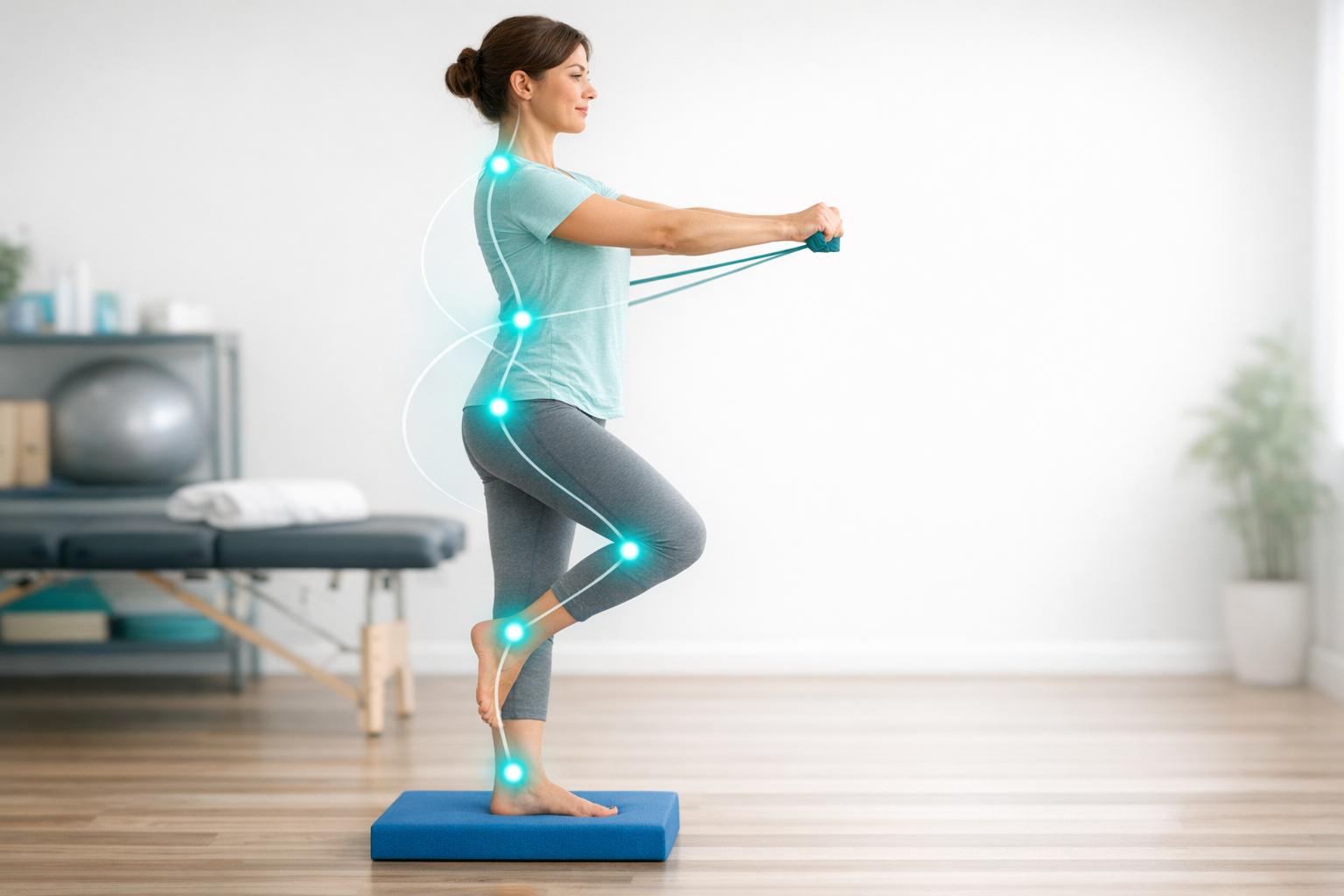
Neuromuscular re-education retrains muscle timing to reduce chronic pain, improve joint stability, coordination and posture alongside chiropractic care.
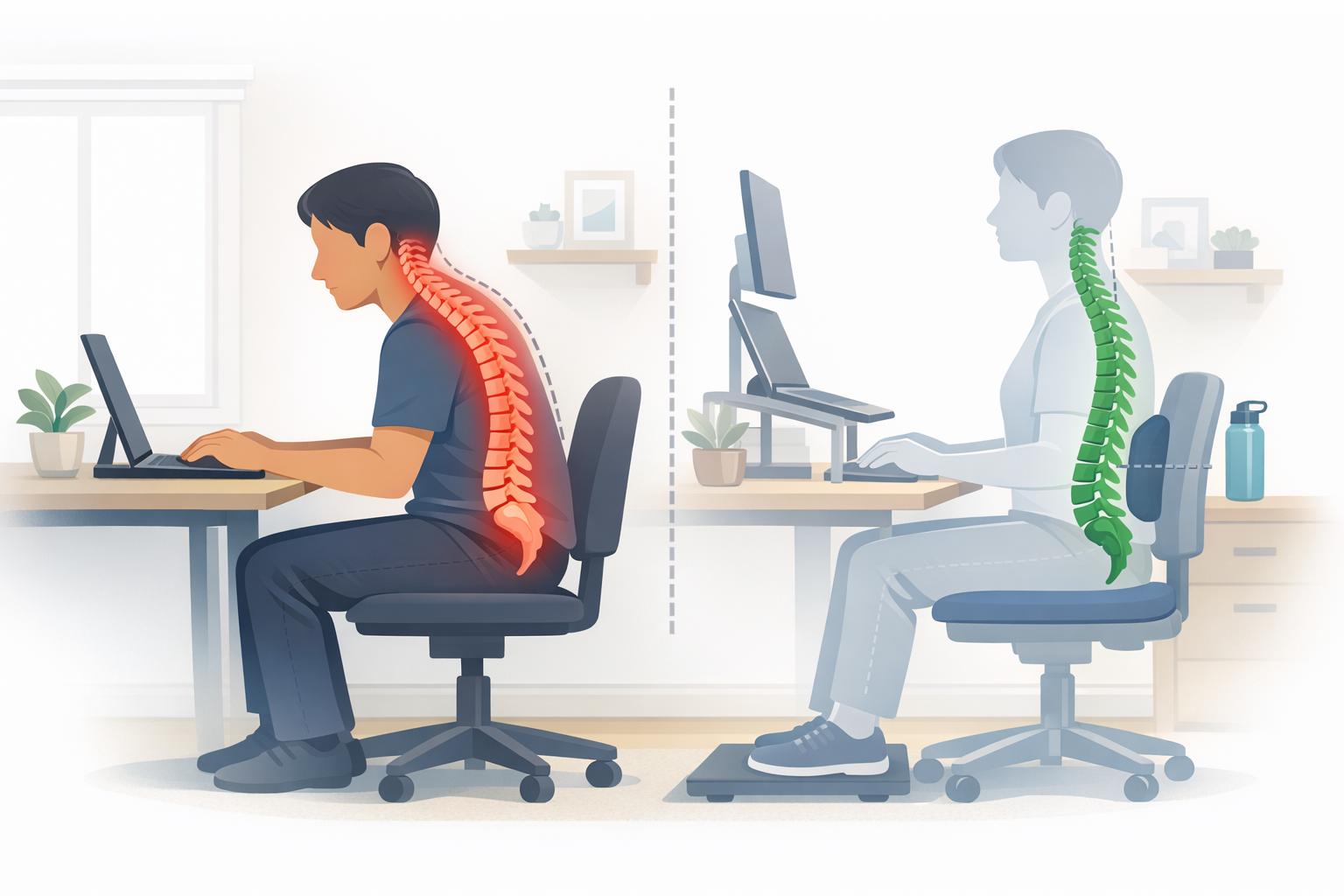
Poor ergonomics—forward head posture, slouching and bad lifting—increases spinal strain and pain; simple workspace changes, movement and exercises can help.

How chronic stress alters the HPA axis and central sensitisation, increasing muscle tension and pain — and how chiropractic care plus lifestyle changes can help.

Antioxidants show lab and animal promise to slow spinal disc degeneration, but human trials and delivery methods remain limited.