
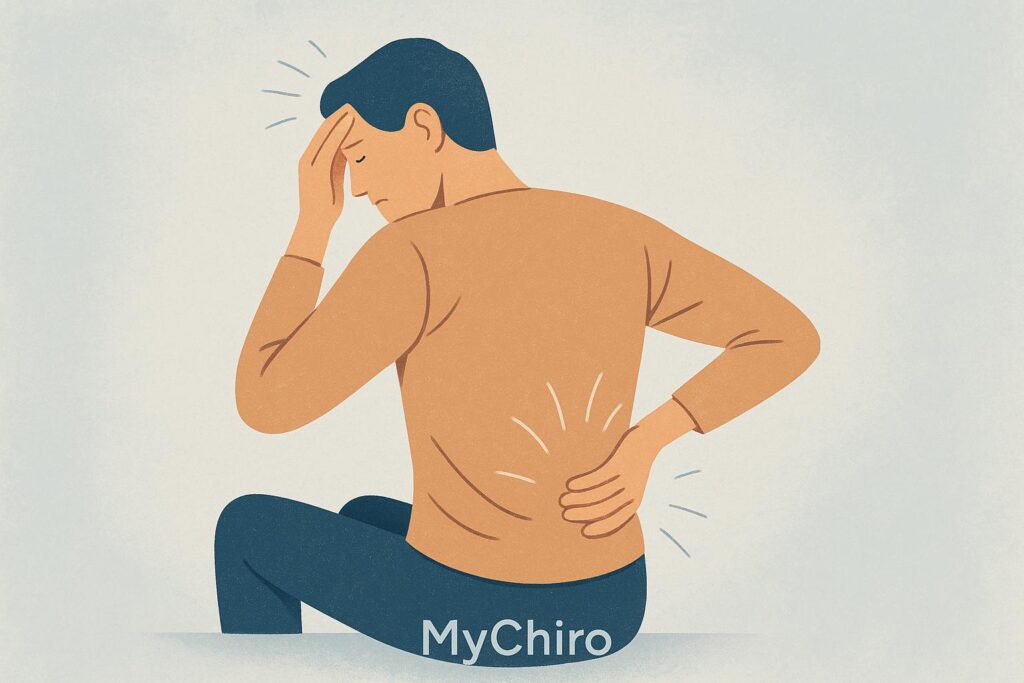
Stress can cause headaches and spinal issues by tightening muscles, disrupting posture, and overloading the nervous system. Here’s what happens:
- Tension headaches often stem from tight neck and shoulder muscles caused by stress.
- Poor posture during stress strains the cervical spine, leading to nerve irritation and headaches.
- Chronic stress keeps cortisol levels high, increasing inflammation and pain sensitivity.
- Workplace habits like long hours at a desk worsen spinal tension and headaches.
Solutions include chiropractic care, better desk setups, relaxation techniques, and regular exercise to manage stress and reduce headache frequency. Small daily changes can protect your spine and ease headaches.
Tension Headache Relief | Stress & Migraine Headaches too
How Stress Physically Affects Your Spine and Triggers Headaches
Stress doesn’t just take a toll on your mental health – it brings about physical changes in your body, particularly in your spine, and plays a key role in triggering headaches. When stress strikes, your body reacts in ways that can directly affect your spinal health and lead to persistent head pain.
Your Body’s Stress Response System
At the centre of your body’s response to stress is the hypothalamic–pituitary–adrenal (HPA) axis, which works hand in hand with the autonomic nervous system (ANS). These systems are like your internal stress managers. When you’re under pressure, they activate nerve pathways and release hormones designed to help you cope. However, chronic stress keeps cortisol levels high, leading to inflammation in the nervous system, changes in blood vessels, and an increased sensitivity to pain.
The autonomic nervous system, which oversees functions like heart rate and blood pressure, can also become unbalanced. The "fight or flight" mode, controlled by the sympathetic nervous system, stays switched on, while the "rest and digest" state, managed by the parasympathetic system, struggles to kick in. This imbalance leaves your body stuck in a state of heightened alertness, which not only increases muscle tension but also sets the stage for spinal discomfort.
Muscle Tension and Poor Posture from Stress
One of the first places stress shows up physically is in your muscles, especially those around the neck, shoulders, and upper back. When your sympathetic nervous system is constantly active, it causes these muscles to tighten. Over time, this tension can lead to tension-type headaches and even spinal issues. You might unconsciously hunch your shoulders or clench your neck muscles, which places extra strain on the cervical spine. If you spend a lot of time at a desk or computer, poor posture can make these issues worse, compounding the tension and discomfort.
Tight muscles don’t just cause stiffness or pain locally – they can also compress blood vessels and irritate nerves. This combination often contributes to the development of tension headaches, one of the most common types of stress-related headaches.
Stress Hormones and Brain Inflammation That Cause Headaches
Stress doesn’t stop at your muscles – it also affects how your brain processes pain. Chronic stress disrupts the normal functioning of the HPA axis, altering pain signalling pathways and making your nervous system more sensitive to pain triggers. This is why nearly 70% of people identify stress as a migraine trigger[1].
Stress hormones like cortisol also influence brain areas involved in pain perception, such as the thalamus and brainstem. Over time, prolonged stress can lead to inflammation in the brain, shrinkage in the hippocampus, and increased sensitivity to pain. These changes can even disrupt blood flow in the brain’s protective membranes and activate pain pathways linked to the trigeminal nerve, a major player in headache development.
On a cellular level, chronic stress can cause oxidative stress and mitochondrial dysfunction. This means your body produces more harmful reactive oxygen species while its natural antioxidant defences weaken. This biochemical imbalance damages nerve cells and interferes with pathways that regulate headaches, making stress-related headaches particularly challenging to manage. Combined with muscle tension and altered hormone regulation, these factors create a cycle of spinal misalignment and headache pain that can feel difficult to break.
Research Studies on Stress, Spine Problems, and Headaches
Scientific research has repeatedly shown that chronic stress can lead to more frequent headaches, increased spinal tension, and a heightened sensitivity to pain. Below, we explore how stress interacts with headaches and spinal health, with evidence drawn from various studies.
Stress and Headache Frequency
Stress has a well-established link to the development of headaches. Data reveals that more than half of the population experiences headaches each year, with migraines and tension-type headaches being especially common.
For those suffering from chronic headaches, the impact is even more pronounced. Around 4.6% of people endure headaches on 15 or more days each month. Research has found that individuals with chronic headaches often experience a higher number of stressful events in the year leading up to their symptoms.
A 2011 study in Norway highlighted how traumatic experiences can significantly increase the risk of persistent migraines. This underscores how major stressors can lead to long-term headache patterns.
One striking case study from 2018 focused on people suffering from chronic headaches lasting over two years. These individuals had previously tried various treatments, including physical therapy, acupuncture, and extended medication regimens, but saw little improvement. However, after six months of chiropractic care aimed at restoring nervous system function, participants reported significant reductions in headache pain, lower reliance on medication, and improved mental health.
Workplace Stress and Poor Desk Posture
Modern work environments are another major contributor to stress-related spinal issues and headaches. A study involving 63,071 Japanese IT workers found a strong connection between workplace stress and headache frequency. Workers with high stress levels were far more likely to experience regular headaches compared to their less stressed peers. Additionally, spending over 12 hours seated on a weekday further increased the risk.
The study also revealed gender-specific trends. For both men and women, high stress, prolonged sitting, and lack of physical activity were closely linked to regular headaches. Symptoms such as stiff shoulders, back pain, insomnia, eye strain, and anxiety often accompanied these headaches, painting a broader picture of stress-related health issues.
Desk workers, in particular, are prone to headaches caused by extended periods of sitting, poor posture, and suboptimal workstation setups. Research also shows that migraine sufferers are more likely to have neck dysfunction, suggesting that spinal alignment problems could make them more susceptible to headaches. Adjusting workstations to improve ergonomics may help alleviate discomfort and reduce headache occurrences.
Comparing Daily Stress to Major Life Events
Studies have also examined how different types of stress – everyday pressures versus major life events – affect headache patterns. Both forms of stress are linked to headaches, but they influence sufferers in distinct ways.
Major life changes, such as losing a job, going through a breakup, or dealing with a severe illness, can turn occasional headaches into chronic pain. Research has shown that individuals with chronic daily headaches often experienced significant stressful events in the year leading up to or during the onset of their condition.
On the other hand, the cumulative effect of daily stressors seems to play a bigger role in migraine-related disability. While major events may trigger the onset of chronic headaches, it’s the day-to-day pressures that often determine how debilitating the headaches become and how much they interfere with daily life.
In general, people dealing with chronic headaches report more negative stressors in the preceding year compared to those without headaches. This pattern holds true regardless of whether the stress arises from major events or the steady build-up of minor hassles.
sbb-itb-585d67d
Treatment Options for Stress-Related Headaches
The connection between stress, spinal tension, and headaches is well-established, making effective treatment options crucial. Research highlights several methods to manage both spinal tension and the headaches often linked to stress.
Chiropractic Treatment for Spinal Tension
Chiropractic care focuses on addressing spinal dysfunction through spinal adjustments and soft tissue techniques, targeting the root causes of stress-related headaches. This approach aims to restore proper nervous system function.
"Spinal manipulation – one of the primary treatments provided by doctors of chiropractic – may be an effective treatment option for tension headaches and headaches that originate in the neck."
– American Chiropractic Association
Spinal manipulation is a core component of chiropractic care for headaches. A 2011 study in the Journal of Manipulative and Physiological Therapeutics found that chiropractic treatments, including spinal adjustments, can alleviate migraines and cervicogenic headaches by improving spinal alignment and reducing nerve irritation. This, in turn, helps calm an overactive nervous system.
Spinal misalignments often lead to nerve irritation, and chiropractic adjustments aim to correct these imbalances. Practitioners frequently combine these adjustments with soft tissue therapies to relieve muscle tension in the neck, shoulders, and upper back. Together, these techniques help rebalance the musculoskeletal system. Clinical observations also suggest that tension headaches are often cervicogenic, with poor posture – particularly in the shoulders, neck, head, and jaw – playing a significant role in their development.
Chiropractic care often includes ergonomic advice and lifestyle strategies to minimise daily tension. For example, a 2016–2017 case study reported on a 27-year-old woman who had suffered nearly daily migraines for ten years. After standard neurological treatments failed, chiropractic care combining manual soft tissue release and spinal adjustments led to a 50% reduction in headache intensity, with immediate improvements noted.
Understanding how chiropractic care compares to other treatment options provides a clearer perspective on its role in managing stress-related headaches.
Comparing Different Treatment Methods
Various treatment methods address stress-related headaches in different ways. Choosing the right option depends on individual needs and circumstances.
| Treatment Method | Approach | Research Evidence | Typical Timeline | Best For |
|---|---|---|---|---|
| Chiropractic Care | Spinal adjustments, soft tissue therapy, nervous system focus | 2011 JMPT study showed improvement in migraines and cervicogenic headaches; 2014 report highlighted better outcomes for neck pain | Immediate relief with ongoing improvement | Tension headaches, cervicogenic headaches, neck-related pain |
| Physiotherapy | Exercise therapy, manual techniques, movement rehabilitation | Strong evidence for managing neck pain and improving posture | Gradual improvement over 6–12 weeks | Postural issues, muscle weakness, movement dysfunction |
| Medication | Pharmaceutical intervention for symptom relief | Effective for acute pain but limited for long-term management | Immediate relief | Severe pain, acute headache episodes |
| Mindfulness/Meditation | Stress reduction and nervous system regulation | Growing evidence for managing stress-related pain | Benefits typically seen after 4–8 weeks | High stress levels, anxiety-related headaches |
Chiropractic care stands out by addressing the underlying spinal dysfunction rather than just treating symptoms. A 2014 report in the Journal of Manipulative and Physiological Therapeutics highlighted that chiropractic interventions can improve outcomes for both acute and chronic neck pain.
Combining chiropractic care with other therapies, such as physiotherapy or mindfulness practices, may yield the best results. However, it’s important to note that not all headache types respond equally to chiropractic treatment. While tension-type and cervicogenic headaches often improve, migraines and cluster headaches may show limited response.
For Australians seeking non-pharmaceutical, evidence-based treatment options, registered chiropractors offer a valuable resource. Practitioners like Dr Steve provide care focused on the nervous system, incorporating spinal adjustments, soft tissue therapies, ergonomic advice, and lifestyle recommendations to help manage stress-related headaches and spinal tension.
Ultimately, proper assessment and diagnosis are key. Since treatment effectiveness varies, consulting a registered health practitioner is essential for creating a personalised care plan.
Self-Care Methods to Prevent Stress and Headaches
In addition to professional treatments, simple daily self-care habits can make a big difference in reducing stress-induced headaches. By tweaking your routine and making thoughtful adjustments, you can support spinal health and lower the chances of headaches.
Better Desk Setup and Posture
Your workspace setup plays a huge role in preventing tension headaches. Poor ergonomics can strain your muscles, tire your eyes, and leave you with a pounding head by the end of the day. A well-designed desk setup keeps your spine aligned and minimises stress on your nervous system.
Chair positioning is key. Choose a chair that supports your lower back, keeping the natural S-curve of your spine intact. Adjust the height so your feet rest flat on the floor, knees bent at a 90° angle. Leave about 10 centimetres of space between the seat’s edge and the backs of your knees to maintain healthy circulation.
Monitor placement matters too. Keep the screen at arm’s length, with the top of the monitor at or just below eye level. This prevents forward head posture, which can lead to cervicogenic headaches. If you wear bifocals, lower the monitor slightly to suit your needs. For those using multiple screens, place them close together to minimise head movement.
Keyboard and mouse positioning also play a role in reducing shoulder and neck tension. Keep them at a height where your wrists remain straight, your upper arms stay close to your body, and your elbows are bent at a 90° angle. Relax your shoulders and keep the mouse within easy reach to avoid unnecessary strain.
To protect your eyes, follow the 20-20-20 rule: every 20 minutes, look at something 20 feet away for 20 seconds. Also, take short breaks every hour to stretch or walk around, easing pressure on your spine and improving circulation. Adjust your lighting to reduce glare and set your screen brightness to a comfortable level.
Beyond these adjustments, managing stress and improving relaxation can further help prevent headaches.
Relaxation Methods and Better Sleep
Relaxation techniques are powerful tools for managing stress and preventing headaches. Studies show that methods like biofeedback and relaxation training can reduce headache frequency and severity by 45% to 60%, offering results comparable to many medications but without the side effects.
"Deep relaxation is a skill that teaches you how to recognise signs of stress in your body and how to reduce them before they reach the level of painful muscles and headache." – Gay L. Lipchik, PhD, Ohio University Headache Treatment & Research Project
Deep breathing exercises are a simple yet effective way to lower stress. Spend 5-10 minutes, two to three times a day, focusing on slow, deep breaths to calm your body’s stress response.
Progressive muscle relaxation (PMR) is another helpful technique. This involves tensing and then relaxing each muscle group, starting from your toes and working upward. Over time, this practice can help you become more aware of tension in your body and release it before it leads to a headache.
Sleep quality is equally important. Sleeping on your back or side, rather than your stomach, helps maintain proper spinal alignment. A firm mattress that evenly supports your body weight can prevent pressure points that might cause morning headaches or neck stiffness.
For the best results, aim to dedicate about 25 minutes daily to relaxation techniques. Combined with other strategies, this can significantly improve headache management. Pair your relaxation efforts with regular movement to keep your muscles and spine healthy.
Regular Movement and Exercise
Physical activity is a natural way to combat the factors that contribute to stress-related headaches, such as muscle tension, poor circulation, and heightened stress hormones. Movement not only supports spinal health but also provides a mental reset.
Core strengthening exercises are particularly important for spinal stability. Moves like planks, pelvic tilts, and abdominal crunches target the deep muscles that help you maintain good posture – especially during long hours at a desk.
Low-impact cardio activities such as walking, swimming, or cycling can improve blood flow and reduce stress without putting additional strain on your spine. These activities can ease muscle stiffness and tension, reducing the likelihood of headaches.
Stretching should be part of your daily routine. Focus on areas impacted by prolonged sitting, such as your lower back, hamstrings, and hip flexors. Don’t forget to include stretches for your neck and shoulders, which are common tension hotspots linked to headaches.
Take regular breaks – every 30 minutes, stand up, stretch, or take a short walk to counteract the effects of sitting. Warm-up and cool-down exercises are also essential for improving circulation and keeping muscles flexible.
Sticking to a consistent schedule of moderate, regular activity is one of the most effective ways to prevent headaches over the long term.
Key Points to Remember
Research has shown a strong link between stress, spinal misalignment, and headaches. Each year, more than half of the population experiences headaches, with stress playing a role in nearly 70% of migraine cases. These findings emphasise just how common and interconnected these issues are.
When you’re stressed, your body releases cortisol and adrenaline. These hormones cause your neck and back muscles to tense up, which can trigger headaches. Over time, chronic stress disrupts your nervous system and blood flow, creating conditions that contribute to both headaches and spinal problems.
"Stress affects the body in a variety of ways, from mood swings and headaches to weight fluctuations. However, an often-overlooked side effect of stress is neck and back pain. Over time, repetitive bouts of stress can cause musculoskeletal issues in these regions of the body." – Kavita Trivedi, D.O., Physical Medicine and Rehabilitation
These findings highlight the importance of addressing both physical alignment and stress management. A well-rounded strategy can help protect your spine and reduce the frequency of headaches.
Simple yet effective steps – like adjusting your workspace ergonomics, incorporating relaxation techniques into your routine, and seeking professional care when necessary – can make a noticeable difference. Small, consistent changes in your daily habits can lead to better spinal health and fewer headaches.
This information is intended for general education and is not a replacement for personalised healthcare advice. Make sure to consult a registered health practitioner for individual assessment and tailored treatment options.
FAQs
How does stress impact your spine and trigger headaches?
Stress often causes muscles to tense up, especially around the neck and shoulders. This tension can lead to stiff joints and even alter the alignment of your spine. When this happens, nearby nerves might become irritated, which can trigger headaches and general discomfort.
If stress becomes a long-term issue, it can also impact your posture. Poor posture puts extra pressure on the spine, which can worsen the frequency and intensity of headaches. Taking steps to manage stress and care for your spinal health can make a big difference in easing these symptoms and enhancing your overall wellbeing.
How can I improve my posture and reduce stress-related headaches while working at a desk?
To improve your posture and reduce stress-related headaches while working at your desk, start by setting up your workspace with comfort and alignment in mind. Adjust your chair to properly support your lower back, position your monitor so it’s at eye level, and make sure your feet rest flat on the floor. These small tweaks can go a long way in preventing muscle strain and tension.
Adding regular movement to your routine is equally important. Every 30–60 minutes, take a moment to stand, walk, or do a few simple stretches. Exercises like neck stretches, shoulder rolls, and seated torso twists can help release tension in your neck, shoulders, and back. Not only do these movements promote better posture, but they can also reduce the chances of headaches linked to stress or poor alignment.
Short breaks to relax and reset your posture can make a noticeable difference too. When paired with a thoughtfully organised workspace, these habits contribute to better spinal health and overall wellbeing.
How can chiropractic care help with stress-related headaches?
Chiropractic care can be an option for easing stress-related headaches, especially tension headaches tied to neck and spinal strain. Studies indicate that chiropractic adjustments, which aim to correct musculoskeletal imbalances, may help reduce the frequency and severity of these headaches for some individuals.
What sets chiropractic care apart is its non-invasive, drug-free approach, which comes with few side effects. While results differ from person to person, many people find it helpful for managing pain and supporting better spinal health. For personalised guidance, it’s always a good idea to consult a qualified chiropractor.