

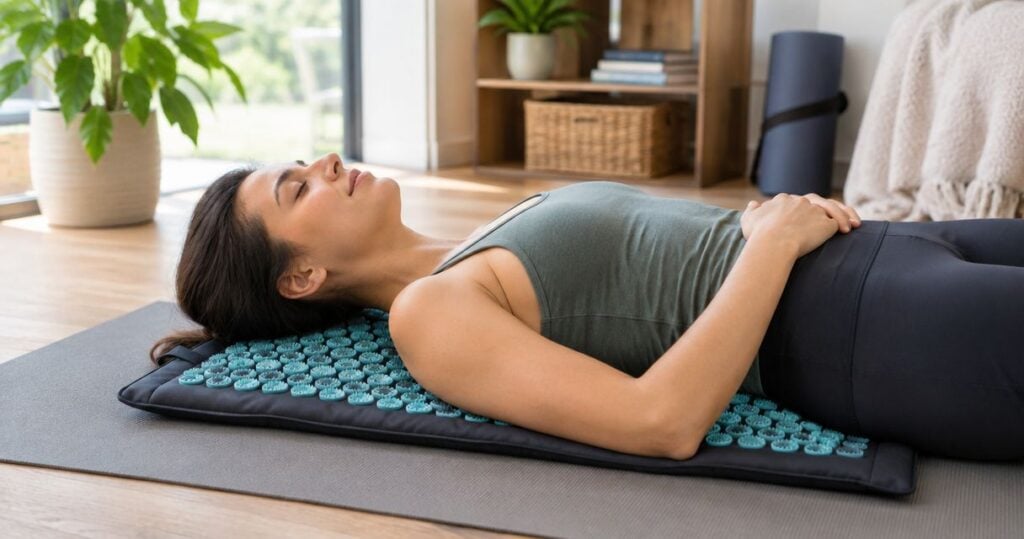
An acupressure mat is a flat mat covered in plastic spikes that some people lie on at home as a self-care add-on for general back and neck tension, alongside professional care rather than instead of it. This guide compares five widely sold mats on spike coverage, size, portability and how easy they are to introduce safely in 2026.
- Bed of Nails Original is the best acupressure mat for back pain for everyday use at home in 2026.
- ProsourceFit’s mat and pillow set suits first-time users who want a gentler introduction.
- Spoonk Space folds down for travel; Yantra Mat gives a denser, firmer spike pattern.
- Kanjo Restore pairs a mat with a neck pillow for combined sessions.
- Anyone with a spinal condition, pregnancy or skin sensitivity should check with a health professional before starting.
Why this matters
Back and neck tension is one of the most common reasons people search for at-home tools, and acupressure mats keep showing up as a low-cost option next to yoga poses for lower back pain and other self-care routines. The mats work on the principle of distributing pressure across many small points rather than one hard spot, which is different from a single trigger-point tool.
They are not a substitute for an assessment. If pain is sharp, radiating, linked to a recent injury, or you have a diagnosed spinal condition, discuss any new self-care tool with a chiropractor or GP before adding it to your routine. For general day-to-day tightness, most healthy adults can trial a mat and adjust based on comfort.
What makes the best acupressure mat
- Spike density and material — closer-set spikes spread pressure over a wider area, which most first-time users find more comfortable than sparse, hard points.
- Mat and pillow size — a full-back mat around 68 x 42 cm covers the lower and mid-back in one session; smaller mats focus on targeted areas.
- Portability — foldable or roll-up designs matter if you travel or have limited storage space.
- Cleaning and fabric — cotton covers are washable; foam-backed designs are wipeable but less breathable.
- Included accessories — some sets bundle a neck pillow, which changes what the mat can be used for.
- Build consistency — even spike spacing and a firm backing stop the mat from folding awkwardly under body weight.
Acupressure mats at a glance
| Mat | Best for | Standout feature | Key limitation |
|---|---|---|---|
| Bed of Nails Original | Everyday use | Long-standing spike design, full-back coverage | Firm from the first use; not ideal for very sensitive skin |
| ProsourceFit Mat and Pillow Set | Beginners | Softer introduction, includes matching pillow | Bulkier to store than foldable options |
| Spoonk Space | Travel and small spaces | Foldable, compact when packed | Reduced coverage area versus full-size mats |
| Yantra Mat | Firmer pressure preference | Dense, close-set spike pattern | Too intense for first-time users |
| Kanjo Restore Mat and Pillow Set | Combined neck and back sessions | Mat and pillow designed as a matched pair | Two-piece set takes more space to store |
1. Bed of Nails Original Acupressure Mat: best overall for everyday back and neck routines
Bed of Nails is one of the longer-running names in this category, built around a full-size mat with a cotton cover and a dense, even spike layout. It is designed to lie flat under the shoulders, mid-back or lower back for a general self-care session.
Bed of Nails pros:
- Full-back coverage in a single mat
- Removable cotton cover is machine washable
- Consistent spike spacing reduces pressure hot spots
Bed of Nails cons:
- Firm from the first session, which surprises some new users
- Not designed to fold flat for travel
Best for: people who want one mat for regular home use rather than travel. Verdict: Buy for everyday use; check with a health professional first if you have a diagnosed spinal or skin condition.
2. ProsourceFit Acupressure Mat and Pillow Set: best for beginners easing into pressure-point work
This set pairs a large mat with a smaller pillow insert, aimed at people trying acupressure for the first time. The spike pattern is generally described as slightly more forgiving than denser designs, which suits a gradual introduction.
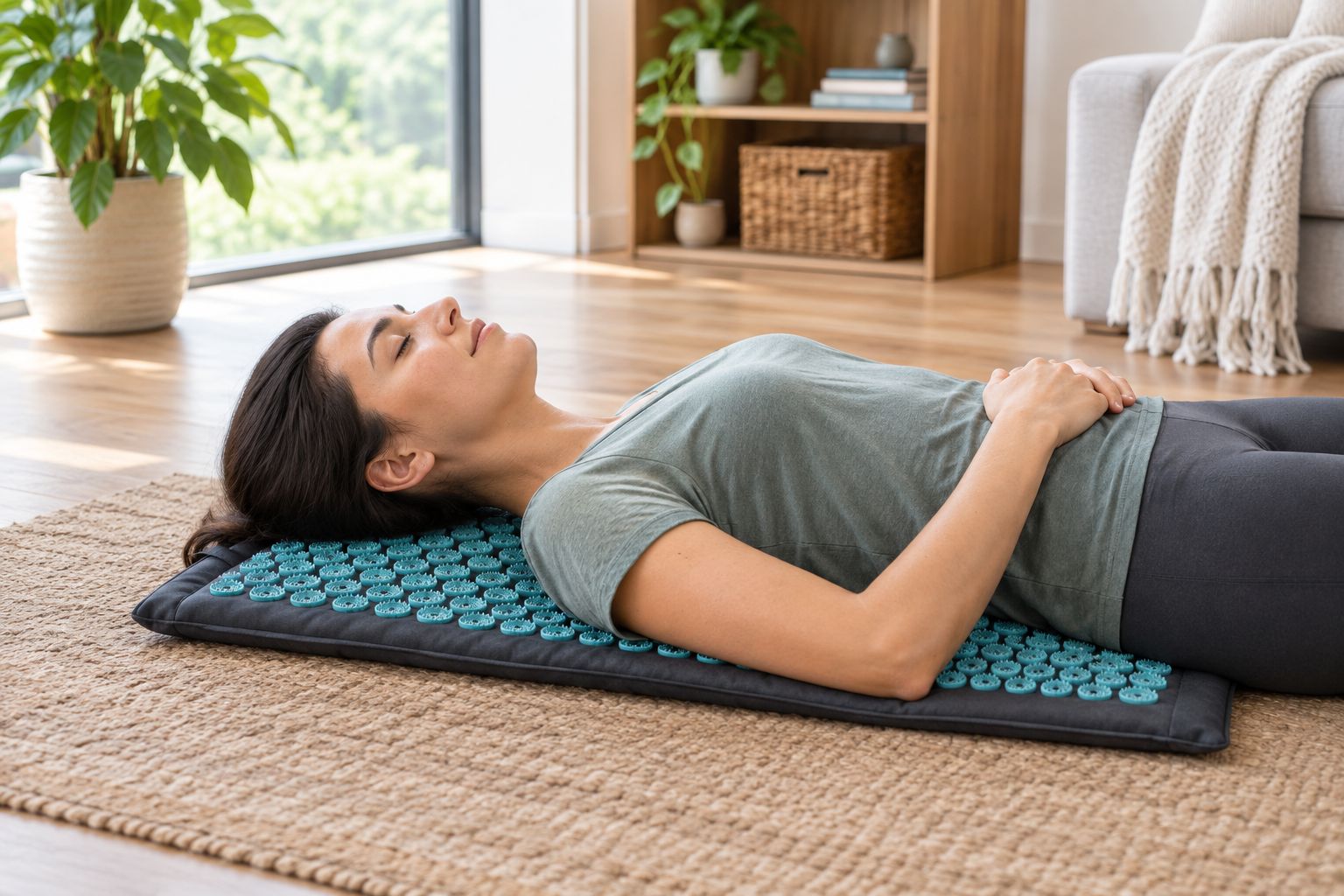
ProsourceFit pros:
- Larger surface area suits taller users
- Matching pillow extends use to the neck
- Gentler first impression for new users
ProsourceFit cons:
- Two-piece set is bulkier to store
- Less portable than folding designs
Best for: first-time users easing in slowly. Verdict: Buy if this is your first mat.
3. Spoonk Space Acupressure Mat: best for travel and small living spaces
Spoonk Space is built around a folding design, which trades some full-back coverage for a mat that packs down small. It suits apartment living or anyone who wants to bring a mat when travelling.
Spoonk Space pros:
- Folds into a compact size for a bag or suitcase
- Lighter fabric construction than full mats
- Easier to store in small spaces
Spoonk Space cons:
- Reduced surface area versus full-size mats
- Fold lines can create uneven pressure over time
Best for: frequent travellers or small apartments. Verdict: Buy for portability; Skip if you want maximum coverage in one session.
4. Yantra Mat: best for firmer, denser pressure sensations
Yantra Mat is a Swedish design known for a tighter, more closely packed spike pattern than most competitors. It is aimed at people who have already used a standard mat and want a more intense sensation.
Yantra Mat pros:
- Denser spike pattern than most standard mats
- Compact roll-up size
- Consistent build quality across the mat surface
Yantra Mat cons:
- Too firm for a first session for most new users
- Smaller surface than full-back designs
Best for: people who already tolerate standard mats and want more pressure. Verdict: Hold unless you have prior experience with a softer mat; Skip as a first-ever purchase.
5. Kanjo Restore Mat and Pillow Set: best for combined neck and back sessions
Kanjo's set is built as a matched mat-and-pillow pair, aimed at people who want to address the neck and upper back in the same session rather than buying separate accessories.
Kanjo Restore pros:
- Pillow is sized to match the mat's spike pattern
- Useful for combined neck-and-back routines
- Reasonably portable as a rolled set
Kanjo Restore cons:
- Two pieces to store and wash
- Neck pillow needs a shorter, more cautious first session
Best for: people who want one set covering both neck and back. Verdict: Buy for combined routines; discuss neck use specifically with a chiropractor if you have any existing neck condition.
How we ranked
Each mat was compared against the criteria above: spike density and material, mat and pillow size, portability, cleaning, included accessories and build consistency. Bed of Nails led on all-round coverage and consistency; the other four each won a distinct use case rather than competing for the same slot, which is why this reads as a decision tree and not a single leaderboard.
How to introduce an acupressure mat safely
Most general guidance on pressure-point tools suggests starting slowly rather than lying on bare skin for a long session on day one. A gradual approach also makes it easier to notice if a mat is not suiting you.
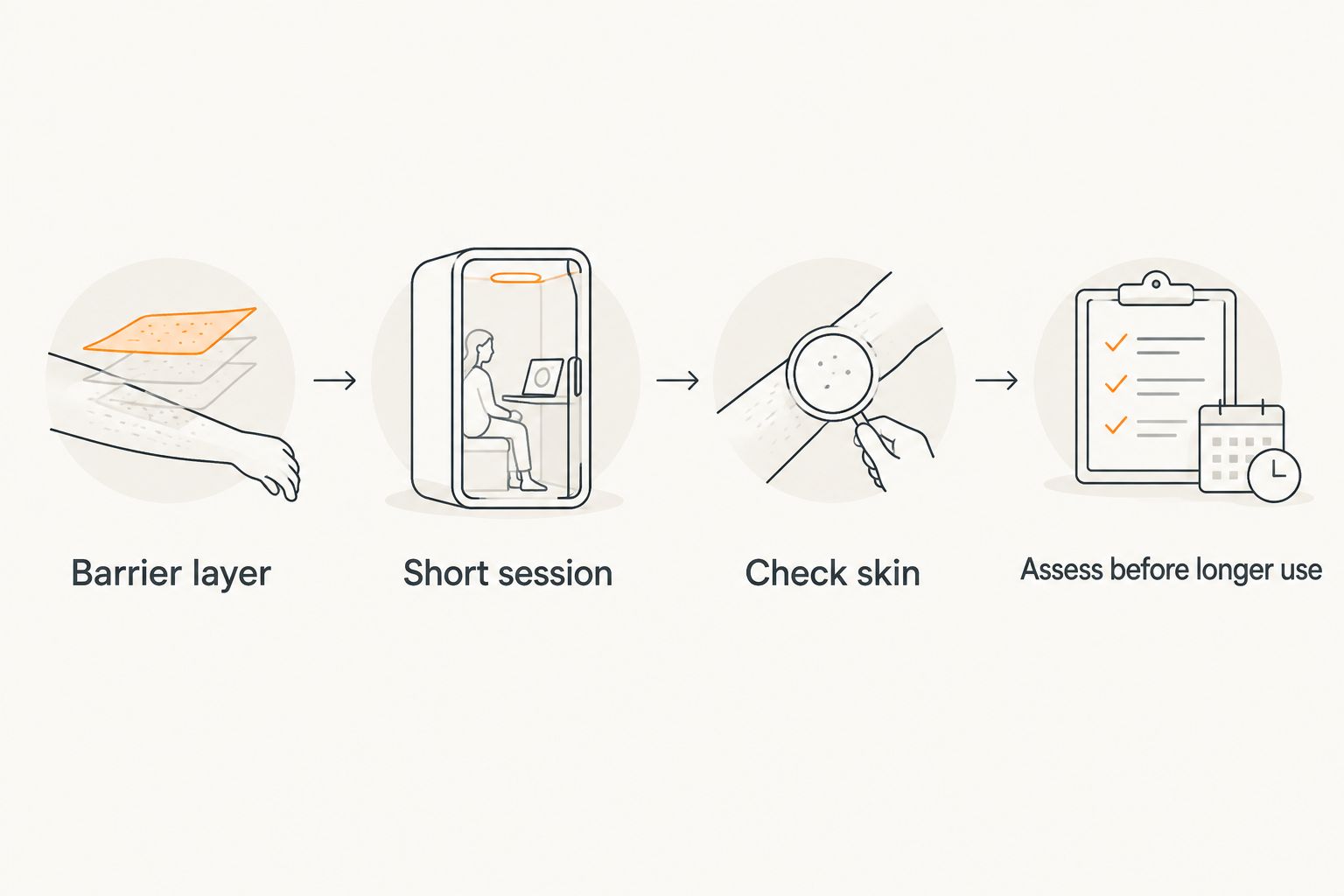
- Start with a thin shirt as a barrier layer rather than direct skin contact.
- Keep the first session to around 10 to 20 minutes and note how the skin responds afterwards.
- Check for lasting red marks or bruising rather than a temporary, even flush.
- If you have a diagnosed spinal condition, are pregnant, or have a skin sensitivity, raise it with your chiropractor or GP before adding a mat to your routine — this fits the same logic covered in guidance for remote workers with makeshift home offices adjusting a new setup gradually.
“A mat that leaves lasting marks rather than a temporary, even flush is the wrong firmness for your skin.”
Discuss your back or neck pain with a chiropractor
Book an assessment before adding new self-care tools to your routine.
Which acupressure mat should you choose?
For most people trying this category for the first time in 2026, Bed of Nails Original remains the default pick for everyday back and neck tension because of its full coverage and consistent build. Choose ProsourceFit if you want a softer first experience, Spoonk Space if storage or travel is the priority, Yantra Mat once you already tolerate standard designs, and Kanjo Restore if you specifically want a matched neck-and-back set. None of these replace an assessment for pain that is sharp, radiating or linked to an injury — that conversation belongs with a chiropractor or GP, not a mat.
Some mats also pair well with other self-care tools compared elsewhere, including heating pad options for lower back pain and TENS machines for muscle and joint pain, which work on different mechanisms than a spike mat.
FAQ
What is the best acupressure mat for back pain in 2026?
Bed of Nails Original is the most commonly recommended all-round pick in 2026 for general back and neck tension because of its full-size coverage and consistent spike layout. Beginners may prefer a softer set like ProsourceFit before moving to a firmer design.
Is an acupressure mat better than a heating pad for back pain?
They work differently: a mat applies distributed pressure while a heating pad applies warmth, and many people use both depending on the day. Neither is a substitute for an assessment if pain persists or worsens.
How long should I lie on an acupressure mat?
A common starting point is 10 to 20 minutes with a thin shirt as a barrier layer, then adjusting based on comfort. Longer or direct-skin sessions are generally introduced gradually, not on the first try.
Can acupressure mats help with neck pain?
Some mat-and-pillow sets, such as Kanjo Restore, are designed to be used across both the neck and back. Anyone with a diagnosed neck condition should check with a chiropractor before adding pressure-point tools to that area.
Are acupressure mats safe during pregnancy?
This is a question to raise directly with a GP or chiropractor rather than assume from general guidance, since individual circumstances vary. It is not something to start without that conversation.
What is the difference between Bed of Nails and Yantra Mat?
Yantra Mat uses a denser, more closely packed spike pattern aimed at people who already tolerate standard mats, while Bed of Nails offers a more moderate, full-coverage design suited to everyday use. First-time users generally do better starting with the more moderate option.
Do acupressure mats work for everyone?
Responses vary by person, skin sensitivity and existing conditions, which is why a gradual introduction and a barrier layer are common starting recommendations. Anyone with a spinal condition or skin sensitivity should check with a health professional first.
How do I clean an acupressure mat?
Mats with a removable cotton cover, like Bed of Nails, can generally be machine washed, while foam-backed designs are usually wipe-clean only. Check the specific care instructions for the mat you buy.
One last thing
The detail most people skip is the barrier layer: lying directly on bare skin for a first session is the most common reason people decide a mat "doesn't work for them," when a thin shirt and a shorter session would have changed the experience. Adjust that one variable before ruling a mat out.
Related guides
- Best yoga poses for lower back pain relief
- Best heating pad options for lower back pain
- Best TENS machines for muscle and joint pain
- Chiropractic care for remote workers with makeshift home offices


