
A chiropractor for pregnancy discomfort should hold current AHPRA registration, explain each technique before using it, adapt positioning for a growing abdomen, and work alongside your GP, midwife or obstetrician. Look for registration, clear communication and a willingness to refer you on. That is the short version for 2026.
- Check that your chiropractor is registered with AHPRA before you book.
- Ask how they adapt positioning and technique for pregnancy.
- Choose a clinician who coordinates with your GP, midwife or obstetrician.
- Chiropractic care may be appropriate following assessment, and it is not a substitute for antenatal care.
- Red-flag symptoms need medical assessment first, not a chiropractic appointment.
What should I look for in a chiropractor for pregnancy discomfort?
Pregnancy changes your posture, your centre of gravity and the load on your pelvis and lower back. Discomfort in those areas is common, and some people explore chiropractic care alongside their antenatal care. The checklist below helps you decide whether a clinician is a sensible fit. This is general education, not individual advice. Whether chiropractic care is appropriate for you is something to discuss with a qualified health professional following assessment.
| What to check | What a good answer looks like |
|---|---|
| Registration | Registered with AHPRA as a chiropractor, and you can confirm this on the public register |
| Pregnancy experience | Can explain how positioning and technique are adapted for each trimester |
| Communication | Explains options, risks and alternatives, and asks for your consent before each step |
| Coordination | Happy to liaise with your GP, midwife or obstetrician |
| Referral | Refers you on when symptoms fall outside what chiropractic care addresses |
| Advertising | Avoids guarantees, cures and promises of specific outcomes |
Why pregnancy discomfort varies so much
No two pregnancies feel the same. Common contributors include:
- Postural change as the abdomen grows and your centre of gravity shifts forward
- Ligament changes around the pelvis during pregnancy
- Sleeping position and mattress or pillow support
- Your work set-up, especially long hours of sitting or standing
- Previous back, hip or pelvic history
- Activity levels and general conditioning
Because the drivers differ, a clinician should start with a proper history and assessment, not a standard routine.
Registration and qualifications
Chiropractors in Australia are regulated by AHPRA. Search the public register by name before your first visit. If a clinician uses the title Dr, they should make clear that they are a chiropractor. For more on credentials, read what qualifications a Sydney chiropractor should have.
Questions to ask at the first visit
A good clinician will welcome these:
- How do you position patients who are in the second or third trimester?
- Which techniques do you use, and which do you avoid in pregnancy?
- Will you contact my GP, midwife or obstetrician if I ask you to?
- What would make you refer me for medical review?
- What does a typical plan look like, and how will we review progress?
If you have never seen a chiropractor, how to prepare for your first chiropractor appointment covers what to bring and expect.
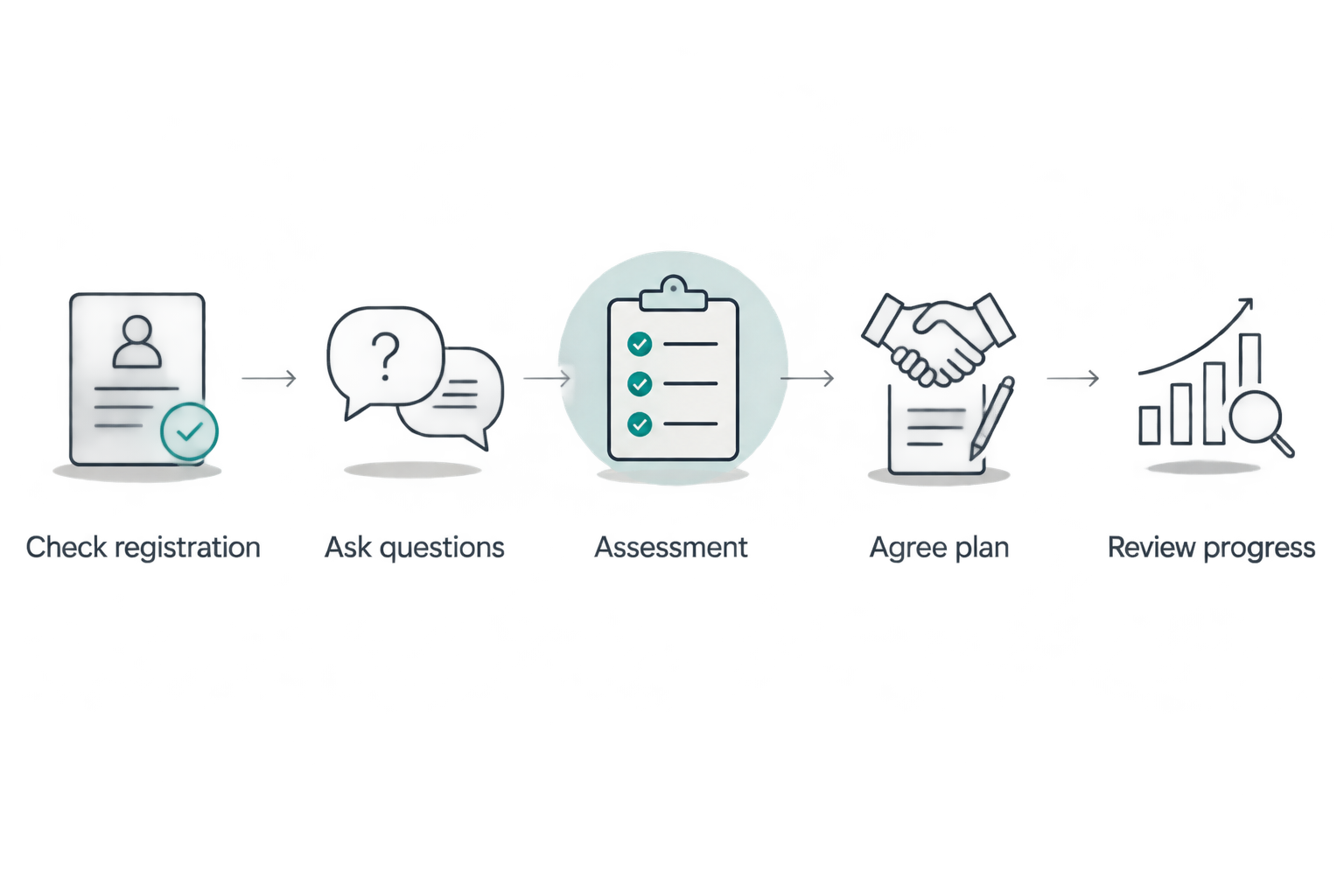
What does a pregnancy-aware assessment involve?
Expect questions about your pregnancy stage, symptoms, medical history and current care team. The clinician should examine how you move and where you feel discomfort, then explain what they found in plain language. Treatment options, including the option of no treatment, should be discussed before anything starts.
Chiropractic care in pregnancy commonly involves gentle, adapted techniques, but what is suitable depends on you. For an overview, see chiropractic care during pregnancy: what to expect.
When to seek medical care first
Some symptoms need urgent medical assessment and should not wait for a chiropractic appointment. Contact your GP, midwife, obstetrician or emergency services if you notice:
- Vaginal bleeding or fluid loss
- Severe or sudden abdominal pain
- Regular contractions before term
- Reduced baby movements
- Severe headache with vision changes or swelling
- Fever, or calf pain and swelling in one leg
- Numbness, weakness or loss of bladder or bowel control
A responsible chiropractor will ask about these and refer you on when needed.
Is it safe to see a chiropractor during pregnancy?
Whether chiropractic care is appropriate for you depends on your health, your pregnancy and the assessment findings. Raise it with your GP, midwife or obstetrician, and tell your chiropractor about your pregnancy and any complications. Related reading: how to ease sciatica pain during pregnancy.
How do I choose between chiropractors?
Compare on registration, communication and coordination, not on promises. Be cautious of anyone who guarantees results, pushes a large upfront block of visits or uses fear to book you in. How to choose the right chiropractor for your condition goes through the decision in more detail.
What can I do at home alongside care?
Support options your care team may suggest include a supportive pillow arrangement for sleep, regular position changes through the day and gentle activity cleared by your obstetric team. Our guide to pregnancy pillows for back and hip pain covers what to look for.
Talk to MyChiro in Bondi Junction
Ask questions before you decide on an appointment.
FAQ
What should I look for in a chiropractor during pregnancy?
Look for current AHPRA registration, clear explanations of technique, and willingness to coordinate with your GP, midwife or obstetrician. Avoid anyone who promises specific outcomes.
How do I check a chiropractor is registered in Australia?
Search the AHPRA public register by name. It confirms registration status and any conditions on practice.
Should I tell my chiropractor I am pregnant?
Yes, always, including any complications. It affects positioning, technique choice and whether care is appropriate at all.
Do I need a referral to see a chiropractor while pregnant?
No referral is generally required to book a chiropractor in Australia. Talking with your GP or midwife first is still sensible.
What symptoms mean I should see a doctor instead?
Bleeding, severe abdominal pain, reduced baby movements, regular early contractions or neurological symptoms need prompt medical assessment.
What questions should I ask at my first appointment?
Ask how they adapt care for pregnancy, what techniques they avoid, when they would refer you on, and how they will communicate with your care team.
One last thing
The best sign of a good clinician in 2026 is what they decline to promise. Honest assessment, clear referral pathways and respect for your antenatal team matter more than any technique name.
Related guides
- Is it safe to see a chiropractor while breastfeeding?
- Chiropractic care for new mums after birth
- Can you see a chiropractor without a GP referral?