

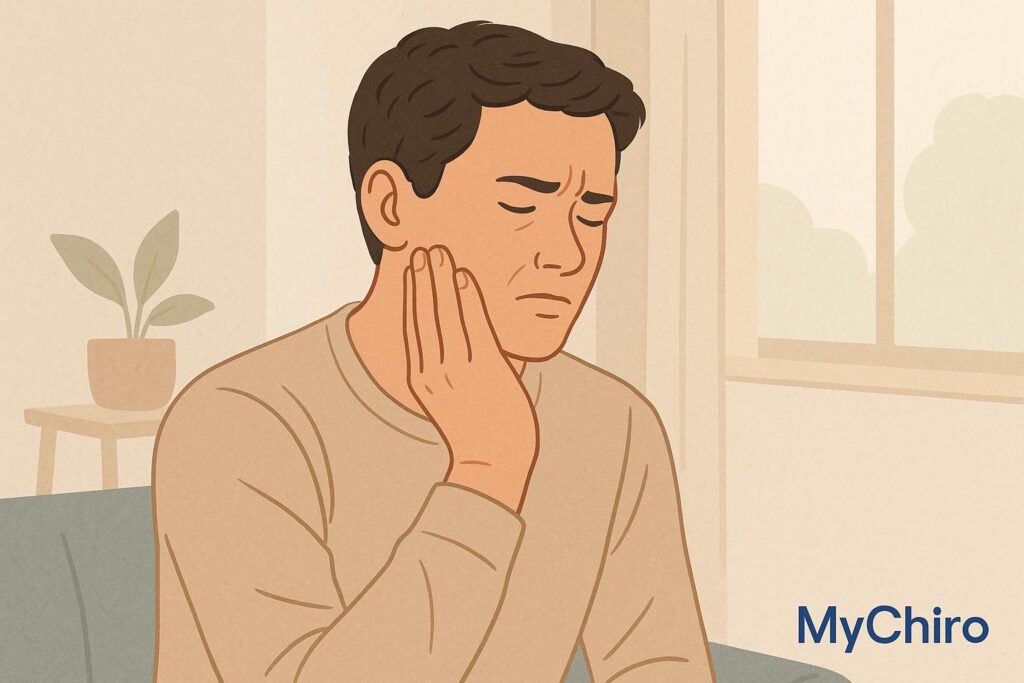
Stress is a major trigger for jaw pain and TMJ (temporomandibular joint) disorders, affecting many Australians. It often leads to clenching or grinding your teeth, creating a cycle of tension and discomfort that worsens the pain. TMJ issues can cause jaw stiffness, headaches, clicking sounds, and limited movement, disrupting daily life. Chronic stress increases muscle tension and sensitivity to pain, making symptoms more persistent.
Key points to know:
- Stress-TMJ Link: Stress raises tension in jaw muscles, leading to clenching/grinding.
- Common Symptoms: Jaw pain, facial discomfort, headaches, and clicking sounds.
- Main Causes: Stress, poor posture, teeth grinding, and repetitive habits like gum chewing.
- Treatment Options: Self-care (jaw exercises, heat therapy, mindfulness), chiropractic care, dental treatments, and medications.
Addressing both stress and physical symptoms is crucial to breaking the pain cycle and improving quality of life.
Painful, clicking jaw? Doctor explains TMJ Dysfunction! | Causes, symptoms and treatment
What is TMJ and How Does Jaw Pain Develop?
The temporomandibular joint (TMJ) is the connection between your jawbone (mandible) and your skull at the temporal bone. This joint is incredibly intricate, functioning as both a hinge and a sliding mechanism. It allows you to perform everyday actions like chewing, speaking, and yawning. But when the TMJ isn’t working as it should, even these basic activities can become difficult.
When issues arise in the TMJ or the muscles around it, a condition known as TMD (temporomandibular disorder) may develop. Symptoms can include jaw pain, facial stiffness, clicking sounds, and headaches near the temples. Some people also report ear discomfort, a feeling of fullness in the ears, or pain that spreads to the neck and shoulders.
TMJ-related jaw pain often stems from mechanical stress, inflammation, or improper movement patterns, all of which can lead to persistent discomfort. Research suggests that as many as 75% of people may experience some degree of TMJ dysfunction at some point in their lives. Understanding the role of the nervous system in managing jaw movements can shed light on how stress contributes to TMJ problems.
How Your Nervous System Controls Jaw Movement
Your nervous system plays a key role in coordinating jaw movements and processing pain signals. When you’re under chronic stress, muscle tension tends to increase, and the nervous system can become hypersensitive – a condition known as central sensitisation. This can lead to habits like clenching or grinding your teeth.
Studies have found that people with TMD often have higher levels of stress hormones like cortisol and epinephrine, indicating that their nervous system may be under continuous strain.
Main Causes of TMJ Pain
Several factors can contribute to TMJ pain, including mechanical stress, inflammation, and certain behaviours. Repetitive actions like grinding or clenching your teeth are common culprits. Additionally, poor posture – especially from prolonged desk work or screen use – can misalign the jaw and increase tension in the muscles responsible for jaw movement. Over time, this postural strain can overload the TMJ, leading to discomfort.
Teeth grinding (bruxism) and jaw clenching, often linked to stress, are significant contributors to TMJ issues. These behaviours can occur unconsciously, whether during sleep or moments of intense focus.
Other habits, such as excessive gum chewing or nail biting, can also strain the TMJ and surrounding tissues over time. Identifying these triggers is an important step in finding effective, whole-body approaches to managing TMJ pain.
This information is general in nature and does not replace professional medical advice.
Chiropractic care focuses on musculoskeletal health, and results may vary between individuals.
Always consult a qualified healthcare professional before making decisions about your health.
How Stress Triggers TMJ and Jaw Pain
When you’re under chronic stress, your body activates its fight-or-flight response, releasing hormones like cortisol and adrenaline. These hormones can increase muscle tension, particularly in the jaw, which often leads to involuntary clenching or teeth grinding.
Over time, prolonged stress disrupts the balance between the body’s fight-or-flight system and its rest-and-digest system. This imbalance can increase sensitivity to pain and make jaw muscles more prone to spasms. The result? A cycle of tension and discomfort that feeds on itself, making the pain worse.
The Stress-TMJ Pain Cycle
Clenching and grinding caused by stress put extra pressure on the temporomandibular joint (TMJ) and surrounding tissues. This can lead to inflammation, muscle fatigue, and pain. As the pain intensifies, stress levels often rise, creating a vicious cycle that perpetuates the clenching and grinding.
On top of that, poor posture – like slouching at a desk for hours – can worsen neck and jaw tension, adding to TMJ strain. Sleep issues, which are common when you’re stressed, can also exacerbate jaw pain, making it harder for your body to recover.
What Research Shows About Stress and TMJ
Studies have consistently shown a strong connection between stress and TMJ pain. For instance, individuals with high stress levels are 3.5 times more likely to develop temporomandibular disorders (TMD). Research involving over 6,000 participants found that people with TMD reported significantly higher levels of stress, anxiety, and pain catastrophising (p < 0.0001).
In one study, 70% of TMJ disorder patients reported experiencing elevated stress levels. These individuals often had higher levels of stress hormones and inflammatory markers, which contribute to muscle tension, increased pain sensitivity, and a reduced ability to naturally block pain signals. Chronic stress can even lead to central sensitisation, a condition where the nervous system becomes overly responsive to pain signals from the jaw area.
TMJ disorders are also more commonly observed in women, potentially due to a combination of hormonal influences and psychosocial stressors. Recent research suggests that effective treatment often requires addressing both the physical and psychological aspects of the condition. Combining stress management techniques with traditional physical therapies has shown promise in improving outcomes.
This information is general in nature and is not a substitute for professional medical advice.
Chiropractic care focuses on musculoskeletal health and results vary between individuals.
Please consult a qualified healthcare professional before making decisions about your health.
sbb-itb-585d67d
Signs Your TMJ Pain May Be Stress-Related
Identifying stress-related TMJ symptoms early can help prevent long-term discomfort. Many Australians deal with these issues daily, often unaware that stress and tension might be the root cause of their jaw pain. Below are some key physical signs and habits linked to stress-induced TMJ pain.
Key Physical Indicators
One of the most common signs is morning jaw stiffness, which can point to nocturnal bruxism – grinding or clenching your teeth while you sleep.
Frequent headaches near the temples, sometimes accompanied by ear discomfort, can also signal TMJ strain brought on by stress.
Pay attention to jaw clenching during stressful moments, like being stuck in traffic or dealing with tight deadlines at work. This behaviour often adds to the cycle of stress and pain.
Other signs include audible clicking or popping sounds in the jaw when you move it, difficulty opening your mouth fully, or a sense of fatigue in your jaw after long conversations or meals.
Interestingly, research indicates that around 70% of people with TMJ disorders experience bruxism, showing a strong link between stress and jaw-related issues.
How Poor Posture Adds to Jaw Stress
Spending hours hunched over a desk can worsen TMJ discomfort. Forward head posture, often caused by prolonged desk work, forces your jaw into an awkward position, creating extra tension in the jaw muscles.
Poor posture, such as slouching at your desk or craning your neck to check your phone or computer, can amplify the effects of emotional stress on your TMJ. You might notice your jaw pain flares up after a long day at work but eases when you’re away from your desk – this could be a sign that posture is playing a role.
Adjusting your posture not only helps reduce jaw strain but also works hand-in-hand with stress management techniques. Addressing both factors is key to relieving TMJ discomfort.
This information is general in nature and is not a substitute for professional medical advice.
Chiropractic care focuses on musculoskeletal health and results vary between individuals.
Please consult a qualified healthcare professional before making decisions about your health.
Treatment Options for Stress-Related TMJ Pain
Managing stress-related TMJ pain effectively often involves a mix of self-care strategies and professional treatments.
Self-Care Methods for Jaw Relief
There are simple steps you can take to ease stress-related TMJ pain. Gentle jaw exercises can improve mobility and ease muscle tension. For example, try slowly opening and closing your mouth, moving your jaw side to side, or gently massaging the jaw muscles with your fingertips.
Heat therapy is another helpful tool. Applying a warm compress to your jaw for 15-20 minutes can relax tight muscles and reduce discomfort. Alternating between heat and cold therapy may offer additional relief.
Mindfulness techniques, such as meditation or deep breathing, can help interrupt the stress-pain cycle. If you catch yourself clenching your jaw during stressful moments – like sitting in traffic or tackling a tough task – take a moment to consciously relax your jaw and focus on deep, calming breaths.
Other helpful habits include avoiding hard or chewy foods and prioritising good sleep hygiene. Keeping a journal to track when your TMJ pain flares up and identifying potential triggers can also provide valuable insights.
For more targeted relief, professional treatments like chiropractic care might be worth exploring.
How Chiropractic Care May Help TMJ Pain
Building on self-care, chiropractic care can address some of the underlying factors contributing to TMJ pain, such as posture and nervous system tension. Practitioners like Dr Steve in Bondi Junction focus on these aspects to help alleviate jaw discomfort.
Spinal adjustments are one way chiropractic care can help, particularly for those with forward head posture – a common issue for people who spend long hours at desks. By improving head and neck alignment, chiropractic treatments can reduce the strain placed on jaw muscles and joints.
Chiropractic care may also support nervous system balance, which can influence how your body responds to tension and pain. Reducing habitual jaw clenching and improving posture can further relieve TMJ strain.
Dr Steve’s practice offers online booking and treatment plans designed to provide both immediate relief and long-term improvements. This approach not only addresses the pain itself but also tackles the postural and stress-related factors behind it.
Research indicates that chiropractic adjustments targeting the jaw, neck, and upper back may improve joint mobility and reduce muscle tension, though individual results can vary.
Comparing Your Treatment Options
Finding the right treatment for TMJ pain depends on your specific needs. Here’s a breakdown of the most common options:
| Treatment Type | Benefits | Limitations | Best For |
|---|---|---|---|
| Self-care | Affordable, easy to start | May not suffice for severe cases | Mild to moderate symptoms |
| Chiropractic care | Addresses posture and nervous system stress | Requires multiple visits, results vary | Posture-related or persistent pain |
| Dental treatments | Mouthguards protect teeth | Expensive, may not target stress | Teeth grinding, severe misalignment |
| Medications | Quick relief, reduces inflammation | Short-term use due to side effects | Acute pain or flare-ups |
Self-care is often the first step for managing TMJ pain. It’s accessible, low-cost, and can be implemented right away. However, it may not be enough for more severe or ongoing symptoms.
Chiropractic care provides a balanced option, particularly if poor posture or nervous system stress plays a role in your pain. While generally safe, some people might experience mild soreness after adjustments.
Dental treatments, such as custom mouthguards or splints, are especially helpful for those who grind their teeth at night. These devices protect against dental damage and reduce jaw strain but may not address the stress triggering the problem.
Medications, such as anti-inflammatories or muscle relaxants, can offer quick relief during painful flare-ups. However, they’re typically a short-term solution and don’t tackle the root causes of TMJ pain.
If your symptoms persist despite these methods, it may be time to consult a professional for further evaluation. Often, combining treatments yields the best results, as each approach addresses different aspects of TMJ pain.
This information is general and should not replace professional medical advice. Chiropractic care focuses on musculoskeletal health, and results vary from person to person. Always consult a qualified healthcare provider before making decisions about your health.
Key Points About Stress and TMJ Pain
Stress plays a major role in triggering and worsening TMJ pain, primarily through its impact on the nervous system and jaw muscles. When stress activates the body’s fight-or-flight response, it often leads to increased tension in the jaw muscles. This tension can strain the muscles, causing discomfort and pain. Research has shown that individuals with TMJ disorders often exhibit higher levels of stress markers compared to those without the condition.
One common outcome of stress is jaw clenching or grinding, which can create a vicious cycle. The more the jaw is overused or strained, the more persistent the pain becomes, making it challenging to break the cycle without addressing both the stress and the physical symptoms.
Pinpointing your personal stress triggers is a key step in managing TMJ pain. Studies have identified specific stressors, including relationship issues, marital or partner conflicts, and workplace pressures, as common contributors to TMJ disorders. Interestingly, about 70% of TMJ patients report stress as a factor in their symptoms. Poor posture, especially from prolonged desk work, can add strain to the neck and jaw, compounding the problem.
Taking steps to manage stress may help alleviate TMJ symptoms. Early intervention is particularly important – seeking treatment as soon as symptoms arise can prevent the condition from worsening and may reduce the need for more intensive treatments later on.
Treatment outcomes can vary widely, so a personalised approach is essential. Some individuals find relief through self-care strategies like stress management techniques, relaxation exercises, and improving posture. Others may benefit from professional care, such as chiropractic treatments that focus on balancing the nervous system and addressing postural challenges.
TMJ pain isn’t just a physical issue; it’s often a sign that your body is responding to stress. Recognising this connection allows you to take proactive steps to manage both your stress levels and the associated pain, potentially breaking the cycle and improving your overall wellbeing.
This information is general and not a substitute for professional medical advice.
Chiropractic care focuses on musculoskeletal health, and results can vary between individuals.
Always consult a qualified healthcare professional before making decisions about your health.
FAQs
How can I tell if stress is contributing to my jaw pain?
Stress can have a noticeable impact on jaw pain, especially if it triggers habits like jaw clenching or teeth grinding – commonly referred to as bruxism. These behaviours can place excessive pressure on the temporomandibular joint (TMJ), potentially leading to discomfort or even pain.
If you find your jaw pain flares up during particularly stressful times, this might suggest a link between stress and your symptoms. Other signs to watch for include jaw tightness, headaches, or discomfort while chewing. Seeking advice from a healthcare professional, such as a chiropractor, could help determine whether stress-related tension is affecting your TMJ. They can also suggest ways to alleviate the strain and manage your symptoms effectively.
This information is intended for general purposes only and does not replace professional medical advice. Chiropractic care focuses on musculoskeletal health, and outcomes can vary for each individual. Always consult a qualified healthcare provider before making health-related decisions.
How can managing stress help reduce TMJ symptoms?
Stress often plays a role in TMJ discomfort by tightening the muscles in your jaw and face. To help ease this tension and potentially alleviate TMJ symptoms, you might explore practices like mindfulness meditation, regular exercise, or gentle jaw stretches. Ensuring you get quality sleep and following a balanced diet can also contribute to your overall wellbeing.
Chiropractic care could be another avenue to consider for stress-related musculoskeletal issues. Chiropractors work to address tension and discomfort in the body, which may indirectly promote better jaw function and reduce strain.
Please note: This information is general and not a replacement for professional medical advice. Chiropractic care focuses on musculoskeletal health, and individual results can vary. Always consult a qualified healthcare professional before making decisions about your health.
What exercises or lifestyle changes may help with TMJ pain caused by poor posture?
TMJ pain associated with poor posture can often improve with targeted exercises and simple lifestyle changes aimed at better alignment and reduced tension. Gentle stretches for the neck, shoulders, and jaw are a great way to relieve muscle tightness. Activities that emphasise posture, like yoga or Pilates, can also support spinal alignment and ease the strain on your jaw.
Incorporating small, mindful habits into your daily routine can make a noticeable difference too. Setting up an ergonomic workspace, avoiding long periods of slouching, and taking regular breaks from desk work are all practical steps. Stress management is equally important, as stress can lead to jaw clenching or teeth grinding, both of which can aggravate TMJ discomfort.
If the pain persists, seeking advice from a healthcare professional, such as a chiropractor, could provide personalised guidance and treatment options.
This information is general and should not replace professional medical advice. Chiropractic care focuses on musculoskeletal health, and results can vary. Always consult a qualified healthcare professional for decisions about your health.