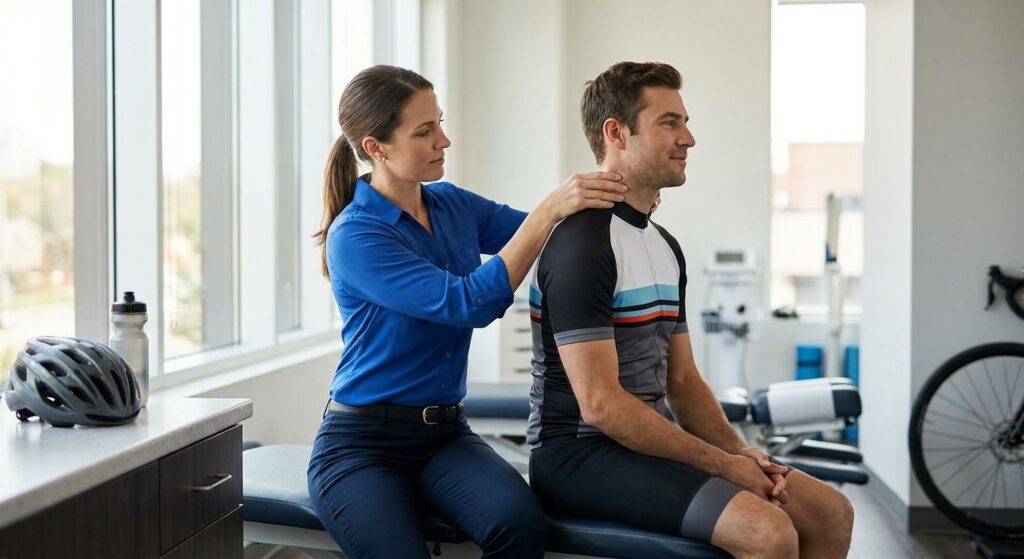
Cyclists may notice neck tightness, lower-back discomfort or stiffness during longer rides, especially when they stay in one position for extended periods. This guide breaks down what to look for when discussing chiropractic care for cyclists, and what an individual assessment may consider when neck or back symptoms recur on the bike.
- A consultation explores symptoms, history, movement and cycling habits before discussing whether chiropractic care is appropriate.
- Cervical extension held for long stretches in a drop-bar position is a common discussion point for neck strain in riders.
- Bike fitting is individual; a qualified bike fitter can help assess saddle height and reach without relying on a single formula.
- Comfortable movement breaks may suit some cyclists; no fixed exercise routine works for every rider.
- MyChiro in Bondi Junction offers assessment-based chiropractic care that can be discussed alongside bike fit for ongoing neck or lower back strain.
Why this matters
Long rides may involve extended periods in a similar position. A road cyclist can hold the same neck extension and lumbar flexion angle for an hour or more without much variation, and the riding pattern is worth discussing when discomfort keeps returning. Chiropractic care for cyclists is one of several things riders bring up when neck or lower back strain becomes a recurring pattern rather than a one-off soreness after a hard climb.
This isn't about diagnosing or resolving a specific condition from an article. It's about knowing what an assessment-based approach actually looks at, so a conversation with a chiropractor for cyclists is more useful when you have it.
Who this is for
This guide is for road cyclists, gravel riders and commuters who spend more than a few hours a week in a fixed riding posture and notice neck tightness, upper back stiffness or lower back discomfort that shows up during or after rides. It's also relevant if you've had a bike fit but the discomfort hasn't changed, because persistent symptoms may merit a separate assessment alongside bike-fit advice.
What to look for in chiropractic care for cyclists
A posture and movement assessment before anything else
A useful starting point is an assessment of spinal movement, hip mobility and how your posture holds up under load, not a single adjustment based on where it hurts that day. For people who ride and work at a desk, an assessment can consider both activities without assuming one is causing the pain.
Attention to cervical extension patterns
Riding in the drops means holding your neck in extension to see the road ahead, sometimes for long stretches at a time. A chiropractor who asks about your typical riding position and hours per week is looking at load patterns specific to cycling, not treating neck pain in isolation.
Hip flexor and lumbar mobility screening
Lower-back discomfort on climbs or in an aerodynamic position may have several contributors; muscle tightness alone cannot establish the cause. An assessment can consider the lower back, hips and riding setup together.
Coordination with your bike fit
Saddle height, reach and handlebar drop all change how load moves through your neck and back. Bike fitters can assess saddle height, reach and comfort without applying one universal formula, and discussing bike-fit details can help place the symptoms in context.
A plan you can actually follow between rides
Assessment findings matter less if there's no practical follow-through. Look for guidance on mobility work, warm-up habits and off-bike movement that fits around your training schedule, not a generic handout.
Willingness to refer when something falls outside scope
A chiropractor who flags red-flag symptoms, such as numbness, weakness or pain that doesn't change with position, and refers you for further medical assessment is showing good practice, not a lack of confidence.
Discuss your riding posture with a chiropractor
New patients can book a free initial consultation at MyChiro in Bondi Junction for assessment and advice. If clinically appropriate, treatment is available on the same day for $125, with no obligation.
Areas cyclists commonly bring up for assessment
Neck extension from drop-bar riding — the desk-rider's blind spot. Riders who also sit at a desk all week often stack cycling's cervical extension on top of daily forward-head posture. A chiropractor assessing this pattern will typically look at cervical mobility alongside your riding hours per week. Worth prioritising in an assessment conversation.
Lower back rounding on long climbs — the wildcard. This one surprises a lot of riders because there may be several contributing factors, rather than a single tight muscle. Cross-referencing with the guidance in leg length discrepancy and posture imbalance is useful if one side feels consistently different from the other. Worth raising if it's a recurring pattern.
Shoulder and upper back rounding from an aggressive tuck — the quiet one. Long hours in a hunched aero position can carry over into a rounded upper back off the bike, similar to what's covered in how to fix winged shoulder blades naturally. Riders who also lift or paddle sometimes notice this pattern compounding. Consider it if shoulder positioning feels off the bike too.
Lower back load from a rotational or asymmetric sport crossover — the comparison point. Cyclists who also golf or do repetitive one-sided work often carry a mix of loading patterns, which is why the approach in chiropractic care for golfers with lower back pain covers some overlapping ground. Useful context, not a priority unless you're doing both sports regularly.
Hip and knee tracking from cadence and pedal stroke — the cross-check. Riders coming off running training sometimes carry hip and knee movement patterns onto the bike, which is why the criteria in chiropractic care for runners with knee and hip pain can be a useful comparison when hip tracking feels inconsistent. Worth a mention during assessment if you cross-train.
What to avoid
- A single adjustment presented as a full solution. Riding posture strain builds up over weeks and months of training; an assessment-based plan looking at mobility, movement and habits is a more realistic starting point than a one-visit fix.
- Ignoring the bike fit conversation entirely. A chiropractor and a bike fitter are looking at overlapping but different things. Neither replaces the other, and skipping one weakens the picture.
- Pushing through numbness or shooting pain instead of getting it assessed. Tightness and general soreness are common training feedback; numbness, tingling or pain that doesn't shift with position change warrants a broader medical assessment, not just an adjustment.
Comparison at a glance
| Concern | Common trigger | What an assessment looks at | Priority |
|---|---|---|---|
| Neck extension strain | Drop-bar position held for long stretches | Cervical mobility, riding hours per week | High for riders over a few hours weekly |
| Lower back rounding | Hip mobility, symptoms and bike-fit factors worth discussing | Hip and lumbar mobility together | High on long climbs or aero setups |
| Upper back/shoulder rounding | Aggressive tuck position | Thoracic posture, shoulder blade position | Moderate, check off-bike posture too |
| Hip/knee tracking | Cadence and pedal stroke habits | Hip mobility, cross-training load | Moderate if cross-training regularly |
FAQ
What does a chiropractor for cyclists actually assess?
A chiropractor assessing a cyclist typically looks at spinal movement, hip mobility, posture and how riding position loads the neck and lower back over time. It’s an assessment-based process, not a diagnosis from a single visit, and findings can be discussed alongside your bike fit.
Is chiropractic care better than a bike fit for neck and back strain?
They look at different things and generally work alongside each other rather than replacing one another. A bike fitter adjusts saddle height, reach and handlebar drop, while a chiropractor assesses posture and joint mobility that influence how that fit actually loads your body.
How often should cyclists get a chiropractic assessment?
There’s no fixed schedule that applies to every rider, since it depends on training volume, riding position and whether symptoms are new or recurring. A qualified health professional can advise on a review interval based on your specific assessment.
Can poor bike fit cause lower back pain?
Saddle height, reach and handlebar drop all affect pelvic tilt and lumbar load, so a fit that’s off can be one contributing factor among several. Hip flexor tightness and general posture also play a role, which is why an assessment usually looks at more than the fit alone.
What is the LeMond method for saddle height?
There is no single saddle-height setting that suits every cyclist. A qualified bike fitter can consider leg length, bike geometry, comfort and pedalling mechanics.
Should cyclists do mobility work before or after riding?
Many riders build a short mobility routine into both ends of a ride, often 5 to 10 minutes, to address hip and thoracic stiffness that builds up from a fixed riding position. This is a general training habit rather than a treatment for a specific condition.
When should a cyclist see a doctor instead of a chiropractor?
Numbness, tingling, weakness, or pain that doesn’t change with position or rest are signs to get a broader medical assessment rather than assuming it’s posture-related. A chiropractor who identifies these signs during an assessment should refer you on rather than continue care alone.
Does cadence affect neck and back strain while cycling?
Cadence itself mostly affects leg and cardiovascular load, typically discussed in the 80-100rpm range for road cycling, but the position you hold while pedaling at that cadence is what drives neck and back strain. Riding position and hours per week matter more than cadence alone for postural load.
One last thing
Most riders fixate on the saddle or the handlebars when neck and back strain shows up, but hip flexor tightness off the bike is just as often part of the picture, especially for anyone spending the rest of the day seated at a desk. A five-minute hip flexor stretch before you clip in costs less than a bike fit and is worth doing regardless of what an assessment finds.
Related guides
- Chiropractic care for gym-goers and weightlifters
- Chiropractic care for tradies and manual labourers
- Chiropractic care for dog walkers managing leash-pulling strain
- Chiropractic care for new dads carrying and lifting infants