

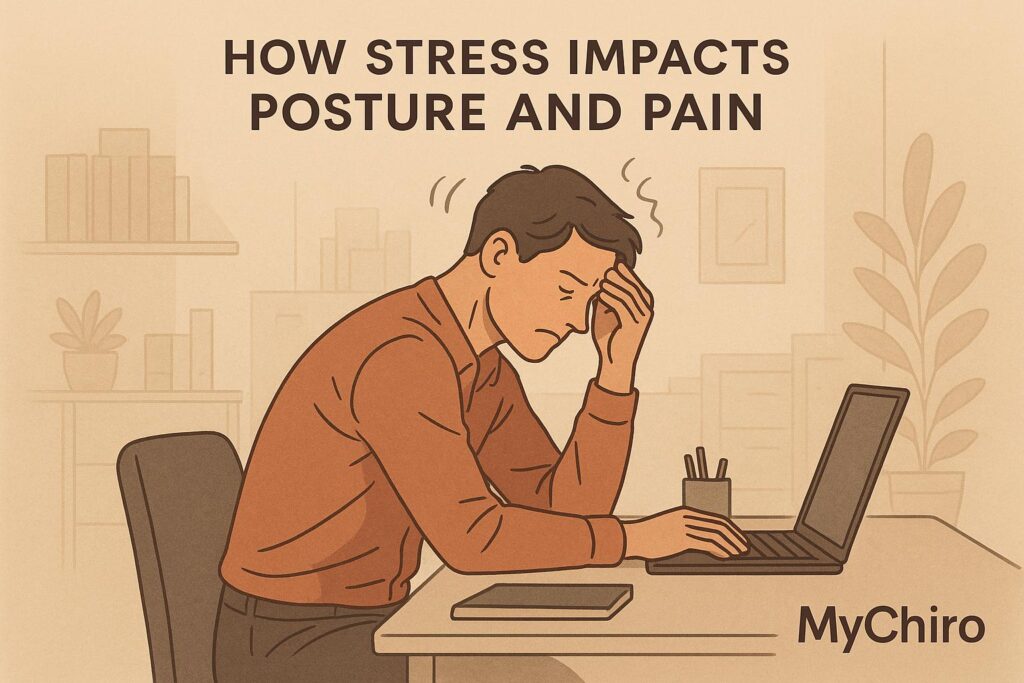
Stress doesn’t just affect your mind – it can change your body, too. Muscle tension, poor posture, and chronic pain often stem from prolonged stress. Australians, in particular, face these challenges due to long hours of screen time and sedentary work habits. Here’s what you need to know:
- Stress tightens muscles: Hormones like cortisol and adrenaline keep muscles in a semi-contracted state, especially in the neck, shoulders, and back.
- Posture suffers over time: Chronic stress leads to slouching, forward head posture, and imbalances in muscle strength.
- Pain becomes persistent: Poor posture and tension increase discomfort, sometimes leading to migraines, nerve issues, and reduced mobility.
- Workplace habits worsen the problem: Australians spend an average of 6.8 hours daily in front of screens, with nearly half sitting all day at work.
- Economic impact: Chronic musculoskeletal conditions cost Australia $12.23 billion in 2018, affecting millions of lives.
To address these issues, early action is key. Chiropractic care, stress management techniques, and home exercises can help reduce tension and improve posture. Regular movement, ergonomic adjustments, and mindfulness practices are simple ways to break the cycle of stress and pain before it becomes a long-term problem.
How to PERMANENTLY Ease Stress & Tension in Your Shoulders
How Stress Changes Your Muscles and Posture
Stress doesn’t just affect your mind – it takes a toll on your body too, especially on your muscles and posture. By understanding how stress impacts these areas, it becomes easier to see why it often shows up as physical discomfort or postural problems.
Stress Response and Muscle Tension
When stress strikes, your body’s sympathetic nervous system kicks into gear, activating the fight-or-flight response. This releases hormones like adrenaline and cortisol, which prepare your body for action by raising your heart rate and blood pressure, and priming your muscles.
This response particularly targets muscles in the neck, shoulders, and back. These areas tense up because they play a key role in protecting vital organs and maintaining an alert, defensive stance. While this tension is helpful in short bursts, chronic stress keeps these muscles in a semi-contracted state, preventing them from fully relaxing. Over time, this constant strain can alter your posture, leading to long-term imbalances in your musculoskeletal system.
Long-Term Stress and Poor Posture
What begins as a temporary response to stress often turns into lasting postural habits. Chronic stress doesn’t just tighten muscles – it can recondition your body to hold itself differently. Over time, this tension can lead to common postural issues like slouching, hunching, or a forward head position.
These changes create muscle imbalances: chest and neck muscles become overly tight, while the muscles between your shoulder blades weaken. Studies on sitting posture reveal that even people without back pain tend to slump after just 20 minutes of sitting. For those under chronic stress, recovery can take much longer – anywhere from three months to a year, especially in cases of burnout. Ignoring these shifts in posture could lead to more serious conditions, such as nerve compression or degenerative disc disease.
Cortisol and Inflammation Effects
Cortisol, one of the key stress hormones, plays a dual role. In the short term, it provides energy and helps control inflammation. However, long-term exposure to elevated cortisol disrupts your body’s balance, contributing to dysfunction and worsening inflammation.
"Cortisol is also a potent anti-inflammatory hormone; it prevents the widespread tissue and nerve damage associated with inflammation." – Kara E Hannibal, PT, DPT, Rehabilitation Science Doctoral Program, University of Florida
Poor posture – like slouching – can increase cortisol levels and raise blood pressure. It also reduces lung capacity by as much as 30%, forcing your respiratory system to work harder and potentially triggering further stress responses. This cycle of stress, inflammation, and poor posture can amplify pain sensitivity and lead to a range of musculoskeletal problems.
From the initial muscle tension to hormonal disruptions, the connection between stress and posture is clear. Addressing both the physical symptoms and the root causes of stress is key to managing posture-related discomfort effectively.
Research on Stress, Posture, and Pain
Scientific studies consistently highlight the connections between stress, posture changes, and the onset of pain. These findings shed light on why many Australians experience physical discomfort during stressful times, especially those in office-based roles. Stress affects muscle tension and posture, creating a ripple effect on overall physical health. Let’s dive into some key research that explores these links further.
Studies on Stress and Muscle Activity
Stress doesn’t just tighten muscles – it also impacts neural and hormonal responses. Recent findings provide deeper insights into these processes.
For instance, research on workplace stress reveals its impact on muscle function and postural control. One study involving 90 young men found that stress significantly reduced postural stability, particularly when visual cues were limited. This shows that higher stress levels can directly impair balance and stability.
David Munson, a rehabilitation therapist with TriHealth Corporate Health, explains the body’s reaction to stress:
"When stress levels are high, our brain sends a signal to the nerves to go into ‘protection mode,’ and our nerves activate our muscles to tighten and increase their tone."
This protective mechanism, while instinctive, can limit muscle circulation and contribute to pain over time.
European research on computer workers highlights the prevalence of pain linked to prolonged muscle activation. Around 25% of workers report neck and shoulder pain, while 15% experience discomfort in their forearms. These issues are often tied to workplace stress, which can lead to chronic pain conditions if left unchecked.
Chronic Stress and Pain Sensitivity Research
Long-term stress does more than exhaust the mind – it changes how the body processes pain. Chronic stress can impair cognitive abilities like memory and decision-making, which influences how people perceive and manage physical discomfort. Studies on the Cortisol Awakening Response (CAR) show mixed results, with some research indicating reduced CAR levels under chronic stress, while others report increased levels in individuals exposed to prolonged stress. However, salivary cortisol levels consistently reveal that chronic stress disrupts the body’s natural stress response.
Mood also plays a role in physical health, affecting balance and postural adjustments. This creates a vicious cycle: stress leads to poor posture, which increases pain and, in turn, fuels more stress. Research shows that individuals with chronic pain are less likely to feel rewarded at work and are absent about nine extra days per year compared to their pain-free colleagues. Even those who continue working with chronic pain often report lower job satisfaction and feelings of isolation.
Australian Research on Desk Work and Posture
Studies in Australia reveal troubling patterns among desk workers. On average, 42% of men and 47% of women spend about 6.3 hours of their 8-hour workday sitting. This prolonged sitting, combined with workplace stress, exacerbates musculoskeletal strain and discomfort.
The broader impact on Australians’ health is striking. Approximately 75% of Australians report that stress has negatively affected their physical health, while 64% acknowledge its impact on their mental wellbeing. Economic costs are also significant. For instance, research from the Netherlands estimates yearly costs due to neck and upper extremity pain at €2.1 billion. Given similar workplace habits, Australia likely faces comparable financial challenges.
Workplace stress remains a major concern. The American Psychological Association’s annual Stress in America survey consistently identifies work as a leading stressor, a finding echoed in Australian research. A 2015 study by Coco, Sarra Fiore, and colleagues also found that stress-related postural changes can begin early, with young women showing reduced postural stability linked to elevated stress levels. These early changes can have lasting effects on physical health.
This body of research highlights the importance of addressing stress and posture issues proactively. Strategies such as postural balance training could help prevent long-term health problems, particularly as desk-based work and stress continue to rise in modern workplaces.
sbb-itb-585d67d
Treating Stress-Related Posture and Pain Problems
Spotting stress-induced posture issues is a good start, but tackling the root causes is what truly makes a difference. Thankfully, there are proven methods to break the cycle of stress, posture problems, and chronic pain.
Nervous System Chiropractic Care
Chiropractic care takes a focused approach to stress-related posture issues by targeting the spine and nervous system. When stress builds up, it often leads to muscle tension and poor posture, which can overload the nervous system. This creates a feedback loop where tight muscles and stiff joints send constant signals, keeping the body in a state of tension.
Spinal adjustments are designed to realign vertebrae, ease nerve pressure, and restore balance to the nervous system. This not only reduces muscle tension but also improves joint mobility and addresses compensatory imbalances throughout the body. Here’s how the Gonstead Chiropractic Centre puts it:
"Chiropractic treatment positively affects the nervous system and as a result, positively affects the entire body."
These adjustments also improve circulation, helping to deliver oxygen and flush out inflammation-causing byproducts.
Modern chiropractic methods, like those practised by Dr Steve in Bondi Junction, focus on the nervous system’s role in managing stress. Stress affects more than just muscles; it influences how the nervous system responds to physical demands. By addressing this overload, patients often notice better sleep, greater resilience to stress, and overall physical comfort.
Chiropractors also guide patients on improving posture and ergonomics. This might involve exercises to strengthen weak muscles, stretches to release tension, and tips for maintaining better alignment during everyday activities. Combined with professional care, ongoing self-care plays a major role in recovery.
Home Care for Stress and Posture
Professional treatment works best when paired with consistent self-care at home. Research shows that 29% of adults blame stress for their neck and back pain, while 26% point to a lack of exercise and weak muscles. This highlights the need to address both stress and physical fitness.
One of the simplest strategies is to keep moving and avoid staying in one position for too long. Physiotherapist Astrid DiVincent explains:
"No posture is good for too long a period of time. You may have the best ergonomic situation possible, but if you sit at your desk for 10 hours a day, you’re going to have pain."
Taking regular breaks to move around can help prevent discomfort caused by prolonged sitting. Adjusting your workstation to maintain a neutral spine and alternating between sitting and standing also helps.
At home, exercises like bird dogs and bridges can strengthen the spine’s support system. Flexibility exercises, such as cat-cow stretches and seated spinal twists, keep the spine mobile. Core-strengthening moves like planks and dead bugs promote better spinal alignment. Even your sleep setup matters – using a supportive mattress and placing a pillow between your knees can help maintain proper alignment overnight.
Stress management is just as important. Techniques like deep breathing, progressive muscle relaxation, and mindfulness can calm an overactive nervous system. When stress levels drop, muscle tension often follows, creating a positive cycle of relief.
Why Early Treatment Matters
The link between stress and postural changes makes early treatment essential. Addressing these issues sooner rather than later can prevent them from turning into chronic problems.
One of the main reasons to act early is to avoid chronic pain. If left untreated, acute pain can evolve into chronic conditions, which are much harder to manage. In Australia, chronic pain affects millions of people and often requires intensive treatment.
As Omega Chiropractic points out:
"Early intervention is always more effective and less costly than treating advanced postural dysfunction."
When postural issues are ignored, they can worsen over time. For instance, forward head posture creates a compounding problem: for every 2.5 centimetres the head shifts forward, the strain on neck muscles doubles. This added stress can lead to more severe symptoms and structural changes.
Delaying treatment also makes recovery more complex. Early-stage problems often respond well to simple adjustments and lifestyle changes, while advanced issues may require intensive rehabilitation or even surgery.
Beyond physical discomfort, poor posture can impact your quality of life. DiVincent highlights this broader effect:
"Our body’s position and alignment significantly impact the way we feel. If we spend our waking lives in poor positions, it will eventually affect our ability to do the things we love to do, whether it’s playing a sport or doing something less active like reading or knitting."
Starting treatment early helps preserve your ability to work, enjoy hobbies, and maintain everyday activities. Plus, retraining the nervous system is much easier when caught early. The longer poor movement patterns persist, the harder they are to correct.
The takeaway is simple: if you’re dealing with stress-related posture problems, don’t wait. Pay attention to your body and seek care as soon as you notice issues. Acting early gives you the best chance for quick relief and long-term prevention of more serious complications.
Key Points About Stress, Posture, and Pain
Research highlights a strong connection between stress, posture, and pain, which often explains unexplained discomfort experienced by Australians.
Chronic stress triggers physical changes that can alter posture and heighten pain levels. When stress kicks in, cortisol levels rise, worsening inflammation and causing muscle tension – especially in the neck, shoulders, and lower back. This tension restricts movement, increasing the risk of strains and persistent discomfort.
Recent statistics shed light on the prevalence of stress: 84% of surveyed individuals reported feeling stressed in the past two weeks. Common causes included health concerns (65%), work pressures (64%), financial issues (63%), and family responsibilities (55%). This pervasive stress can lead to physical problems, with chronic stress shown to trigger or worsen lower back pain, even in the absence of actual injury or structural damage.
The relationship between stress, muscle tension, and pain often becomes a vicious cycle. Stress causes muscle tension, which leads to pain, and the discomfort then amplifies the stress. Breaking this cycle can be challenging without the right interventions.
Evidence-based treatments offer effective solutions. Research from the Journal of Chiropractic Medicine shows that spinal adjustments can improve both posture and pain for those with chronic musculoskeletal issues. Similarly, a study in the Journal of Physical Therapy Science found that combining chiropractic care with targeted exercises significantly reduced forward head posture and improved neck alignment.
A compelling case study illustrates this approach: a 40-year-old woman suffering from chronic neck pain, headaches, and anxiety underwent 12 chiropractic sessions over six weeks. Her Neck Pain Disability Index score improved dramatically from 30/50 (60%) to 3/50 (6%), while her salivary cortisol levels dropped from 0.343 μg/dL to 0.168 μg/dL, indicating reduced stress. This highlights the importance of combining professional care with self-management strategies.
Daily self-care is equally vital. Incorporating regular movement, ergonomic adjustments, stress-relief techniques like meditation and deep breathing, and ensuring quality sleep can help manage the interplay between stress, posture, and pain.
Addressing these issues requires a dual focus on physical symptoms and the underlying stress response. Whether through professional care such as chiropractic treatment or personal self-care routines, early action can lead to better outcomes.
This article is for general educational purposes only and is not a substitute for personalised healthcare advice. Please consult a registered health practitioner.
FAQs
How can I tell if stress is causing my posture problems?
Stress often manifests in our posture, showing up as tightness in the neck and shoulders, rounded shoulders, or a forward head tilt. You might also experience ongoing stiffness or soreness that doesn’t seem tied to exercise or an injury. This happens because stress can cause muscle tension and throw off your natural alignment, affecting how you carry yourself throughout the day.
Interestingly, standing or sitting with an upright posture can sometimes do more than just correct your stance – it may also help lift your mood and improve self-confidence. It’s a simple adjustment that could make a noticeable difference. However, if these posture problems stick around, it’s a good idea to reach out to a healthcare professional for personalised guidance.
What are some simple exercises I can do at home to improve posture affected by stress?
Stress has a sneaky way of creeping into our bodies, often showing up as poor posture and tight, uncomfortable muscles. But the good news? A few simple stretches can make a world of difference. Try the Child’s Pose, Cat-Cow stretch, or a standing forward fold. These gentle movements help ease tension in your spine, shoulders, and neck, all while encouraging better posture.
To get the most out of these stretches, pay attention to your breathing. Slow, steady breaths not only deepen the stretches but also help calm your nervous system, leaving you feeling more relaxed and aligned over time.
How can chiropractic care help with stress-related posture issues?
Chiropractic care can be an effective way to tackle posture issues that arise from stress. By carefully realigning the spine, it eases muscle tension and helps bring balance back to the nervous system. This not only enhances posture but also supports the body’s natural ability to handle stress, reducing the discomfort caused by ongoing tension or strain.
Many people turn to chiropractic adjustments for relief from stress-related problems like neck stiffness, back pain, and headaches – common complaints for those dealing with desk jobs, emotional stress, or physical overexertion. With personalised care plans, chiropractic treatments can also encourage better spinal health over the long term, helping you move through daily life with greater ease and comfort.


